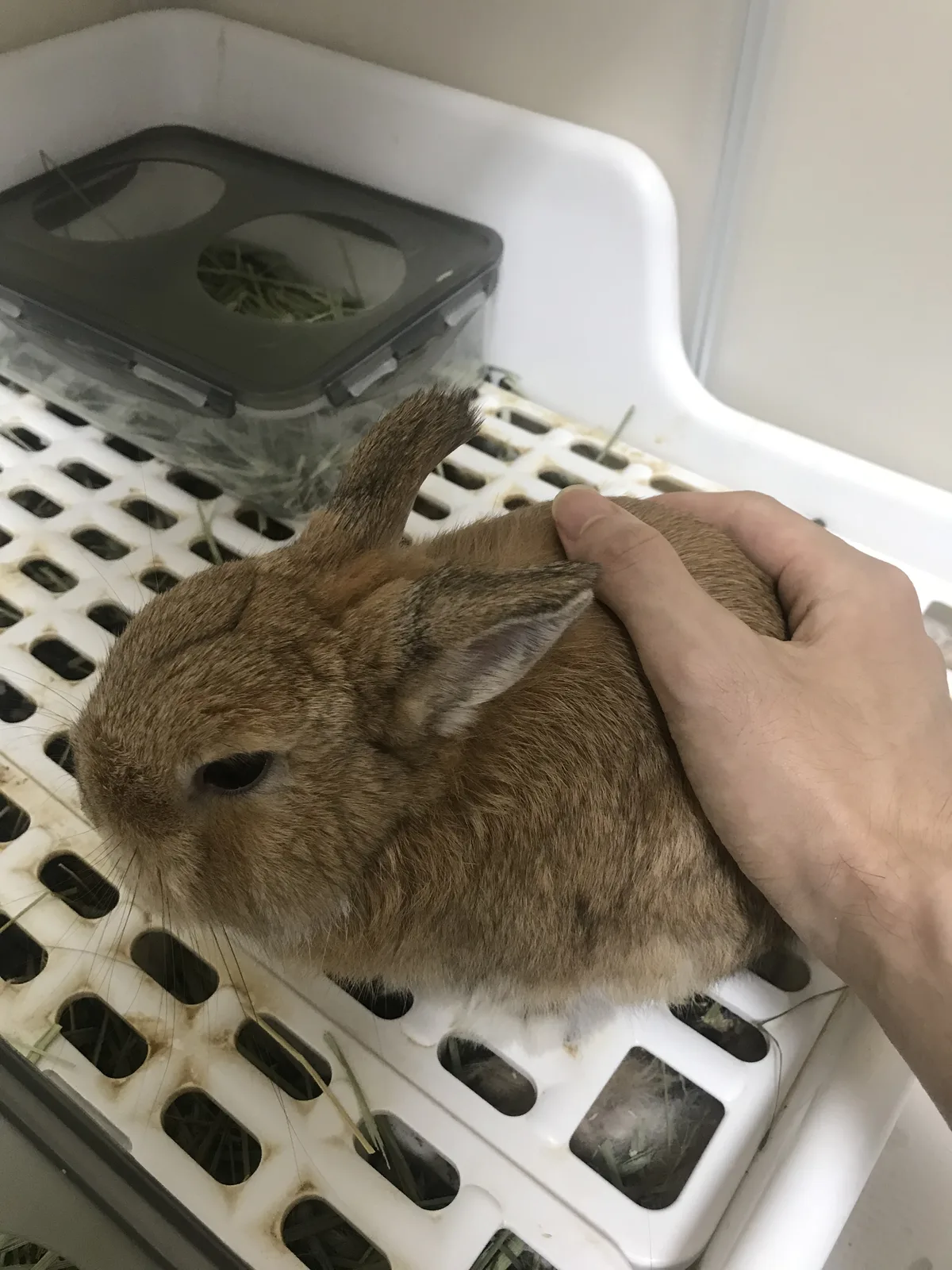
Every rabbit care guide I read before bringing my Netherland Dwarf home was structured the same way: a long checklist of tasks, implying a life of constant maintenance. Two years in, my honest report is different. Rabbit care, done right, is mostly not a checklist — it’s a system you set up once, plus a daily loop of chores that takes me under ten minutes.
This post is the whole picture: everything I actually do to care for an indoor rabbit, sorted by how often I do it — daily, weekly, seasonally, and almost never. Each part links to the post where I cover it properly, so consider this the table of contents for the entire blog, organized the way the work actually happens.
The principle: the setup does the caring
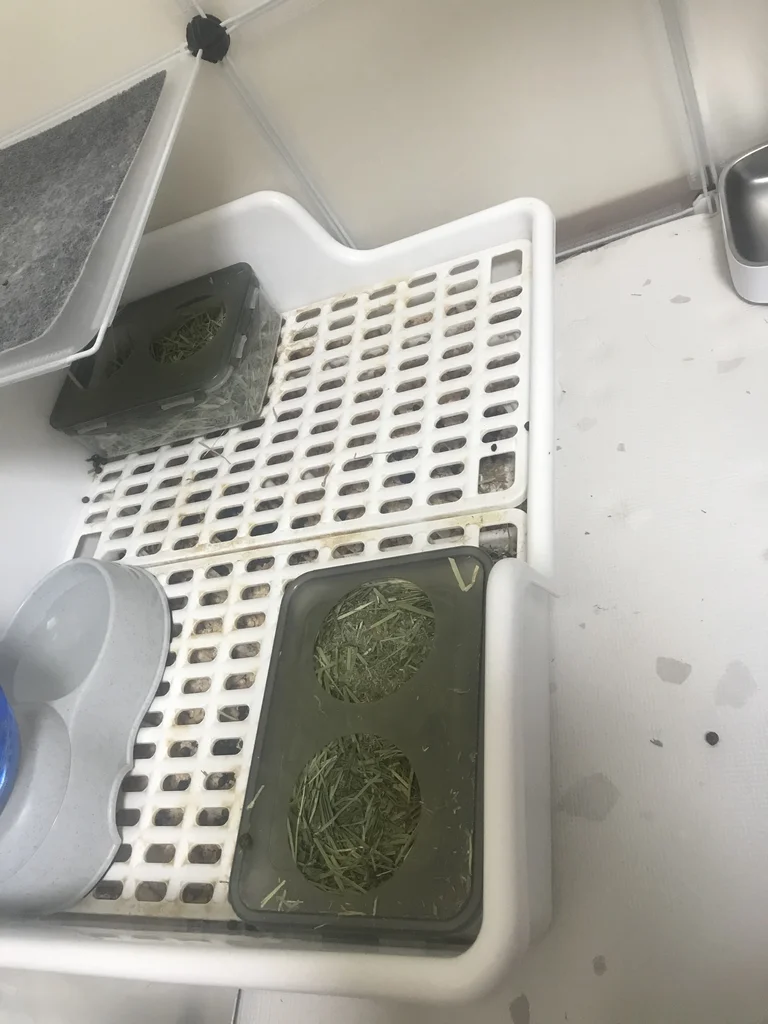
The single biggest thing I’ve learned: most “rabbit care tasks” can be absorbed by the environment. The hay feeder mounted above the litter box litter trained my rabbit without any training. The litter box absorbing everything means cage cleaning collapsed into one small job every week or two. The cushion-mat floor protects his padless feet without me doing anything. I wrote up the whole physical arrangement in my complete rabbit setup — if you get that part right, the daily care below stays genuinely light.
Daily: the actual loop

Hay, topped up. Unlimited first-cutting timothy hay is the diet, the dental plan, and the gut insurance all at once. Keeping the feeder full is the most important thing I do in a day, and it takes seconds.
Pellets, measured. A 12-gram scoop of timothy-based pellets — a supplement, not the meal. The full menu, including the one treat he gets and the vegetables he refuses, is in my rabbit’s complete diet.
Water, glanced at. The 3-liter gravity dispenser holds days of supply, so daily “care” is just confirming it’s flowing.
Brushing, in passing. Five or so short passes with the slicker, worked into petting he was already enjoying — the three-brush routine. Because rabbits can’t vomit, every hair on the brush is a hair that stays out of his gut.
Teeth, at a glance. Rabbit teeth never stop growing, so I lift his lips and check the front incisors a few times a day — a three-second habit a two-hour vet consult taught me.
Reading him. The real daily health check isn’t a procedure, it’s fluency in his body language — flops, loafs, tooth purring, and the alarm signs. The one emergency worth memorizing before you ever need it: GI stasis, where a rabbit that stops eating becomes a same-day vet visit.

And the fun part. Petting, handling practice, and the toys he actually uses. The trust that makes everything else on this list easy was built deliberately — two years of bonding, step by step.
Every week or two: the maintenance jobs
Litter box, fully changed. Dump the pine pellets out of the big box, hot water, dry, refill — the one real chore, every one to two weeks, and the reason “cleaning the cage” barely exists as a separate task.
Water dispenser, washed. Weekly, hot water and a brush — no detergent.
Face comb, mat check, eye corners. The delicate-parts comb comes out about weekly, and while he’s relaxed I check his rump and hind legs for matted clumps and wipe the occasional dried gunk from an eye corner.
Nails, when they’re due. Not weekly — but when they get long, I trim them alone with a solo method that took me a long time to figure out and now just works.
Seasonal: summer and the molt
Summer is the dangerous season. Rabbits handle cold far better than heat, so summer care is its own project: air conditioning, a fan, and a stainless mat plus ice packs. What heat stroke looks like and how I prevent it is in the heat stroke post.
Molting season means more fur, everywhere. The steam brush joins the rotation every few days, and I watch the litter box to make sure the extra swallowed fur keeps moving through.
Almost never: the big one-offs
Neutering — once. We did it preemptively, before hormonal behaviors arrived, and it’s part of why the litter habit and the calm temperament hold.
Vet trips — rarely, by carrier. Once or twice a year, in the backpack carrier that replaced the harness he refused. Rarely used is not the same as not essential.
Housing changes — a few times in two years. Cage, then grids, then a full year of free roaming, then back to a DIY enclosure — each move taught us something, and the current arrangement has been stable since.
What I never do
- Baths. Never. Water baths are dangerous and stressful for rabbits — brushing is the bath.
- Walks. My rabbit voted no on the harness, emphatically, and territory-bound animals don’t need them.
- Vegetables. Not by my choice — he refuses them, and the sources agree hay is the part that matters.
- Scolding. A rabbit can’t connect it to the act, and he can connect it to me. Whatever went wrong, the fix is environmental, not disciplinary.
- Supplements — anymore. For a long stretch he got a round papaya vitamin tablet; I stopped about six months ago. What the science actually says about papaya enzyme claims is in the treats post.
The two-year scorecard
What all this adds up to: in over two years, no GI stasis episode, no dental problems, no sore hocks, and a rabbit relaxed enough to flop in the open every day. I don’t say that to claim the routine is perfect — some of it is luck, and a rabbit who eats his hay makes his owner look smarter than he is. But the pattern I’d defend anywhere: set the environment up right once, keep the daily loop short and consistent, and learn to read your rabbit. That’s rabbit care, in practice.
FAQ
Are rabbits hard to take care of?
The daily work is light — the hard parts are one-time investments: a correct litter-and-hay setup, rabbit-proofing your space, and building trust with a prey animal. Get those right and the actual chores take me under ten minutes a day. The hour or so I spend with him beyond that is petting and play — which is the point of having a rabbit, not a task. What that hour actually looks like — the zoomies, the circling around my feet, the pre-dinner countdown — is a post of its own.
What’s the single most important part of rabbit care?
Unlimited hay. It’s the diet, the dental care, and the gut protection in one item — every serious source lands on the same answer, and two years of watching my own rabbit agrees.
Do rabbits need baths?
No — never bathe a rabbit. Water baths are dangerous and stressful for them. Rabbits keep themselves clean, and regular brushing handles the rest.
How long do rabbits live?
Typically 8 to 12 years for an indoor rabbit — and small breeds like mine often sit at the top of that range. The full breakdown of how long rabbits live, breed by breed and lever by lever, is a post of its own.