Timothy hay should make up about 80% of your rabbit’s diet. That’s not a suggestion — it’s the single most important thing you can do for their health. I’ve been feeding my Netherlands Dwarf rabbit unlimited timothy hay for nearly two years, and here’s everything I’ve learned about choosing, feeding, and storing it.
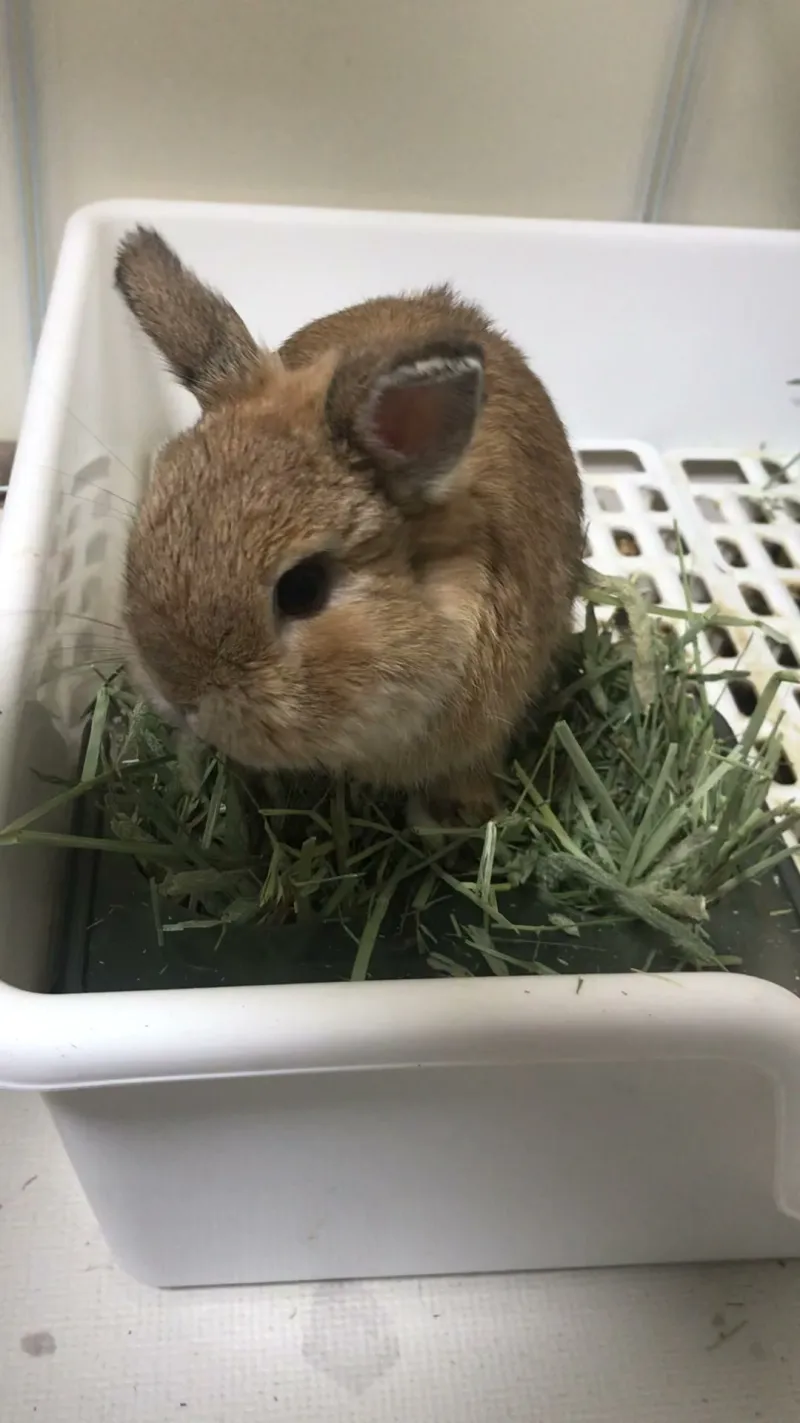
Why Timothy Hay Is So Important for Rabbits
Rabbits have teeth that grow continuously throughout their entire life. Without enough fibrous material to grind down, their teeth can overgrow and cause serious problems — from difficulty eating to painful abscesses that require vet intervention.
Timothy hay solves this because the long, coarse fibers force rabbits to chew in a side-to-side grinding motion, which naturally files their teeth down. Pellets and vegetables don’t do this the same way. I’ve since written a full post on rabbit teeth and why this grinding is the whole game.
Here’s something my vet told me directly: as rabbits age, their bones gradually weaken while their teeth never stop growing. If a rabbit hasn’t been eating enough hay throughout its life, the teeth can actually pierce through the weakened jawbone. At that point, the only option is surgical tooth trimming — roughly once a month, at around $300 per session. That’s not a one-time fix. It’s a recurring cost for the rest of the rabbit’s life. Feeding unlimited hay from day one is the easiest way to prevent this.
The other reason is gut health. A rabbit’s digestive system is designed to process large amounts of fiber. Without enough hay, their gut slows down, which can lead to GI stasis — a potentially fatal condition where the digestive system essentially stops working. It’s one of the most common causes of death in pet rabbits, and it’s largely preventable with proper hay intake.
In short: hay isn’t a side dish. It’s the main course.
1st, 2nd, and 3rd Cutting — What’s the Difference?
When you start shopping for timothy hay, you’ll see labels like “1st cutting” or “2nd cutting.” Here’s what that actually means:
- 1st cutting — The first harvest of the season. Thicker stems, more seed heads, higher fiber content. It’s coarser and crunchier. Best for dental wear because rabbits have to work harder to chew it.
- 2nd cutting — Harvested after the first growth. Softer, more leafy, fewer thick stems. This is what most rabbit owners recommend because rabbits tend to prefer the texture.
- 3rd cutting — Very soft, almost no stems. It’s more like leafy greens than hay. Some picky eaters love it, but it doesn’t provide the same dental benefits.
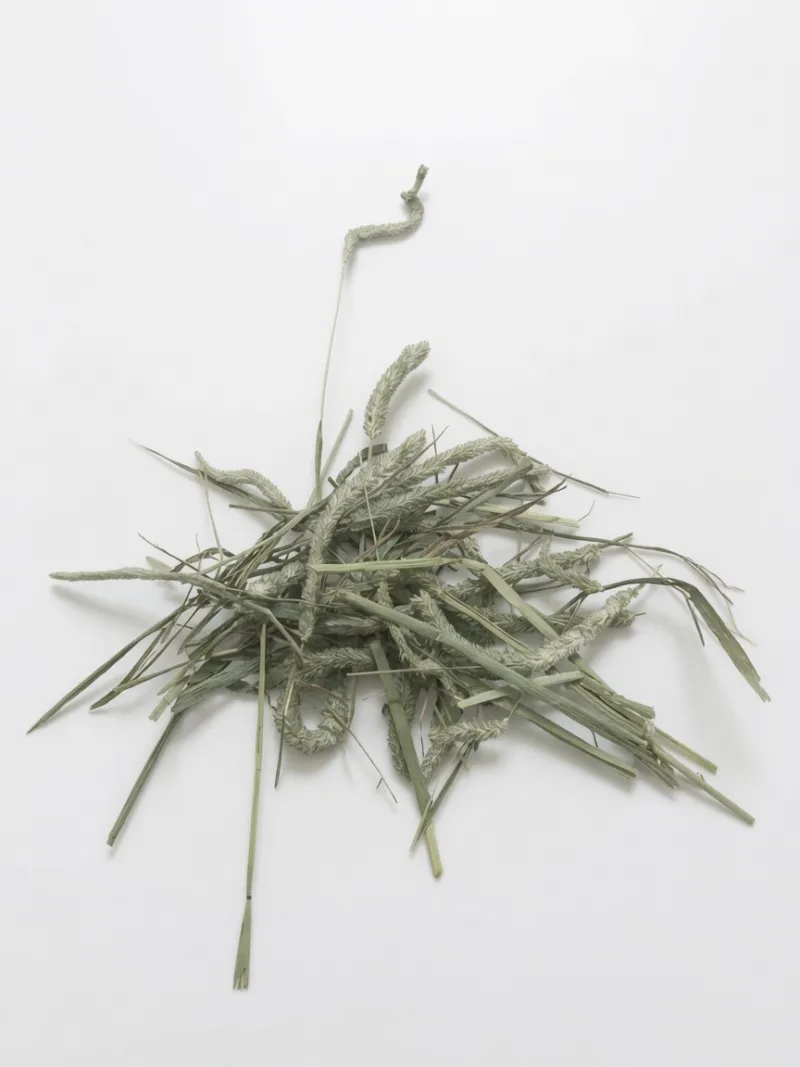
I personally feed 1st cutting timothy hay. My rabbit has never been picky about it — he goes through it just as happily as anything else. The coarser texture gives me peace of mind about his dental health.
Every rabbit has its own preferences though. Some love 1st cutting, others won’t touch it. My advice: try buying timothy hay from a few different sources and see which one your rabbit likes best. The cutting, the brand, even the specific harvest batch can make a difference. Once you find what your rabbit consistently goes for, stick with that.
How Much Timothy Hay Should You Feed?
Unlimited. That’s the standard recommendation from rabbit-savvy vets, and it’s what I do.
I keep two hay feeders in my rabbit’s space and refill them whenever they’re getting low. There’s never a moment where he doesn’t have access to fresh hay. He grazes throughout the day and night, which is exactly how rabbits are designed to eat — small amounts continuously, not big meals at set times.
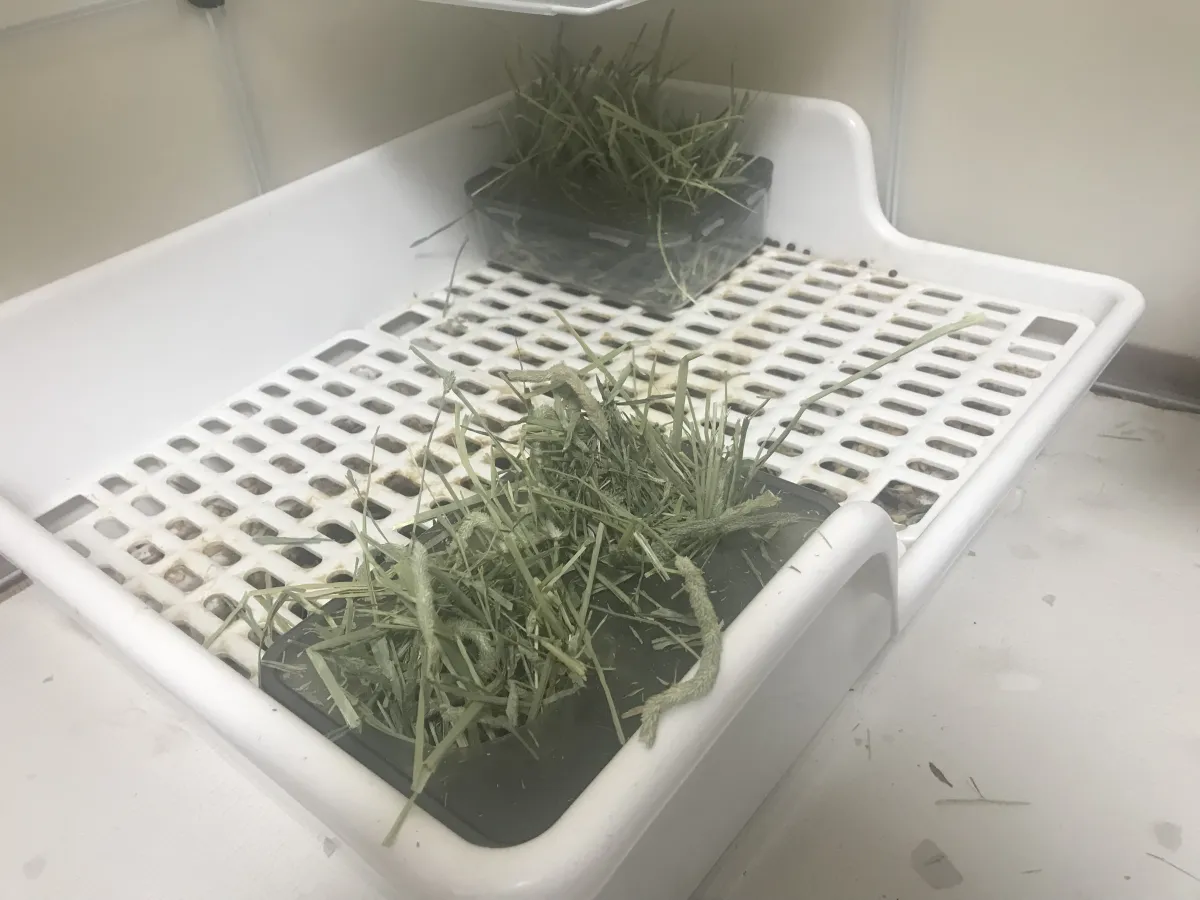
A common concern is waste. Yes, rabbits are messy eaters — they’ll pull hay out, scatter it around, and ignore the pieces they don’t like. That’s normal. I just sweep up the scattered bits and toss them. The cost of a little wasted hay is nothing compared to a vet bill for overgrown teeth or GI stasis.
Where I Buy My Timothy Hay
I buy 1st cutting timothy hay directly from a local farm that ships it fresh. No big brand name — just a small farm that grows and packages it themselves. I order in bulk (usually 3kg at a time), which lasts my dwarf rabbit several weeks.
The main advantages of buying farm-direct:
- Freshness — It smells green and fragrant, not dusty or stale
- Price — Usually cheaper per kg than pet store brands
- Quality — You can see and smell the difference immediately
If you don’t have a local farm option, brands like Oxbow and Kaytee are widely available and perfectly fine. The key is making sure the hay smells fresh (not musty), looks green (not yellow/brown), and isn’t overly dusty. Dusty hay can cause respiratory problems.
How to Store Timothy Hay Properly
Bad storage ruins good hay fast. Moisture is the enemy — it leads to mold, which is dangerous for rabbits.
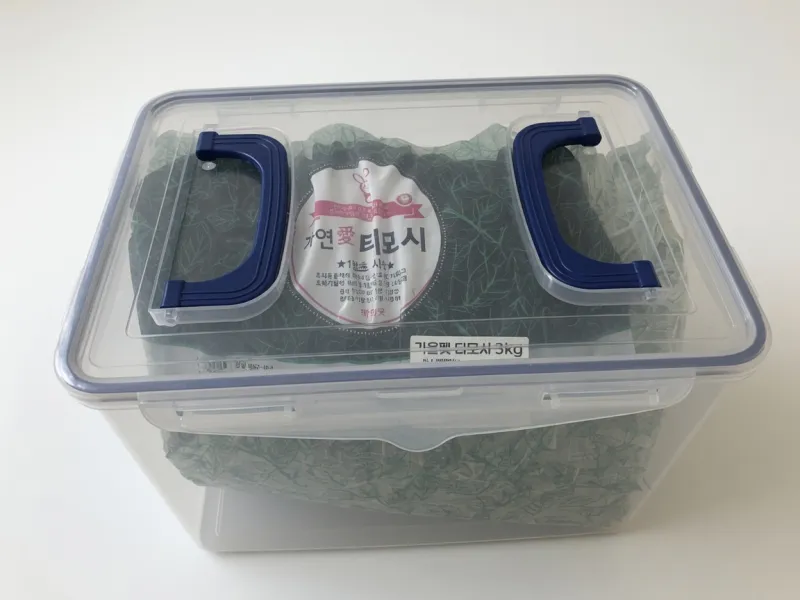
Here’s how I store mine:
- Container: Airtight plastic container with locking clips (I use a 3kg food storage box)
- Location: Room temperature, dry area, away from direct sunlight
- Never: Don’t store hay in the original bag if it’s not resealable — it’ll absorb moisture from the air and go stale
If your hay starts smelling musty or you see any white spots (mold), throw it out immediately. Don’t try to pick out the bad pieces — if one section is moldy, spores have likely spread throughout.
My Hay Feeder Setup
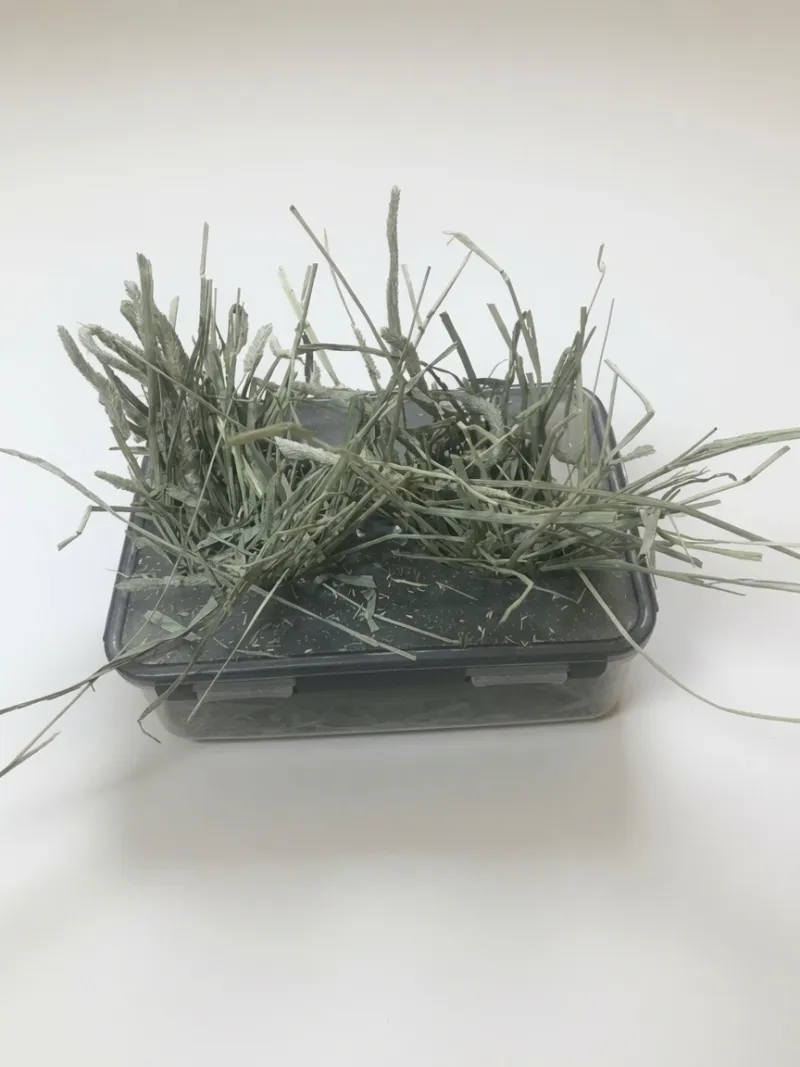
I use two small plastic containers as hay feeders, placed directly above my rabbit’s litter box. This setup works for two reasons:
- Rabbits eat and poop simultaneously — placing hay near the litter box encourages them to use it consistently
- Scattered hay falls into the litter box — not onto the floor, which means less cleanup
One thing I learned the hard way: open-top containers waste less hay than wall-mounted wire racks. Rabbits have a natural habit of digging and rummaging through their hay — they’ll shove their face in, pull pieces out, and toss aside what they don’t want. With a wire hay rack mounted on the side of the cage, all that rejected hay falls straight to the floor and gets wasted. With an open container, the hay they toss around mostly stays inside the container or falls into the litter box below. Much less cleanup, much less waste. I eventually put this to a proper test — the full comparison of the three feeder types I’ve used over two years is in my hay feeder review.
What If Your Rabbit Won’t Eat Hay?
This is rare, but it happens. A few things to try:
- Switch the cutting — If you’re feeding 1st cutting, try 2nd. Some rabbits genuinely prefer the softer texture.
- Try different sources — Buy from a few different farms or brands. The same cutting from different sources can taste completely different to your rabbit.
- Check freshness — Stale hay has almost no smell. Fresh timothy hay smells distinctly sweet and grassy. Your rabbit knows the difference.
- Reduce pellets — If you’re overfeeding pellets, your rabbit may be too full to bother with hay (and if you’re wondering which pellets are worth feeding at all, here’s how I compared my two brands). The usual guideline is about 1/4 cup per day for an average-sized rabbit — my sub-1kg dwarf does fine on roughly 12 grams a day, so scale it to your rabbit’s size. Where pellets sit next to hay, treats and everything else is laid out in my rabbit’s complete diet.
- Mix in a little treat hay — Orchard grass or oat hay mixed into the timothy can entice picky eaters.
The only time my rabbit ever stopped eating hay was the day he had his neuter surgery. He didn’t eat for about 6 hours afterward, which had me worried — but by later that evening he was back to munching like nothing happened. If your rabbit suddenly stops eating hay for more than 12 hours without an obvious reason (like surgery), contact your vet. It could be a sign of GI stasis or dental issues.
Timothy Hay vs Other Types of Hay
Timothy hay isn’t the only option, but it’s the best all-around choice for adult rabbits. Here’s how it compares:
- Alfalfa hay — Higher in calcium and calories. Good for baby rabbits (under 6 months) and pregnant/nursing does, but too rich for healthy adults. Can contribute to bladder sludge over time.
- Orchard grass — Similar nutrition to timothy but softer. Good alternative if your rabbit is allergic to timothy (yes, this happens). Can be mixed in.
- Oat hay — Has crunchy seed heads that rabbits love. Lower fiber than timothy. Fine as an occasional supplement, not a replacement.
- Meadow hay — A mix of various grasses. Quality varies a lot. Can work, but timothy is more consistent.
For most adult pet rabbits, timothy hay as the primary hay with occasional orchard or oat hay mixed in is the way to go.
Frequently Asked Questions
Can baby rabbits eat timothy hay?
For rabbits under 6 months old, alfalfa hay should be the primary hay — it provides the extra calcium and protein they need for growth. Starting around 5 months, begin mixing in small amounts of timothy hay alongside the alfalfa, gradually increasing the ratio. By the time your rabbit reaches 6 months and is considered an adult, you should be feeding timothy hay as the main hay with alfalfa phased out completely.
How long does timothy hay last once opened?
Stored properly in an airtight container at room temperature, timothy hay stays fresh for several weeks to a couple of months. If it loses its green color, smells musty, or feels brittle, replace it.
Is timothy hay dusty? Will it affect my rabbit’s breathing?
Some lower-quality hay can be very dusty, which may cause sneezing or respiratory irritation. If you notice excessive dust, switch brands or sources. Farm-fresh hay tends to be less dusty than hay that’s been sitting on a store shelf for months.
Can I feed only pellets instead of hay?
No. Pellets alone cannot provide the long-fiber chewing action that keeps rabbit teeth ground down. A pellet-only diet will eventually lead to dental problems and likely GI issues. Hay should make up 80% or more of the diet; pellets are a supplement, not a replacement.
Can I use timothy hay as rabbit bedding?
You can — it’s the one “bedding” material a rabbit can safely eat, since it’s literally his food. But I don’t, and after two years I’d argue against it. In my setup hay is strictly food: it stays in the feeder mounted above the litter box, the litter underneath is wood pellets, and the floor is a cushion mat. Hay spread on the floor gets trampled, soiled, and — because rabbits graze whatever is around them — eventually eaten, which means bedding hay has to be kept as clean as food and swapped constantly. Keeping the hay up in the feeder keeps it clean until the moment it’s eaten, and keeps all the mess in one box.