After I wrote about trimming my rabbit’s nails alone, grooming feels almost too easy to write about. Nail trimming is the boss fight of rabbit care. Brushing is the tutorial level — my rabbit tolerates it fine, there’s no wrestling, and you can’t really draw blood with a brush. But it still has to happen, and it has to happen often.
Here’s the routine I’ve settled into after more than two years with my Netherland Dwarf: the three brushes I actually use, how often each one comes out, and the one habit — hands before brush — that makes the whole thing stress-free.
Why brushing matters more than it looks
Rabbits groom themselves constantly, like cats. Unlike cats, they can’t vomit — so every bit of loose fur they lick up has exactly one way out, through the gut. Too much swallowed fur is one of the things that can contribute to GI stasis, which is the single scariest thing that can happen to a pet rabbit. Every hair you get onto a brush is a hair that doesn’t go into your rabbit’s stomach.
And no, you don’t bathe a rabbit. Water baths are dangerous and stressful for them. Brushing is the bath.
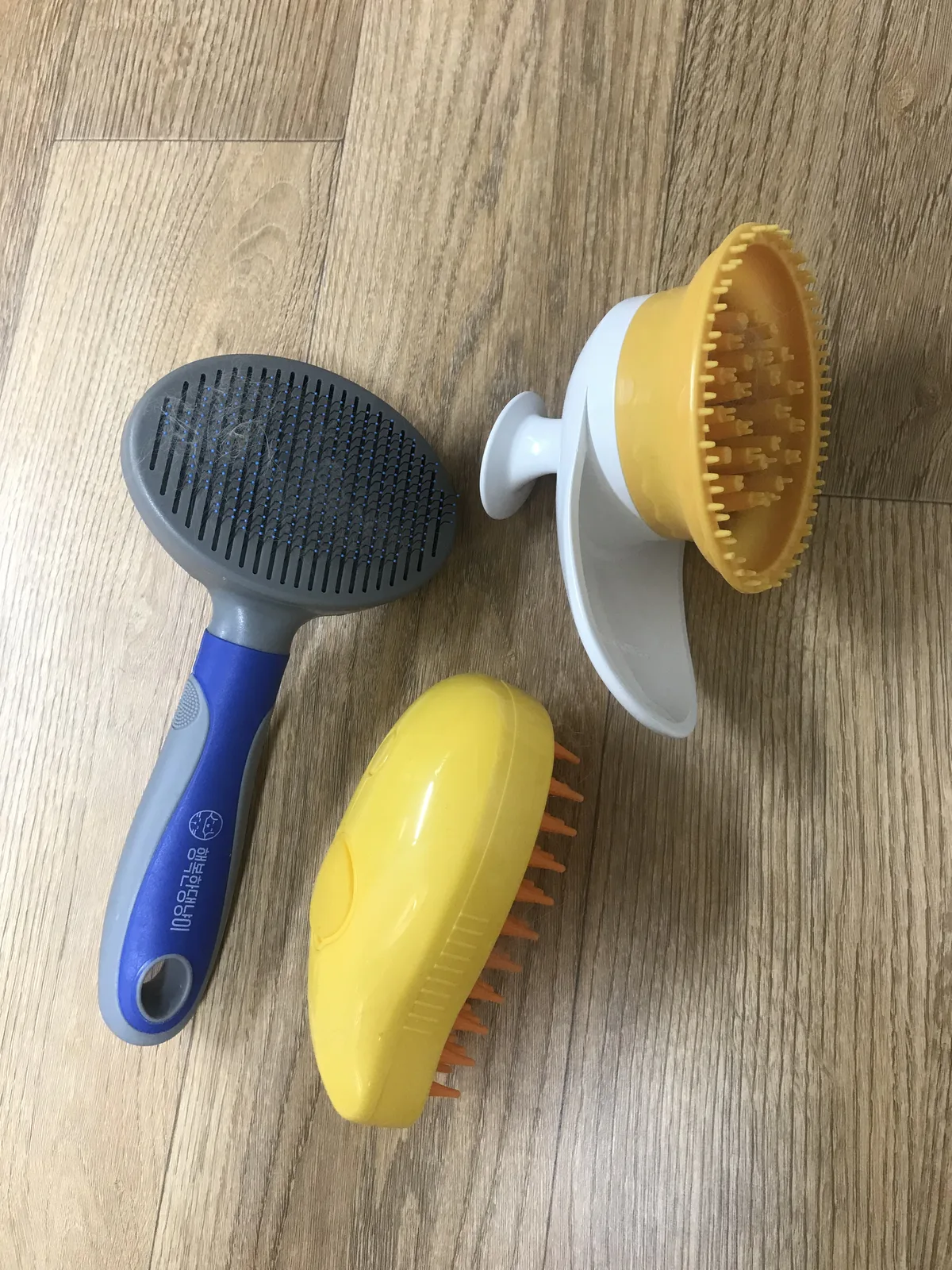
1. The big self-cleaning slicker (my daily driver)
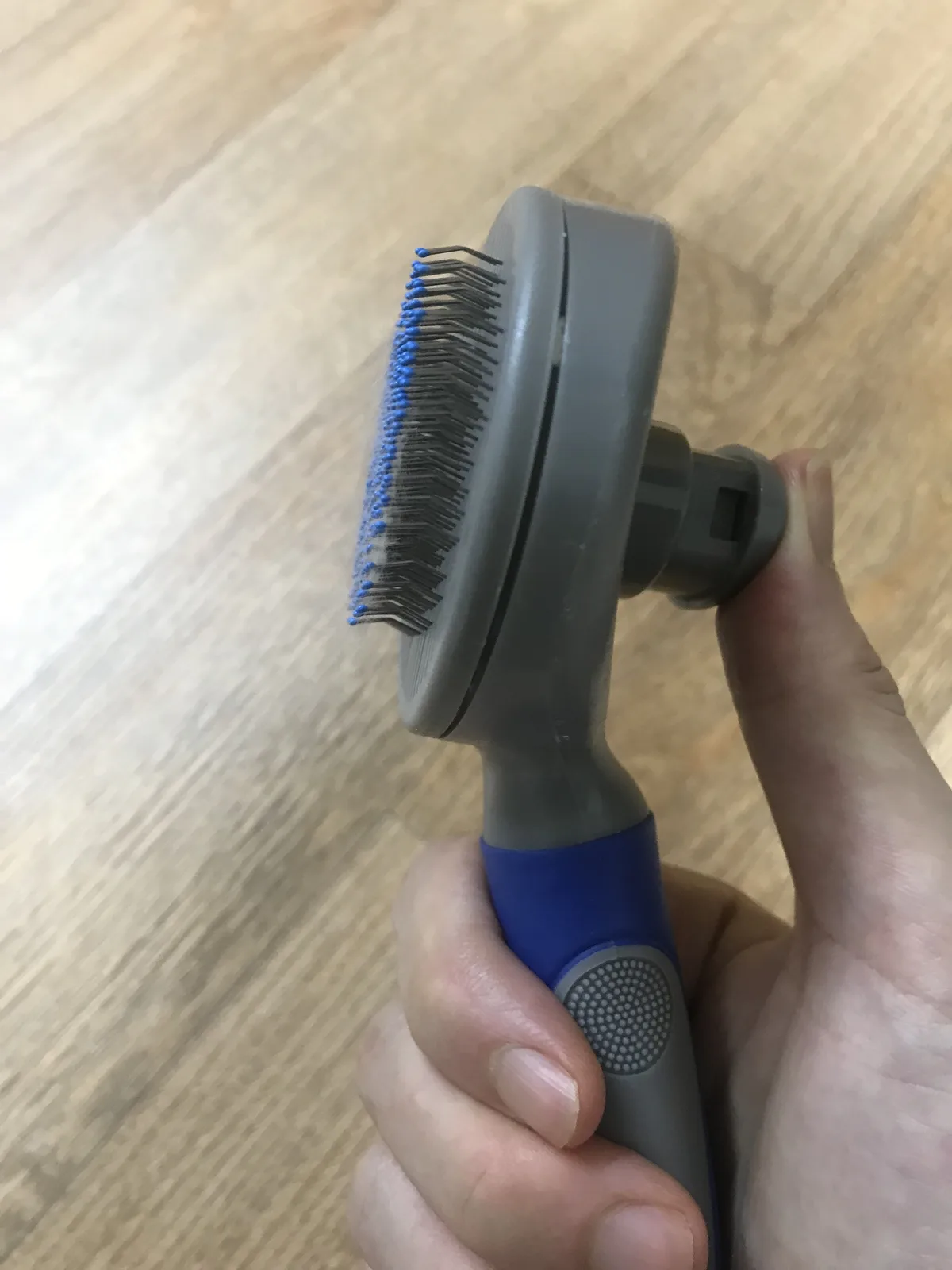
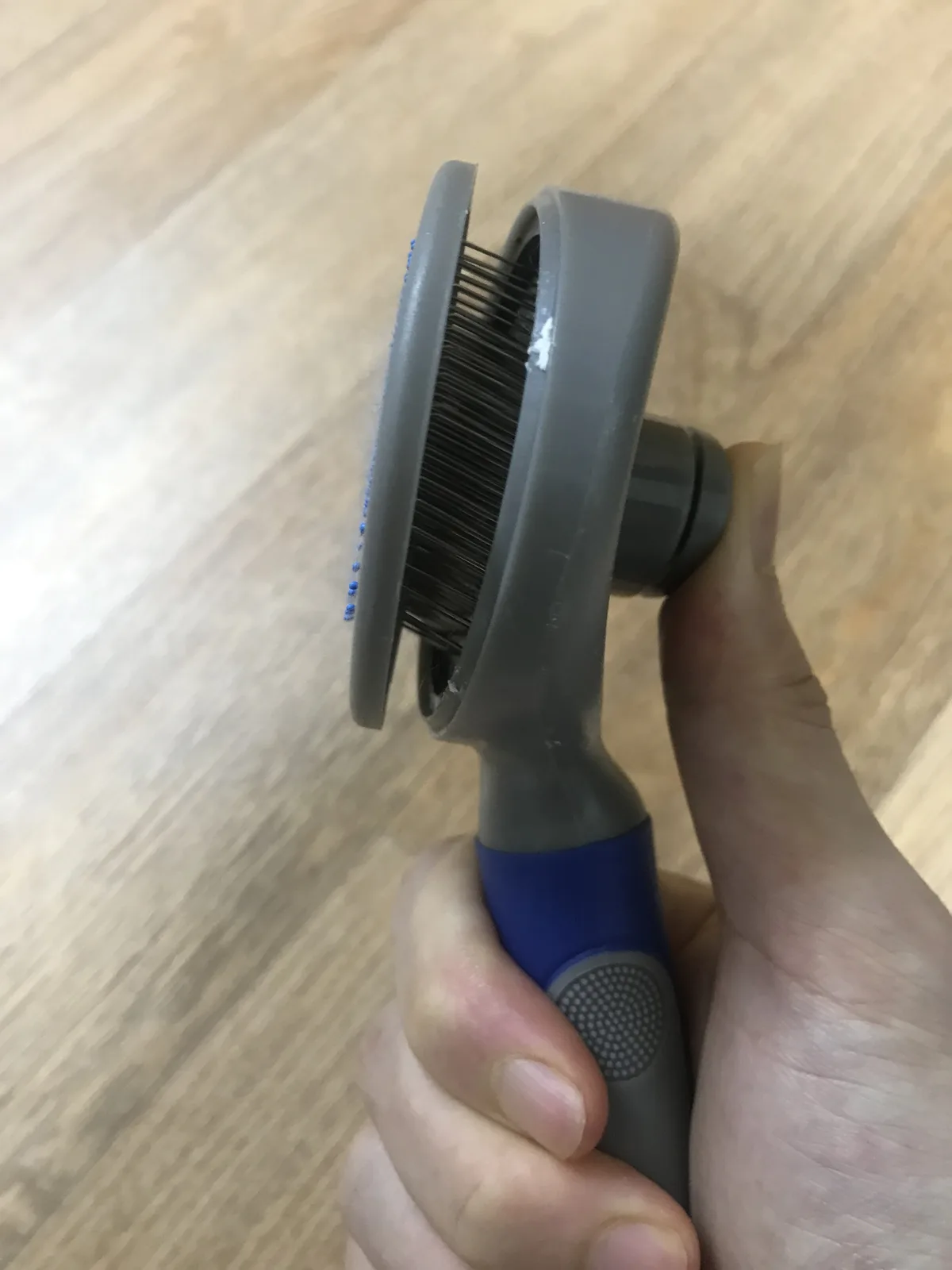
My main brush is a large slicker-style brush with fine hook-like teeth. The feature that made me keep it: a button on the back. Press it and — click — the base pushes forward and shoves all the collected fur off the hooks in one clean sheet. No picking hair out of the bristles with your fingers.
It’s on the big side, and for full-body brushing that’s exactly what you want. A couple of long strokes cover his whole back, so a full pass takes under a minute. This is the brush that does 90% of the work in my routine.
2. The silicone face comb (for the delicate parts)
Faces are a different problem. A slicker with metal hooks near the eyes and nose of an 800-gram rabbit is asking for trouble — one twitch at the wrong moment and you’ve hurt him. So for the face I use a small comb made entirely of soft silicone. Even if he jerks his head mid-stroke, the odds of an injury are close to zero.
The face doesn’t shed like the body, so this one only comes out about once a week.
3. The steam brush (for shedding season)
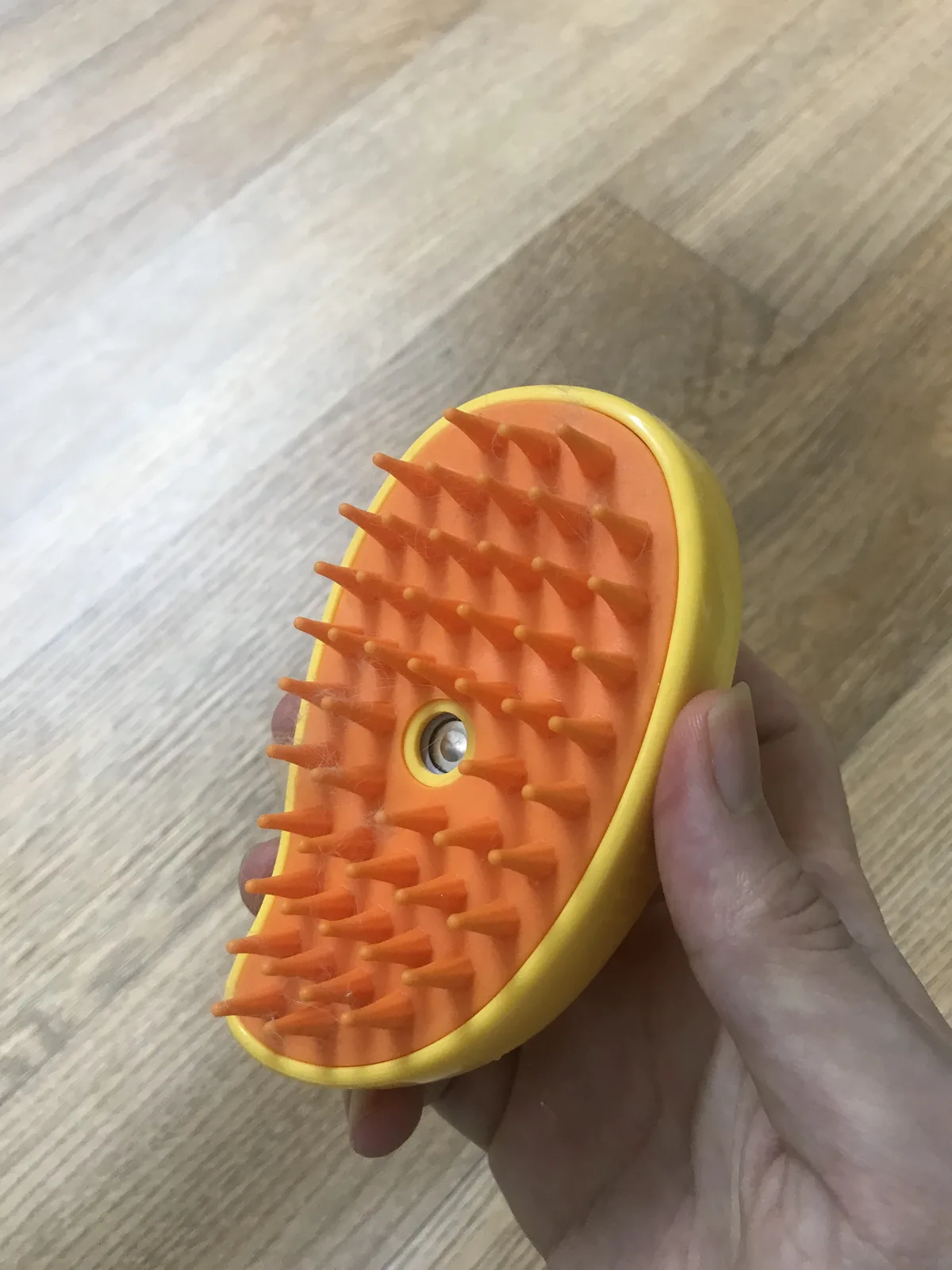
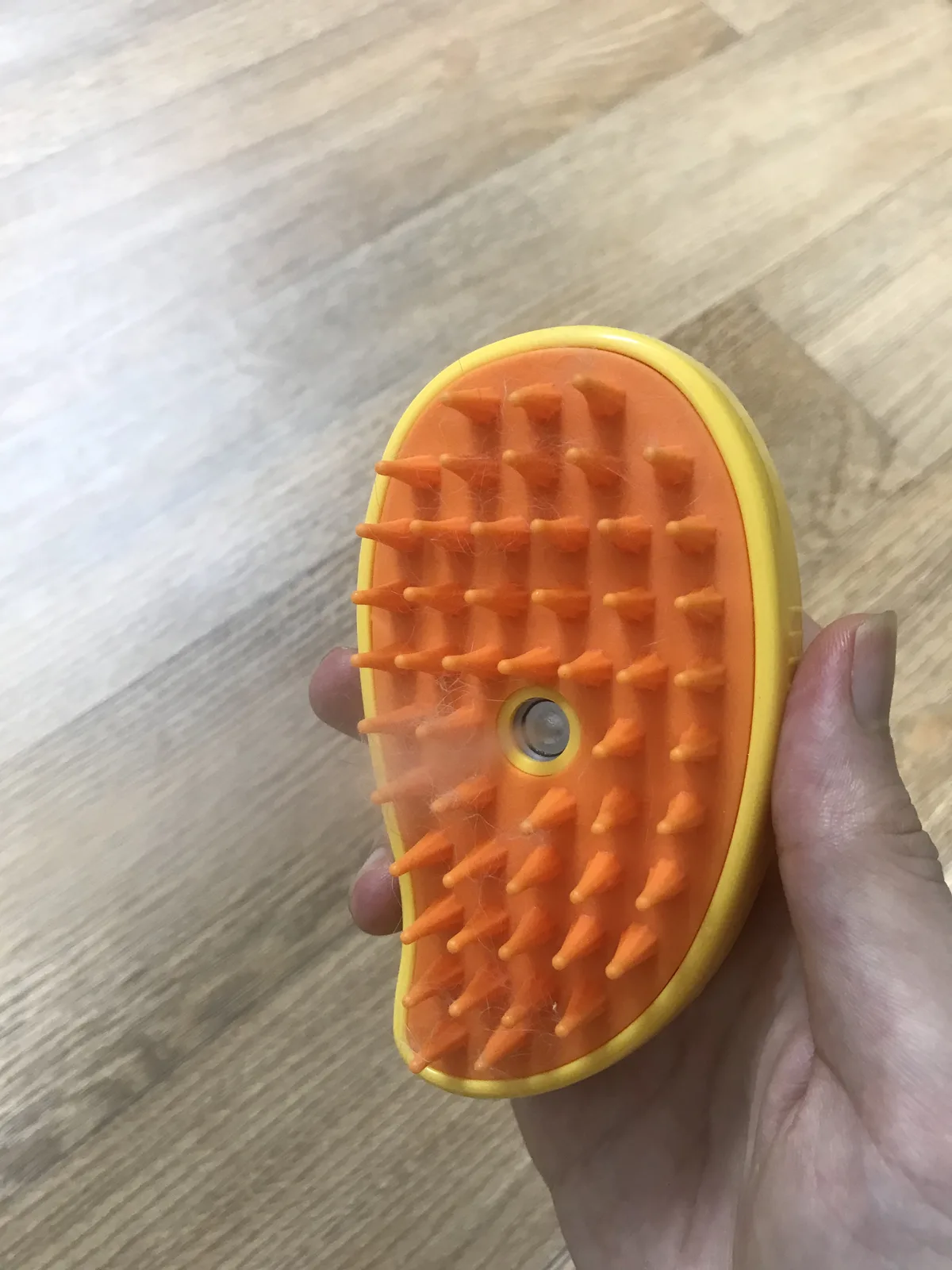
The third brush is a silicone brush that puts out a fine mist of steam while you groom, with three intensity levels — low, medium, strong. During a molt the loose undercoat comes out in absurd quantities and floats everywhere; the light mist keeps that fur clinging to the brush instead of drifting around the room.
This one is strictly seasonal. When he’s molting I use it about once every three days, on top of the normal daily brushing. Outside of shedding season it stays in the drawer.
My actual schedule
Written out, the whole routine is this:
- Big slicker: every day — I brush him at least five times a day, short passes rather than one long session
- Silicone face comb: about once a week
- Steam brush: shedding season only, roughly every three days
Five times a day sounds like a lot until you remember each pass takes well under a minute. It’s not a chore I schedule — it’s just something that happens whenever he’s next to me and relaxed.
How I actually brush him: hands first
If there’s one thing worth copying from my routine, it’s this: never open with the brush.
I always start by grooming him with my hands — long, slow strokes, the same motion another rabbit would use grooming him. Only once he’s settled into it does the brush come out. Then I alternate: a stroke with my hand, a stroke with the brush, hand, brush. To him, the brush is just a slightly weird extension of petting he was already enjoying.
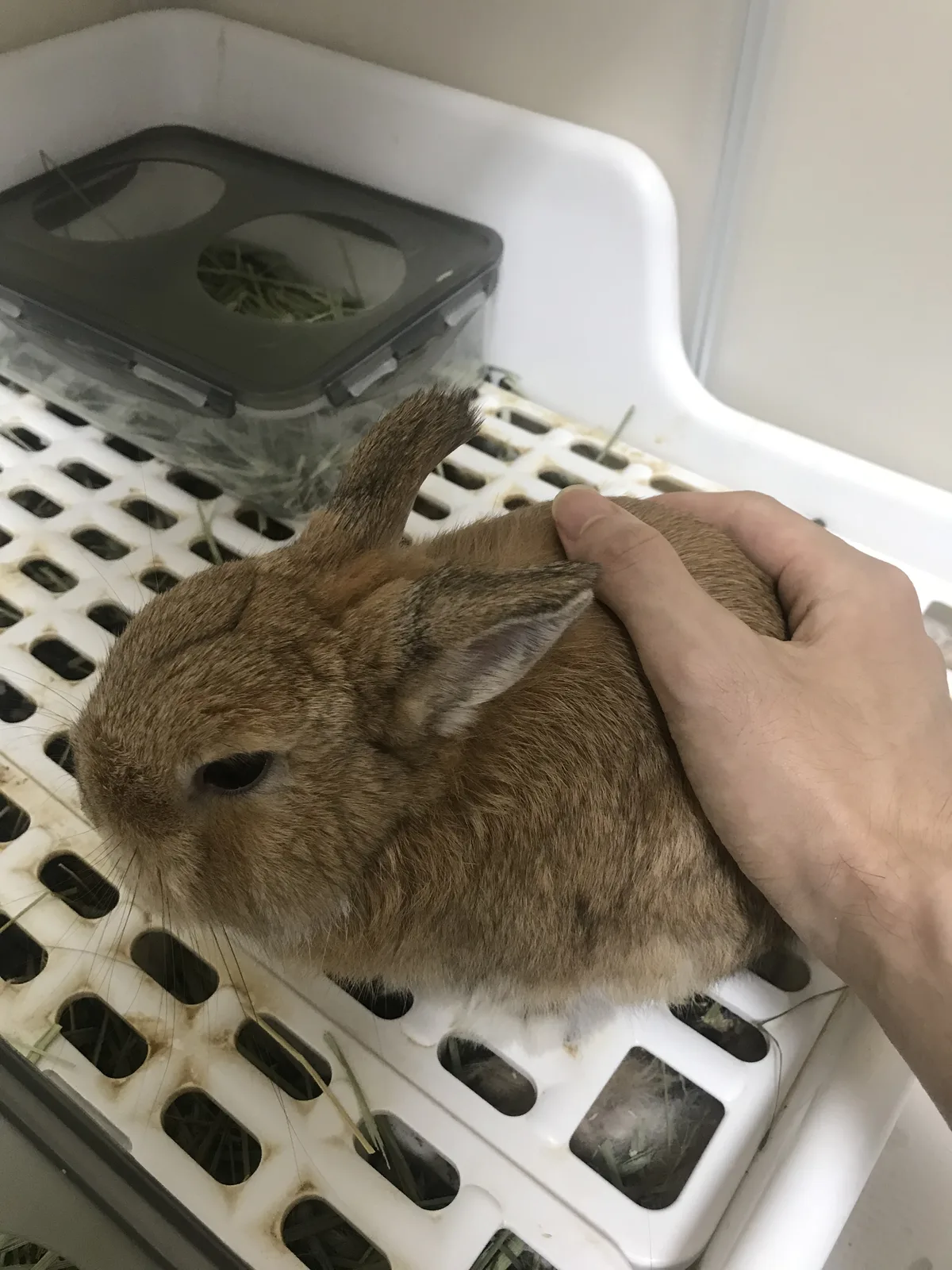
For the spots that need a bit more pressure to get the loose fur out, I steady him with one hand — just holding him gently in place — and work the brush with the other. That’s it. That’s the whole technique.
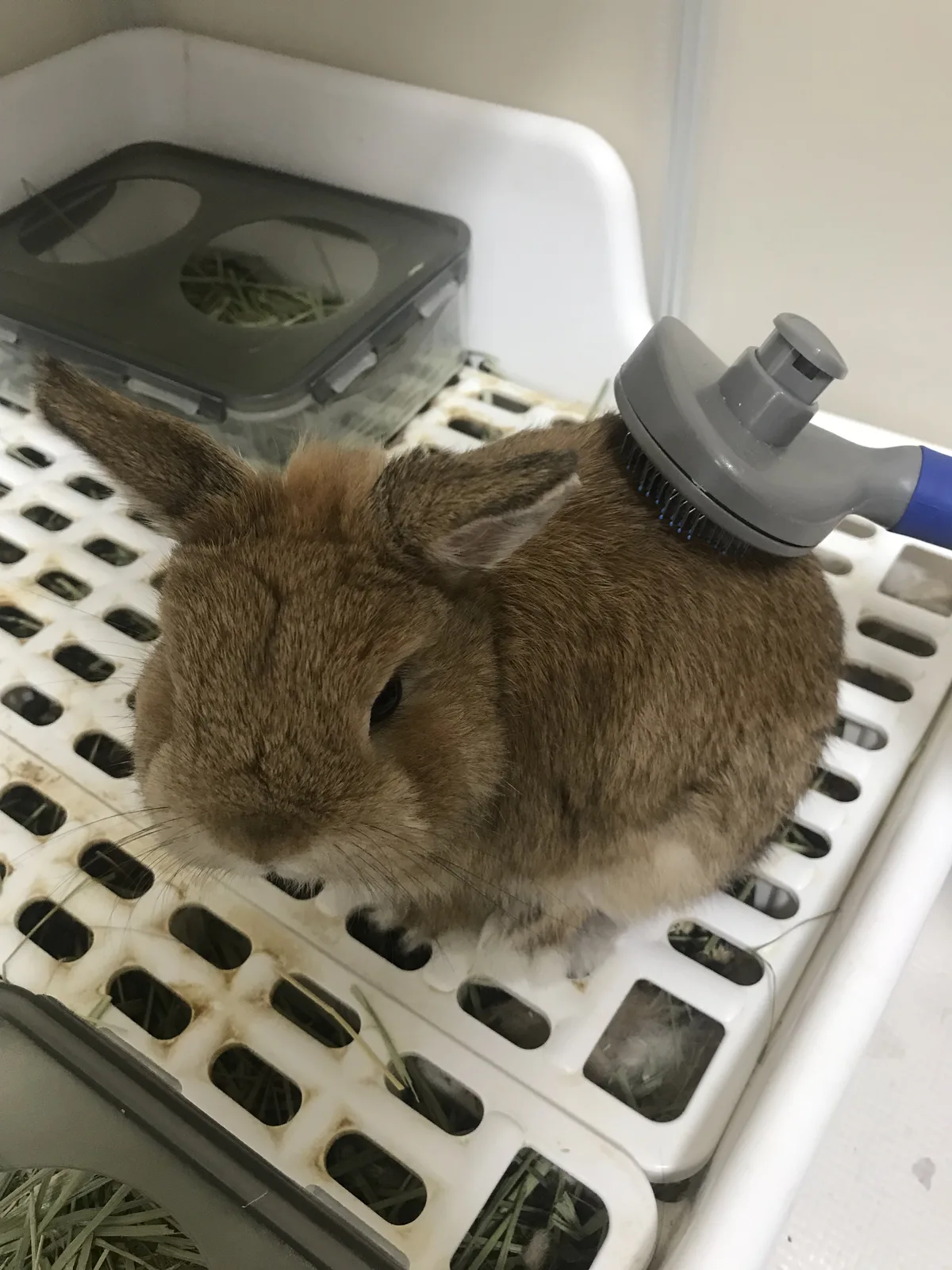
Honestly, compared to nail trimming, there’s barely a trick to it. Nails took me a long time to figure out. Brushing worked on day one.
Matted fur: the one job the brushes can’t do
Even with daily brushing, my rabbit occasionally develops small matted clumps — always in the same places, around his rump and hind legs. A brush doesn’t fix a true mat; the hooks just skate over it or tug at it, and tugging on matted fur is exactly what you don’t want to do.
What I do instead: I keep a pair of rounded-tip mini scissors — the kind sold for trimming nose hair, with blunt ball ends instead of points. When I spot a clump, I don’t stage a procedure. I wait until he’s relaxed during regular petting, gently turn his rump toward me mid-stroke, snip the clump off, and go back to petting.
Now the caveat, because it matters more than the technique: rabbit skin is far thinner than a cat’s or a dog’s and tears very easily. The RWAF’s grooming guide warns against cutting mats out of the coat at all unless you’re confident in what you’re doing, and the standard route for serious matting is a vet or groomer with clippers — the House Rabbit Society has an entire guide on clipping for a reason. My situation is the easy case: small surface clumps on a rabbit who holds still for petting. If a mat sits tight against the skin, or your rabbit squirms, put the scissors down and book the vet. That’s not excess caution — with skin this fragile, it’s just the sensible default.
While you’re close: eye corners
Grooming time is also when I catch the one other bit of upkeep my rabbit needs: every so often a little dried gunk collects at the front corner of an eye, and I wipe it away with a clean finger or a cotton swab. In two years, that has been the entire extent of his eye care.
The line I’d draw: an occasional dry crumb is one thing, but persistent tearing, wet fur under the eye, or real discharge is vet territory — the RWAF lists eye discharge among its book-a-vet-visit signs. And in rabbits, watery eyes can trace back to tooth roots, of all things; my rabbit teeth post covers that connection.
If you’re just starting
Start with the hand grooming alone for a few days before introducing any brush at all. A rabbit that already loves being stroked will accept a brush without drama. And when your first molt hits and fur starts coming off in clouds — that’s not an emergency, that’s just rabbit ownership. Brush more, and keep an eye on the litter box to make sure everything keeps moving through.