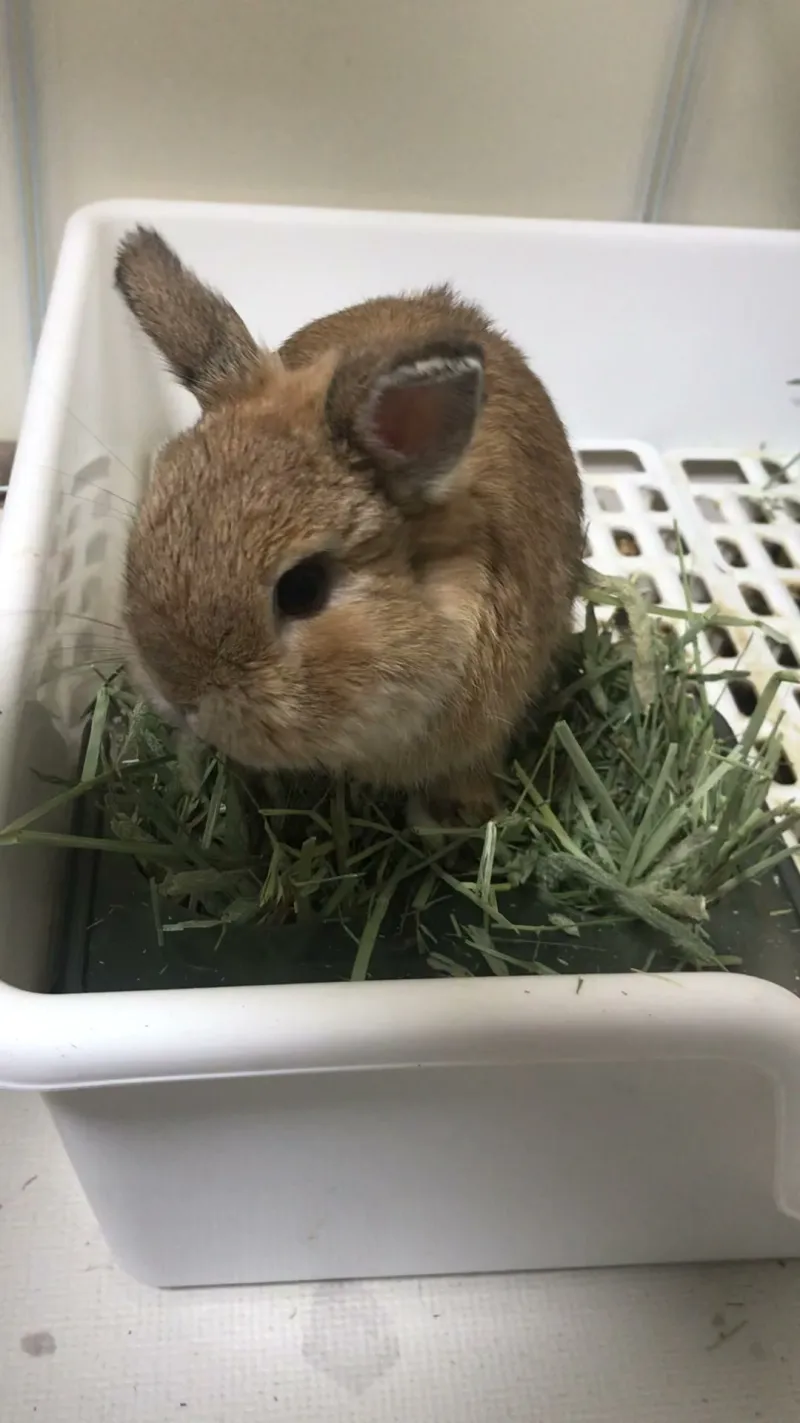
In two years with my Netherland Dwarf, I’ve bought exactly three hay feeders — and the price went down every time. First a wall-mounted metal rack for about $30. Then a fabric hay bag for about $20. Then a plain plastic bin with two holes in the top for about $15.
The $15 bin won, and it’s not close. It has been his hay feeder for roughly two years now, and I have no plans to replace it. If you’re shopping for a rabbit hay feeder and just want the short version: skip anything that serves hay from the side, and get a rigid, washable container your rabbit eats from the top. The rest of this post is how I got there — including the two feeders I paid more for and quietly retired.
The problem a hay feeder actually has to solve
I assumed a hay feeder was just a hay holder. It isn’t. Rabbits are foragers, and mine doesn’t eat hay so much as excavate it — he digs into the pile, tosses strands around, and pulls out way more than he eats. Since hay is basically his entire diet, this digging happens all day, every day.
So the real job of a hay feeder is to survive that: keep the hay clean, keep the wasted portion from ending up somewhere useless, and do it without giving your rabbit something dangerous to chew on. Each of my three feeders failed or passed on exactly those points.
Feeder #1: the wall-mounted metal rack (~$30, months 1–11)
The metal rack is the classic first purchase — it’s what pet stores push, and it’s what I bought when I brought him home. It clips to the side of the enclosure and holds a nice visible stack of hay behind metal bars.
Two things made me retire it after about ten months.
First, the chewing. To get hay out, he pressed his face into the bars and pulled — and along the way he’d gnaw the metal and rake his claws against it, over and over, every day. To be fair to the rack: he was never actually injured. But watching a small animal grind his teeth and nails against steel wire dozens of times a day, I kept thinking, one day this goes wrong. I didn’t want to find out how.
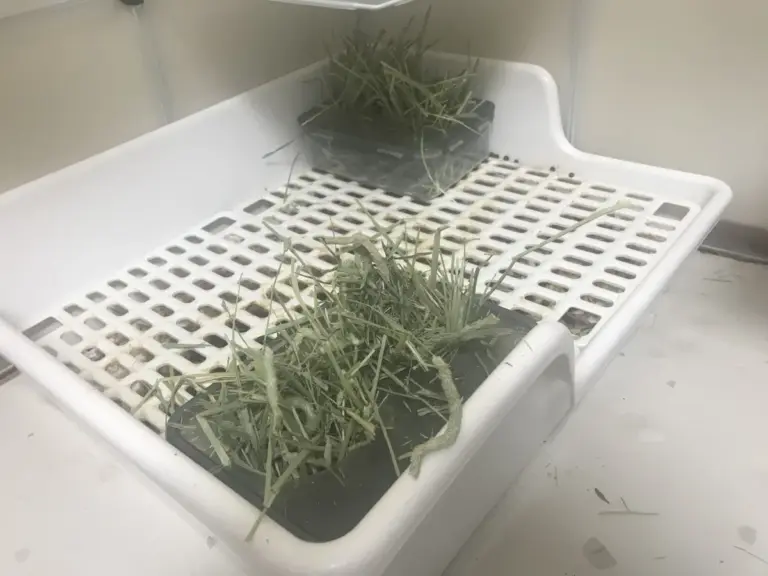
Second, the waste. A side-mounted rack means the hay comes out sideways, and everything he pulled loose but didn’t eat dropped straight down — in my setup, right into the litter area below. Every day the litter box collected a layer of perfectly good, trampled hay. I was effectively buying hay to throw it away.
Feeder #2: the fabric hay bag (~$20, one month)
My fix for the metal-chewing worry was a soft fabric hay bag — a hanging pouch with an opening the rabbit eats through. No wire, no hard edges. Problem solved, I thought.
It lasted about a month, which makes it the shortest-lived piece of rabbit gear I’ve ever owned.
Fabric turns out to be exactly the wrong material to hang in front of a digging, chewing animal. It frayed fast, and it got dirty even faster — hay dust, chin rubbing, the occasional spray of urine. And unlike plastic or metal, you can’t really rinse a hay-stuffed fabric pouch clean and call it sanitary. Once I noticed how grimy it looked one month in, the math was simple: this thing touches his food all day and I can’t properly wash it. Out it went.
It also shared the metal rack’s other flaw — the hay still came out sideways, so the litter box still collected the fallout.
Feeder #3: the plastic bin with holes in the top (~$15, two years and counting)
After the fabric bag failed I spent a while just browsing feeder designs, and the one I landed on looked almost too simple: a rigid plastic bin with a lid, and two openings in the top. You fill the bin with hay; the rabbit eats through the holes.
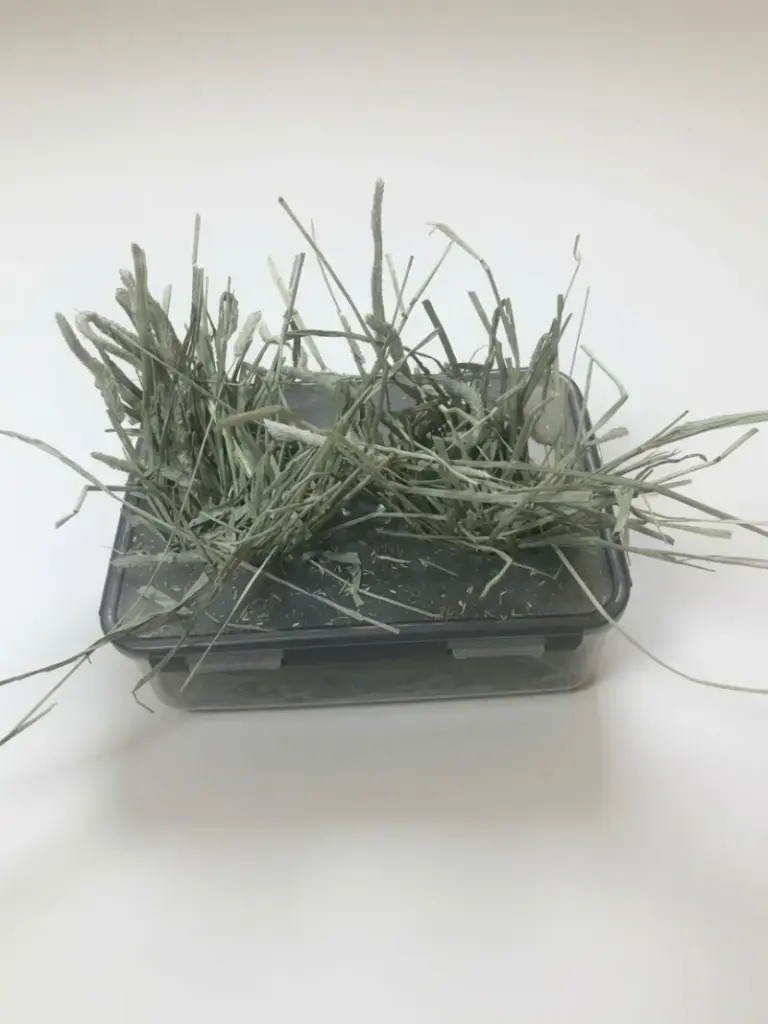
He uses it two ways. Either he sticks his whole head down through a hole and eats inside the bin, or he pulls a mouthful up through the hole and munches it while standing over the lid. And this is where the design quietly wins: whatever he drops falls back into the bin. The wasted hay doesn’t land in the litter box — it lands back on top of the pile, where he eats it on the next pass.
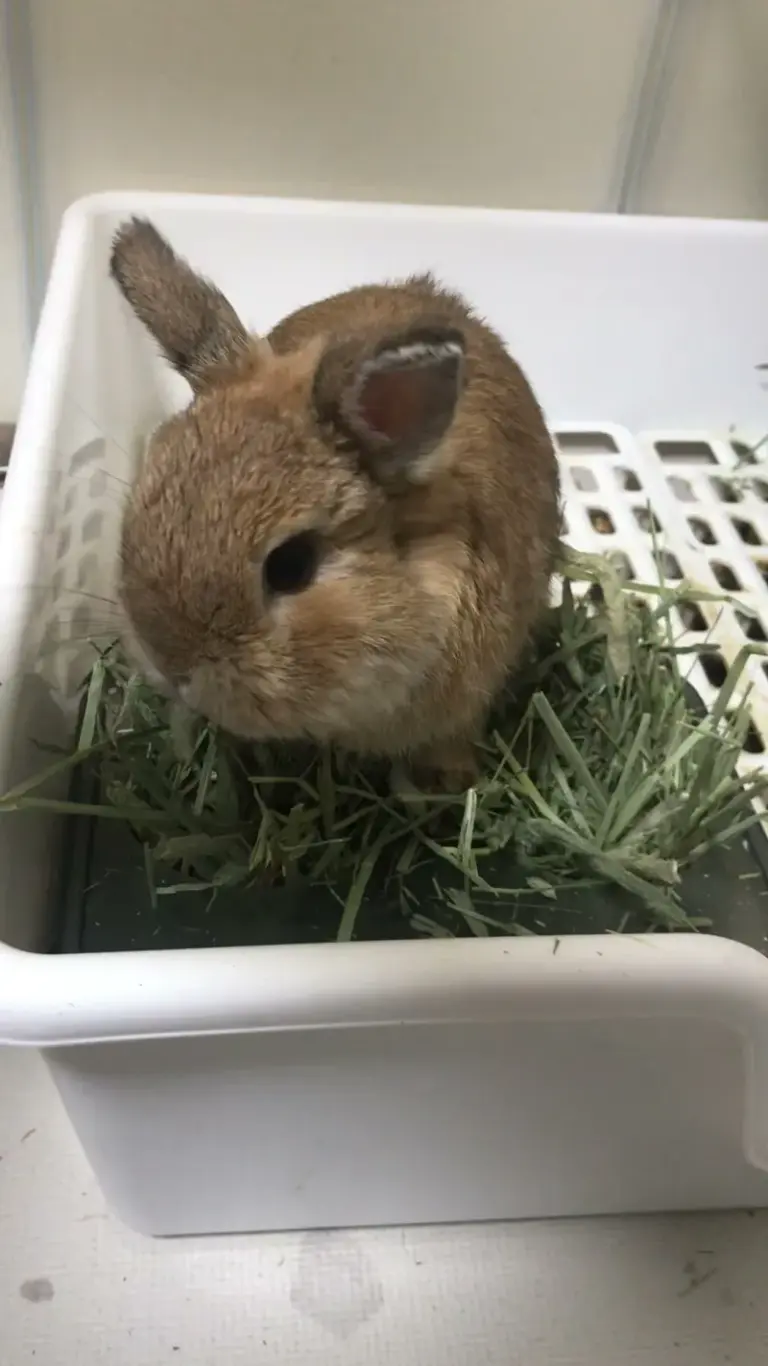
The safety worry from the metal rack is gone too. There’s no wire at mouth level — just smooth plastic edges. He has nothing to rake his claws through or grind his teeth against.
And cleaning became almost embarrassingly easy. When he’s emptied the bin, I rinse it with water, let it dry, and refill it. That’s the entire maintenance routine. After the unwashable fabric bag, a feeder I can hose clean in thirty seconds felt like cheating.
The pattern I only saw afterwards: side access vs. top access
It took me three feeders to notice that the thing separating them wasn’t price or material — it was geometry.
A side-access feeder (rack, bag, most hanging designs) fights gravity. Every strand your rabbit pulls loose and drops is gone — onto the floor, into the litter, wherever. A top-access feeder makes gravity work for you: dropped hay falls back into the feeder. Same rabbit, same messy eating style, completely different amount of waste.
If you take one thing from this post, take that. Whatever feeder you’re looking at, ask: when my rabbit drops hay — and he will, constantly — where does it land?
The bonus I didn’t expect: a cleaner litter box
Here’s the knock-on effect that surprised me. With the metal rack, my litter box collected a daily blanket of discarded hay, which meant more frequent scooping and full changes. With the top-hole bin, that hay rain simply stopped. Less hay in the litter means the litter itself lasts longer and the box stays cleaner between changes — so a $15 feeder ended up reducing my litter cleaning workload too.
What I’d look for in a rabbit hay feeder today
If mine broke tomorrow, this is my checklist — built from one over-engineered rack, one disintegrating bag, and two happy years of plastic bin:
- Top openings, not side bars. Dropped hay should fall back into the feeder, not out of it.
- Openings big enough for a head. Half the fun (his, not mine) is diving in face-first.
- Rigid, smooth, washable material. Hard plastic rinses clean and dries fast. Fabric can’t be sanitized; wire invites chewing.
- Nothing thin or sharp at mouth level. No wire mesh, no fraying edges — nothing for teeth or claws to catch on.
- Stable enough not to tip. A bin with a decent footprint survives a digging session; a light hanging pouch doesn’t.
FAQ
Do you even need a hay feeder? Can’t I just put hay on the floor?
You can, and your rabbit will happily eat from a floor pile. Mine sat on it, dug through it, and eventually peed on it — floor hay and litter-box hay blur together fast. A feeder exists to keep the eating supply separate from the trampling supply. After seeing what a floor pile looks like by evening, I consider some kind of feeder non-negotiable.
Are metal hay racks actually dangerous?
Honestly: my rabbit used one for ten months and was never injured, so I won’t tell you it’s a guaranteed hazard. What I will say is that a hay rack is the one object your rabbit grinds his teeth and claws against dozens of times a day, every day, for years. That’s a lot of chances for one bad snag. With a smooth plastic alternative sitting right there for less money, it stopped being a risk worth keeping.
How often do you clean the bin?
Every time it’s empty — which for us is every few days. Rinse with water, air dry, refill. No soap needed unless something gross happened. It’s the lowest-maintenance item in his entire setup.
This is the first post in a small series on my rabbit’s full setup — the litter box already has its own post, and the water dispenser is next.
This post is part of my complete rabbit setup — a tour of everything currently in his enclosure and why each item survived.