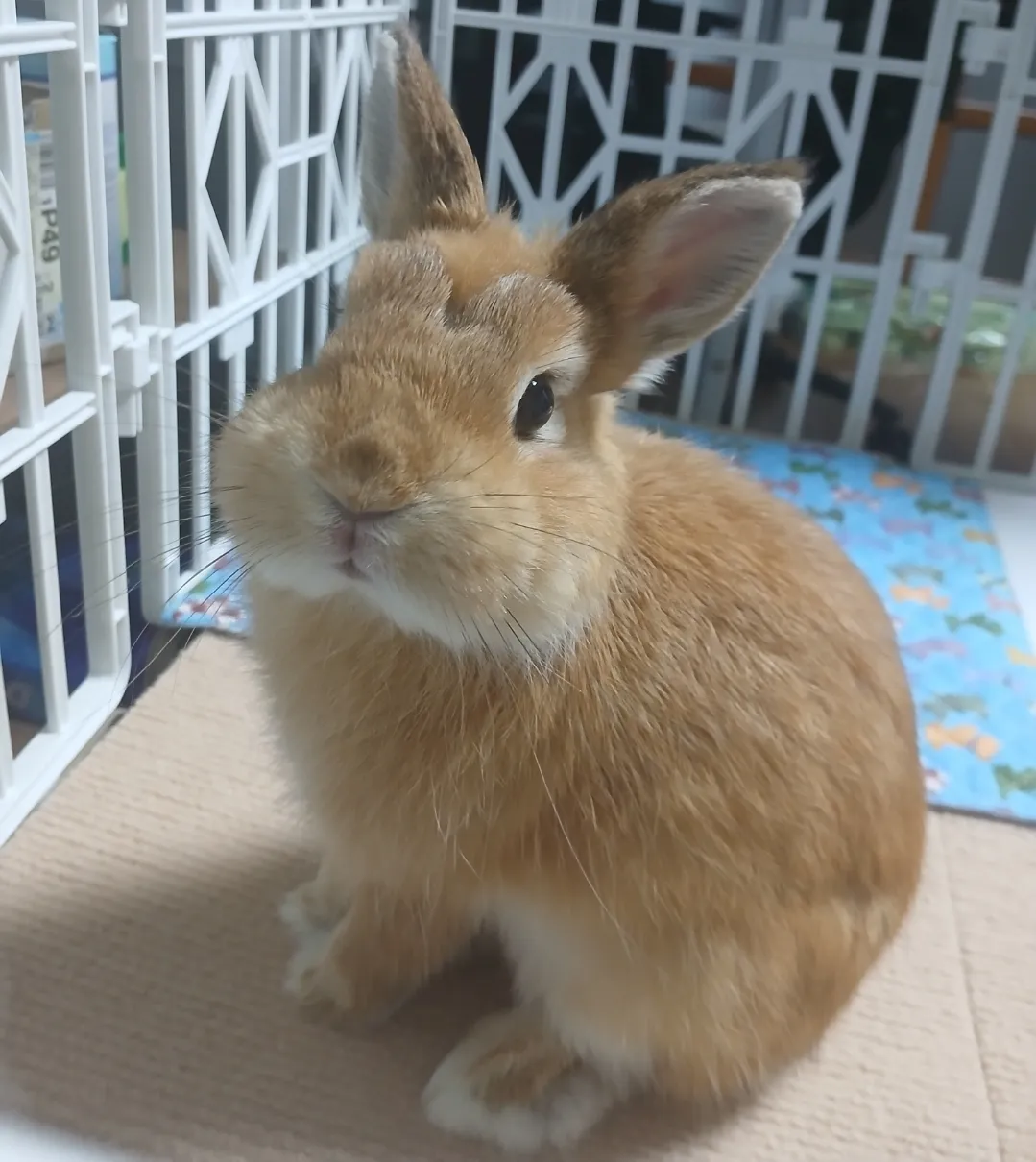
When I first got my Netherlands Dwarf rabbit, I made the same mistake most new owners make — I bought a litter box that was “rabbit-sized.” It looked fine in the store, but in practice, it was a complete disaster. After two years of experimenting, I finally have a setup that works. Here’s everything I learned.
Why Small Rabbit Litter Boxes Don’t Work
My first litter box was roughly a tenth of the size of what I use now. I figured a small rabbit needs a small box, right? Wrong.
Here’s the thing most new rabbit owners don’t realize: rabbits eat and poop at the same time. It’s not a bad habit — it’s just how their digestive system works. Because of this, the standard setup is to place a hay feeder directly above the litter box so your rabbit can munch while doing their business. That one arrangement, by the way, is how my rabbit litter trained himself in about a week — no training tricks required.
But when the litter box is tiny, the hay feeder takes up almost all the usable space. My rabbit could barely fit inside, let alone sit comfortably. He’d end up half-in, half-out, and droppings would land everywhere except the box.
The other problem? A small box holds very little absorbent material. I was cleaning it out every two days, and it still reeked. It was exhausting and honestly made me question whether I was doing something wrong.
What Size Litter Box Does a Dwarf Rabbit Need?
After going through several options, I landed on a large flat tray with a plastic grate cover included as a set: 500 × 600 × 30mm. I bought it on AliExpress for around $10–15.
To put that in perspective — my rabbit is a full-grown show-quality Netherlands Dwarf, about 800g (1.7 lbs). He’s roughly the length of a US size 10 shoe (275mm). So this litter box is massive compared to him. And that’s exactly the point.
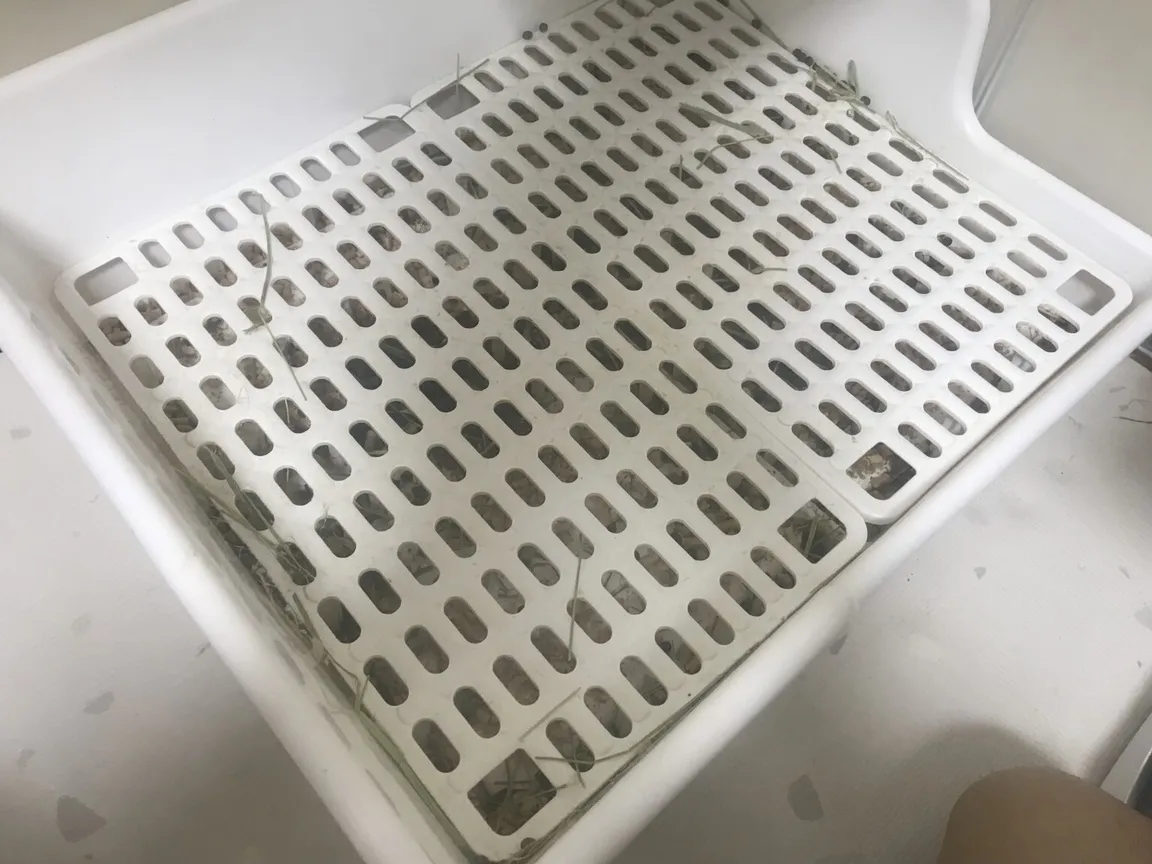
With a box this size, there’s plenty of room for the hay feeder on one side, and he still has space to comfortably sit, turn around, and stretch out. He actually uses it consistently now, which was never the case with the smaller box.
The general rule I’d recommend: go at least 3–4 times your rabbit’s body length for the litter box. Bigger is almost always better. You’re not wasting space — you’re preventing messes and reducing how often you need to clean.
Why I Switched From a Wire Grate to a Plastic Grate
My first litter box came with a metal wire grate on top. It seemed fine at first — urine passed through, droppings stayed on top, easy to clean.
But then I learned about sore hocks (pododermatitis) — a painful condition where a rabbit’s feet develop sores and inflammation from standing on hard or rough surfaces. Wire grates are one of the most common causes, especially for smaller breeds like Netherlands Dwarfs that don’t have much fur padding on their feet.
I immediately switched to a plastic grate, which is smoother and much gentler on his feet. The litter box set I bought on AliExpress came with a plastic grate included, which was one of the reasons I chose it. If yours comes with a wire grate, I’d strongly recommend replacing it with a plastic one.
Best Rabbit Litter Box Bedding: Pee Pads vs Wood Pellets
This was another lesson I learned the hard way.
I started with disposable pet pee pads at the bottom of the litter box. They seemed like the convenient option — just toss and replace. But rabbit urine has a strong, unmistakable ammonia smell, and the pads did almost nothing to contain it. Within a few hours, the smell would fill the room.
I switched to wood pellets (the kind sold as small-animal litter), and the difference was night and day. Here’s why they work so much better:
- They absorb moisture on contact and expand, trapping the urine inside
- They naturally suppress ammonia odor
- They’re cheap — a 5 kg bag costs about $15 and lasts me two to three months
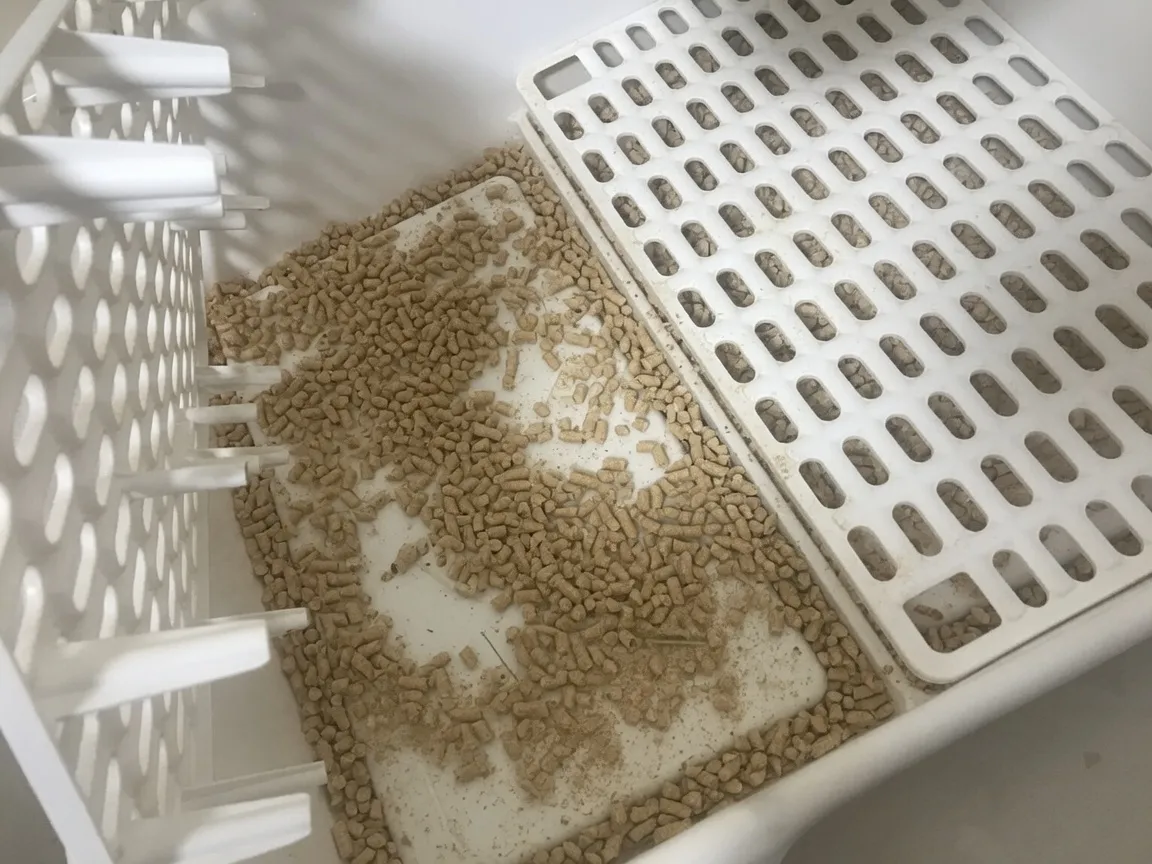
The wood pellets sit under the plastic grate. Urine passes through the grate into the pellets below, and my rabbit’s feet stay clean and dry at all times. And if you’re wondering whether wood pellets — especially pine ones — are actually safe for rabbits, I’ve written a full breakdown of safe and unsafe litters, with veterinary sources.
My Dwarf Rabbit Litter Box Setup
Here’s exactly what I use today, from bottom to top:
- Large flat tray (500 × 600 × 30mm) — the base
- Wood pellets — a 2–3cm layer covering the bottom
- Plastic grate — included with the tray set, keeps rabbit’s feet dry
- Hay feeder — mounted directly above one end of the tray (the feeder I use and why)
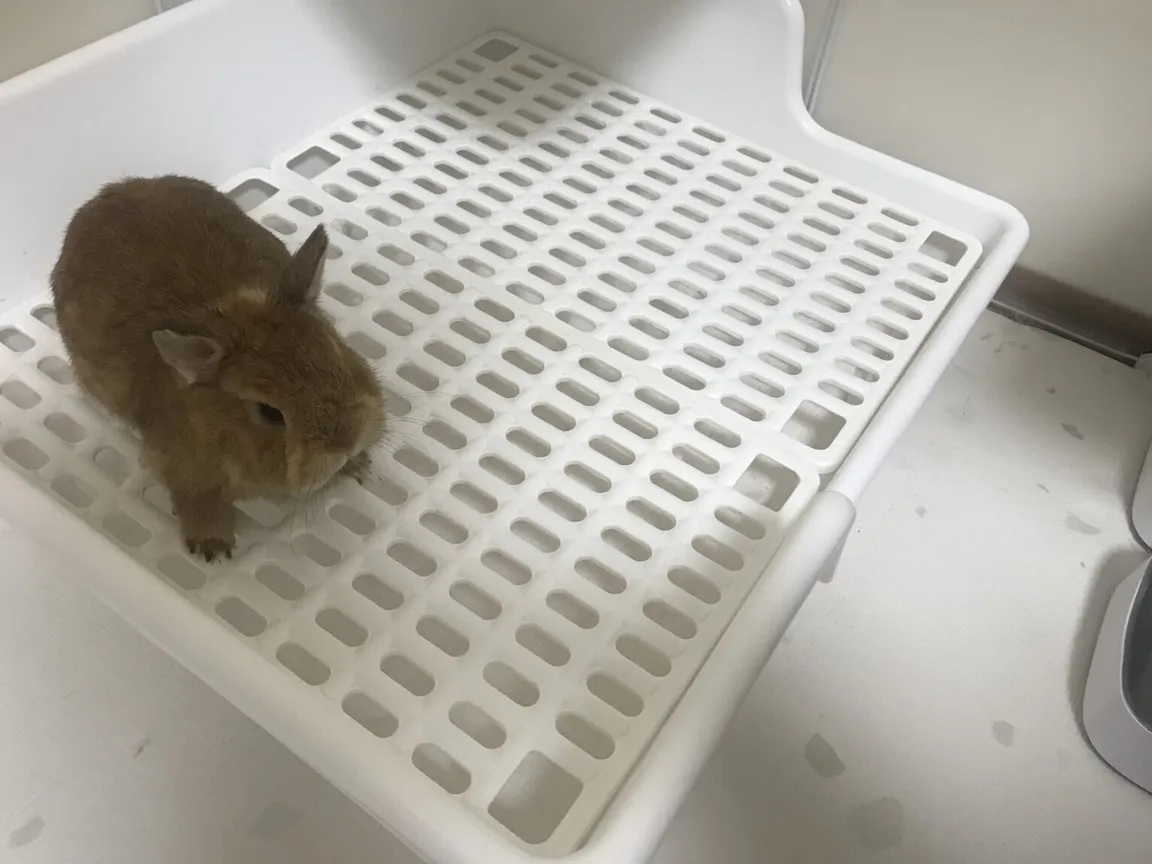
That’s it. No complicated products, no expensive accessories. Total cost was under $25, and it’s been the same setup for over two years with zero issues.
Why a Bigger Litter Box Is Better for Small Rabbits
If you have a dwarf rabbit and think a small litter box makes sense because they’re small — I get it. I thought the exact same thing. But after two years, here’s what I know for sure:
- Fewer accidents — your rabbit has room to actually use it properly
- Hay feeder fits without crowding the litter space
- Way less cleaning — I went from every 2 days to once every 2 weeks
- Better odor control — more pellets = more absorption capacity
- Happier rabbit — mine started using it consistently once he had enough space
Don’t size the litter box to your rabbit. Size it to your sanity.
Frequently Asked Questions
How often should I clean my rabbit’s litter box?
It depends heavily on your setup and your rabbit’s size. Here’s a rough guide:
- Small litter box + pee pads: daily, regardless of rabbit size
- Large litter box + wood pellets (medium/large rabbit): about once a week
- Large litter box + wood pellets (dwarf/small rabbit): every 1–2 weeks
My Netherlands Dwarf is only 800g, so he produces far less waste than a larger breed. That’s why I can get away with cleaning every 2 weeks. If you have a bigger rabbit — say a Holland Lop or a Mini Rex — you’ll likely need to clean weekly even with a large box and wood pellets. The key factors are box size, absorbent material, and how much your rabbit actually produces.
And if you’re wondering what that cleaning session actually looks like — I wrote up my full enclosure cleaning routine, step by step, including why litter training keeps it so small.
Can I use cat litter for my rabbit?
No. Clumping cat litter is dangerous for rabbits — they may ingest it while eating hay, and it can cause serious digestive blockages. Stick with wood pellets, paper-based bedding, or hay. Never use clay or crystal litter.
Do rabbits naturally use a litter box?
Rabbits are naturally clean animals and tend to pick one corner to do their business. Once spayed or neutered, most rabbits can be litter trained fairly easily. The trick is placing the litter box where they’ve already chosen to go, and making it comfortable enough that they keep using it.
This post is part of my complete rabbit setup — a tour of everything currently in his enclosure and why each item survived.