Here’s a detail about rabbit anatomy that took me embarrassingly long to learn: rabbits don’t have paw pads. Dogs and cats walk around on built-in cushioned soles — tough, bare, shock-absorbing pads. A rabbit’s foot has none of that. The sole is just skin covered in fur, resting directly on whatever surface you give him.
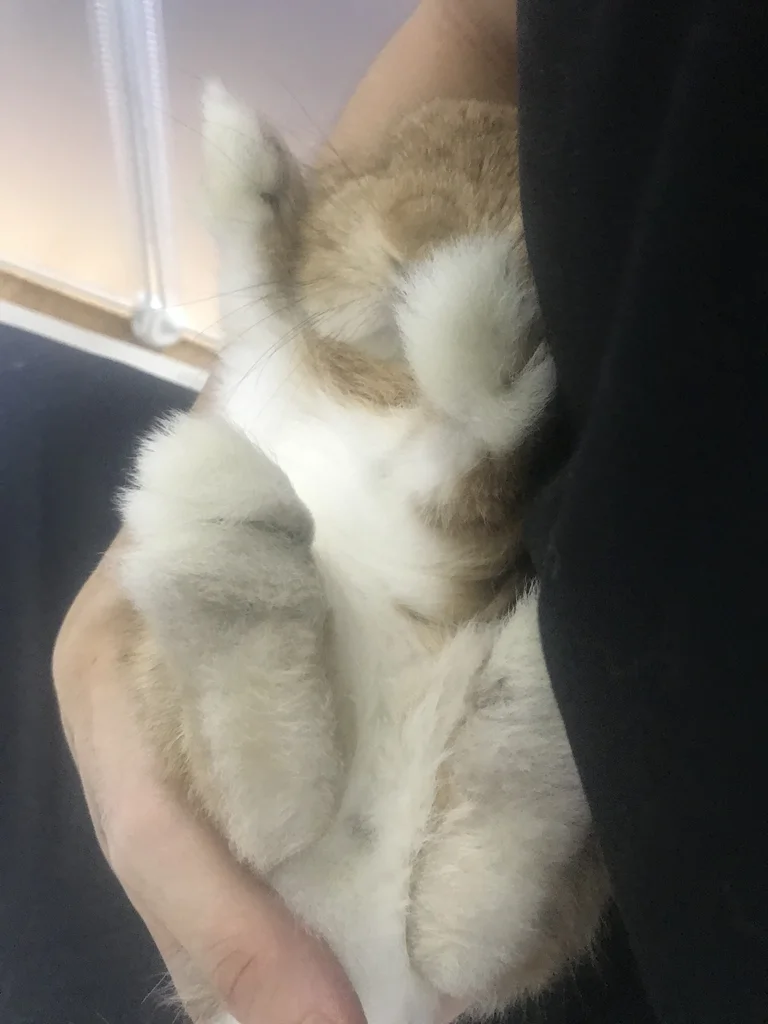
Once I learned that, the flooring in my rabbit’s space stopped being an aesthetic choice. My Netherland Dwarf now lives on cushion mats, and this post covers how we got there — through carpet tiles and a year of bare floor — including the foot condition every rabbit owner should know about before it shows up.
The problem: sore hocks
The condition that makes flooring a health topic is ulcerative pododermatitis, known to rabbit people as sore hocks — pressure sores on the soles of the hind feet that can break open and get infected. Per the Merck Veterinary Manual, it develops from pressure or trauma to the skin of the foot — classically from wire cage floors — followed by infection, and affected rabbits sit oddly on their front feet or tiptoe when they walk.
Two things in Merck’s writeup shaped my setup. First, the fix and the prevention are the same thing: a solid floor with clean, soft bedding to decrease pressure on the feet. Second — and this is the part I find people don’t know — it’s not only a wire-cage problem. Anything that concentrates pressure or abrades those unpadded, fur-covered soles day after day is working in the wrong direction. A rabbit spends his whole life standing on his floor; the floor is health equipment.
To be clear about my own experience, honestly: my rabbit has never had sore hocks. This is one of the few posts I’m writing about a problem I haven’t had — because the whole point of the cushion mats is to keep it that way.
What I used first: DIY carpet tiles
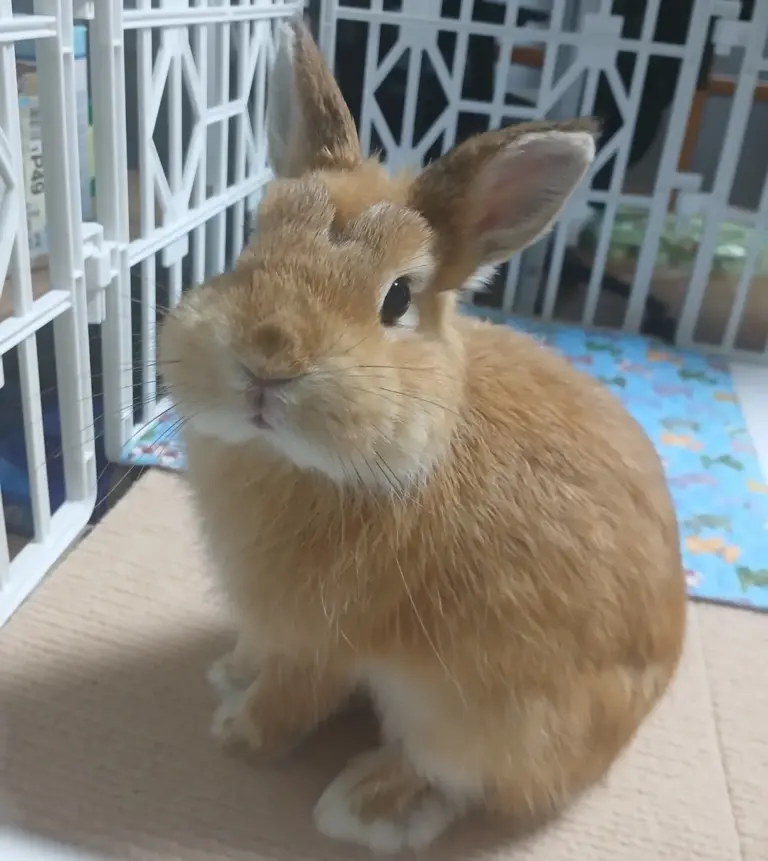
My rabbit’s flooring history tracks his housing history. After about three months in a starter cage, he moved into a wire grid pen — and that’s when flooring became my decision to make. My answer was those DIY square carpet tiles: the non-adhesive kind that grip the floor on their own, with a short fuzzy carpet-like surface on top, laid edge to edge like giant puzzle pieces. As budget flooring goes, they weren’t a bad instinct: non-slip for him, modular for me, and softer than bare floor.
The tile era lasted about two months, and I only have to look at old photos of him sitting on that beige tile floor to remember why it ended. Two reasons, one for each of us.
His reason: tiles are hard. Somewhere in my endless rabbit reading, I ran into the paw pad thing: rabbits don’t have them. That reframed the tiles instantly. A carpet tile has a fuzzy face, but it’s a thin skin over what is essentially hard floor — there’s no real give under an animal whose soles are fur over bone.
My reason: cleaning them was misery. That short carpet pile grabs rabbit fur and does not let go. Sweeping does nothing; the only thing that worked was a dedicated scraper, dragged across every single tile, one tile at a time. Fur removal wasn’t a chore, it was a project.
The bare-floor year
The tiles didn’t get replaced by better mats — they got replaced by nothing. When the grid pen came down, we went free roam for about a year, and his floor became my floor: plain bare flooring, room-wide.
That year is where the traction lesson comes from. More than once I watched him take off in a sprint, hit a corner, and nearly wipe out — legs scrambling for grip that fur-soled feet simply don’t have on smooth flooring. Knowing what I knew about his feet by then, those near-misses weren’t funny for long. Bare floor gives an unpadded animal nothing: no cushion when he’s resting on it all day, no grip when he’s cornering at full speed.
So when free roaming ended and I built him a proper enclosure, the floor was the first decision, not an afterthought: this time, the padding he doesn’t have would be padding I provide.
What I use now: cushion mats
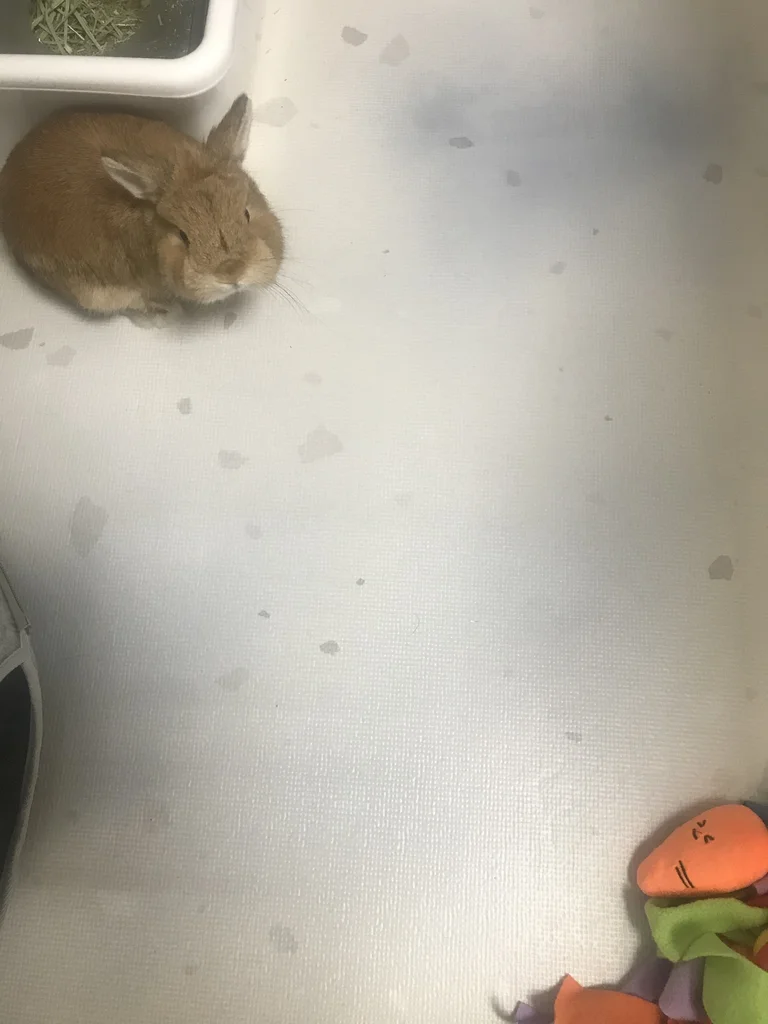
Today the entire floor of his enclosure is covered in cushion mats — genuinely padded mats, each about 80 by 110 cm (roughly 31 by 43 inches) and about 1.5 cm (just over half an inch) thick, with a slight give you can feel when you press a hand into them. He’s lived on them since the day the enclosure went up, and they’ve been the endpoint of the whole flooring journey.
What the mats deliver in practice:
- Pressure relief. Soft footing everywhere he stands, sits, and flops — exactly the “decrease pressure on the feet” prescription, applied preemptively.
- Traction. The scrambling-corner near-misses from the bare-floor year don’t happen on mats. He corners and sprints with confidence; you can see the difference in how he moves.
- Fur sweeps right off. This is the quality-of-life upgrade the tiles never gave me: on a cushion mat, shed fur sits on the surface instead of weaving itself in.
- Comfort behavior as evidence. The flops, the full stretches, the loafing — the relaxed postures all happen on the soft ground. A rabbit votes with his body.
Upkeep: about a minute, every week or two
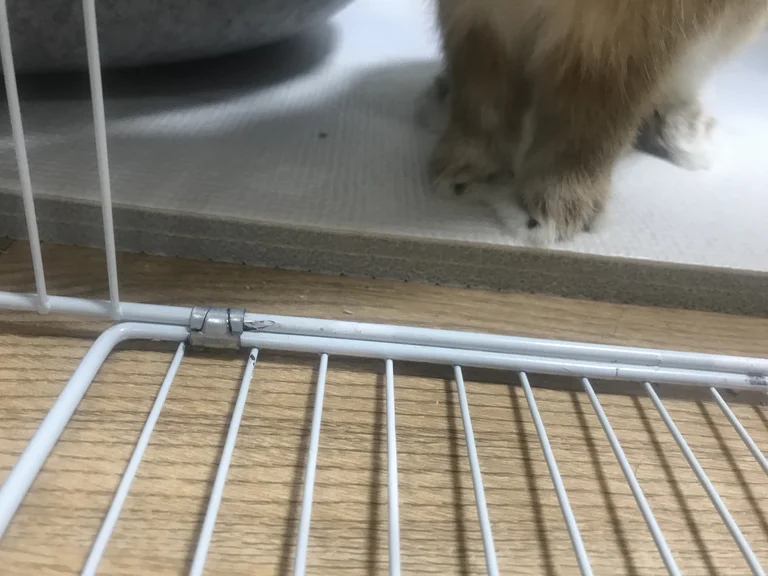
My whole mat routine, every one to two weeks: sweep the shed fur off with a broom (a mini cordless vacuum works too), spritz the same hypochlorous spray I use for the rest of his cleaning routine, and wipe it down. That’s it — no washing machine, no replacement schedule. The honest reason the mats stay that clean is that litter training keeps accidents at essentially zero, so the floor only ever collects fur, not messes.
The one tile that survived
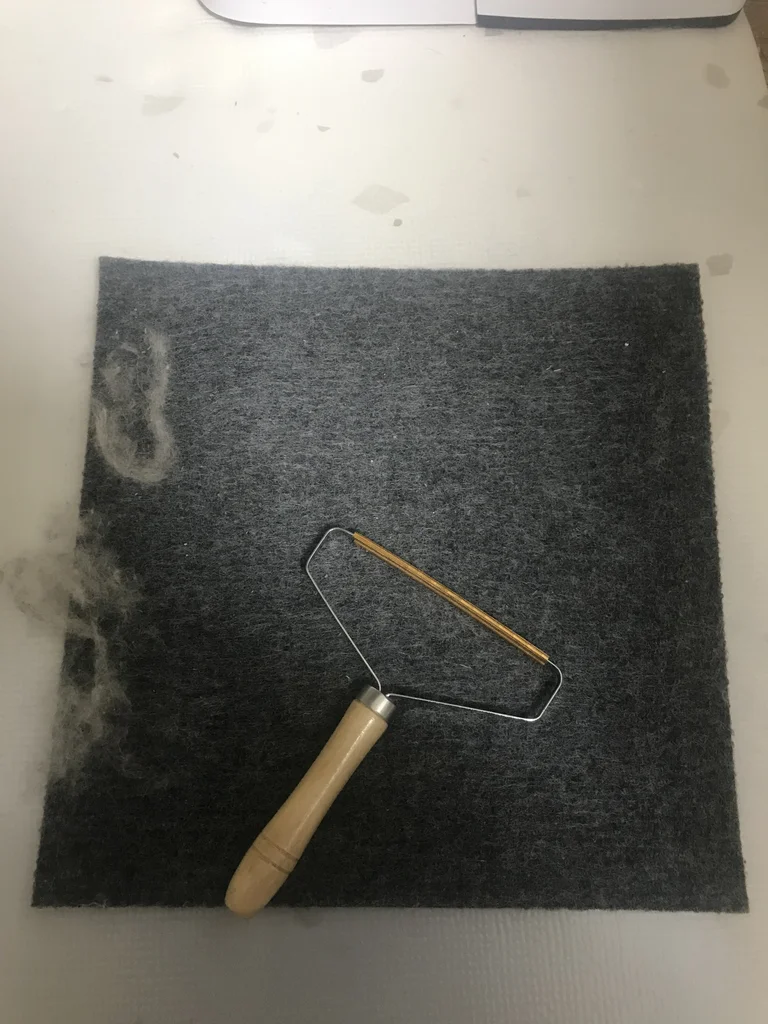
Full disclosure: one carpet tile is still on active duty. It lives on top of the platform inside his enclosure, where its grip and durability actually make sense — that’s a landing surface, not a living surface. I still have to scrape the fur out of it regularly, which is a nice recurring reminder of why the rest are gone.
It’s the same pattern as my pellet comparison, honestly: the loser doesn’t have to be trash. Demoted to the right job, it can even be good at it. Just don’t make a jump pad your floor.
What to check whatever flooring you pick
- Soft beats hard. Mats, rugs, fleece — the specific product matters less than getting an unpadded animal off unpadded ground.
- Non-slip beats smooth. If your rabbit ever scrambles on a corner, that’s your floor telling you something.
- Washable or cheap-to-replace. Accidents and chewing happen; flooring is a consumable, not furniture. (A solid litter habit keeps this to near zero.)
- Watch the chewing. Any mat is also a chewing candidate. Mine leaves the mats alone entirely; if yours gnaws foam or rubber, switch materials — swallowed mat bits trade a foot problem for a gut problem.
- Keep it dry and clean. Merck lists soiled, urine-soaked flooring among the contributing factors — soft but dirty defeats the purpose.
The bottom line
Flooring is the least glamorous purchase in rabbit care and one of the most consequential: your rabbit stands on it every hour of every day, on feet that evolution forgot to cushion. It took us three tries — hard tiles, a year of slippery bare floor, then proper cushion mats — to land on ground that works for both of us. Soft, clean, non-slip footing is cheap insurance against a genuinely nasty condition, and since the mats went in, his feet have stayed boring — in exactly the way you want feet to be boring.
This post is part of my complete rabbit setup — a tour of everything currently in his enclosure and why each item survived.