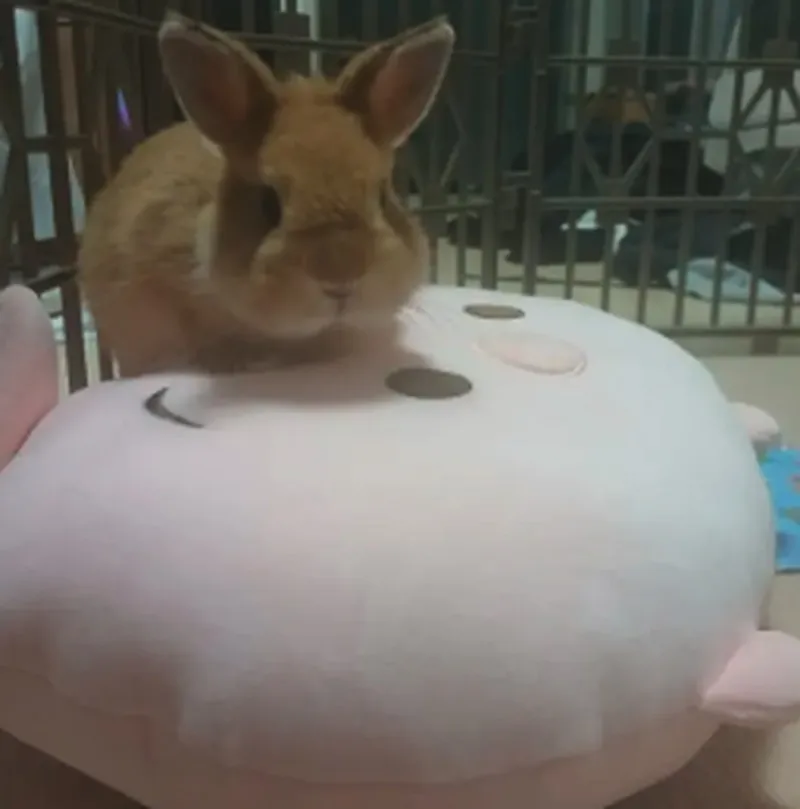
GI stasis — short for gastrointestinal stasis, and sometimes written as gastric stasis or ileus — is one of the most common causes of death in pet rabbits. The digestive system slows down or stops completely, and if you don’t catch it early, it can be fatal within 24 to 48 hours.
I’ve been raising a Netherlands Dwarf rabbit for over two years, and thankfully, he’s never had GI stasis. I think a big part of that is prevention — regular belly massages, unlimited timothy hay, and frequent grooming during shedding season. In this post, I’ll cover what GI stasis is, how to spot the signs, and the 3-step belly massage routine I do regularly to keep my rabbit’s gut moving.
What Is GI Stasis?
GI stasis (gastrointestinal stasis) is when a rabbit’s digestive system slows down or stops moving. Unlike cats, rabbits can’t vomit. So when something blocks or slows their gut — whether it’s fur, stress, dehydration, or lack of fiber — everything just stops.
The gut starts producing gas, which causes pain. The rabbit stops eating because of the pain. And because they stop eating, the gut slows down even more. It’s a vicious cycle that can turn fatal fast.
Early Signs of GI Stasis to Watch For
I haven’t had to deal with GI stasis myself, but these are the early warning signs and symptoms that every rabbit owner should know:
- Stopped eating hay — If your rabbit normally eats timothy hay throughout the day and suddenly ignores it completely, that’s a major red flag.
- No droppings, or very small/dark droppings — Healthy rabbit droppings are round, uniform, and plentiful. Any sudden change is a warning.
- Linked droppings appearing too often — If you keep finding droppings connected in a chain, like a string of small sausages, that means fur and poop are mixing together inside the gut. An occasional linked dropping is normal during shedding season, but if you’re seeing them frequently, it’s a sign your rabbit is ingesting too much fur and their gut is struggling to process it. This is an early warning that GI stasis could follow.
- Sitting hunched in one spot — Rabbits don’t show pain the way dogs or cats do. They go quiet and tense up. Note: don’t confuse this with loafing — the relaxed “bread loaf” position where a rabbit tucks their legs under their body. Loafing is normal resting behavior. The difference is that a loafing rabbit looks calm, their eyes may be half-closed, and they respond normally when you approach. A rabbit in pain sits hunched with a tense body, often pressed into a corner, and may not react to you at all.
- Loud teeth grinding — Not the soft grinding they do when content. Loud, deliberate grinding is a pain signal.
- Bloated or hard belly — If their stomach feels hard or swollen compared to normal, something is wrong.
If you notice two or more of these signs at the same time, take your rabbit to the vet immediately. Don’t wait and see — GI stasis can escalate within hours.
GI Stasis Posture: Pressing the Stomach to the Floor vs. Just Relaxing
One posture sends a lot of owners into a panicked search: a rabbit pressing its stomach flat against the floor. I get the worry — but context is everything here. My rabbit stretches out belly-down almost every day, and in more than two years he has never had a single gut problem. A relaxed stretch and a pain posture can look similar in a photo. In person, the details are very different.
A comfortable rabbit lying belly-down looks loose. The body is stretched long, the back legs often kick out behind, the eyes are soft, and when you walk over they respond like normal — ears swivel, the head comes up, and hay is still interesting. A rabbit hugging the floor because of gut pain looks tense instead: the body is compressed rather than stretched, they keep shifting position as if they can’t get comfortable, and — the biggest tell — food gets ignored and they barely react to you. Veterinary descriptions of GI stasis mention a “stretched or hunched body position”, but it never shows up alone — it arrives together with the warning signs above: no appetite, shrinking droppings, low energy.
Your ears can help you decide, too. The House Rabbit Society describes the sound of a healthy gut as quiet gurgling — and warns that in stasis it may be replaced by “very loud, violent gurgles” (gas moving around painfully) “or silence.” So a gassy rabbit whose stomach is suddenly growling loudly, or a normally audible belly that has gone completely quiet, combined with a tense posture and no appetite — that combination is a vet call, not a wait-and-see.
Why I Massage My Rabbit’s Belly Regularly
I started doing belly massages as a preventive routine after reading how common GI stasis is in dwarf rabbits. The idea is simple: gentle abdominal massage helps stimulate gut movement and can prevent things from slowing down in the first place.
I do this a few times a week — usually while we’re hanging out in the evening. It’s become part of our bonding routine. My rabbit is used to it now and actually relaxes during the massage. Here’s my 3-step method.
Step 1: Calm Them Down
Don’t just grab your rabbit and start touching their belly. Rabbits are prey animals — sudden handling stresses them out. Start by sitting next to them and gently stroking from their head down to their back. Do this for a few minutes until you feel their body relax.
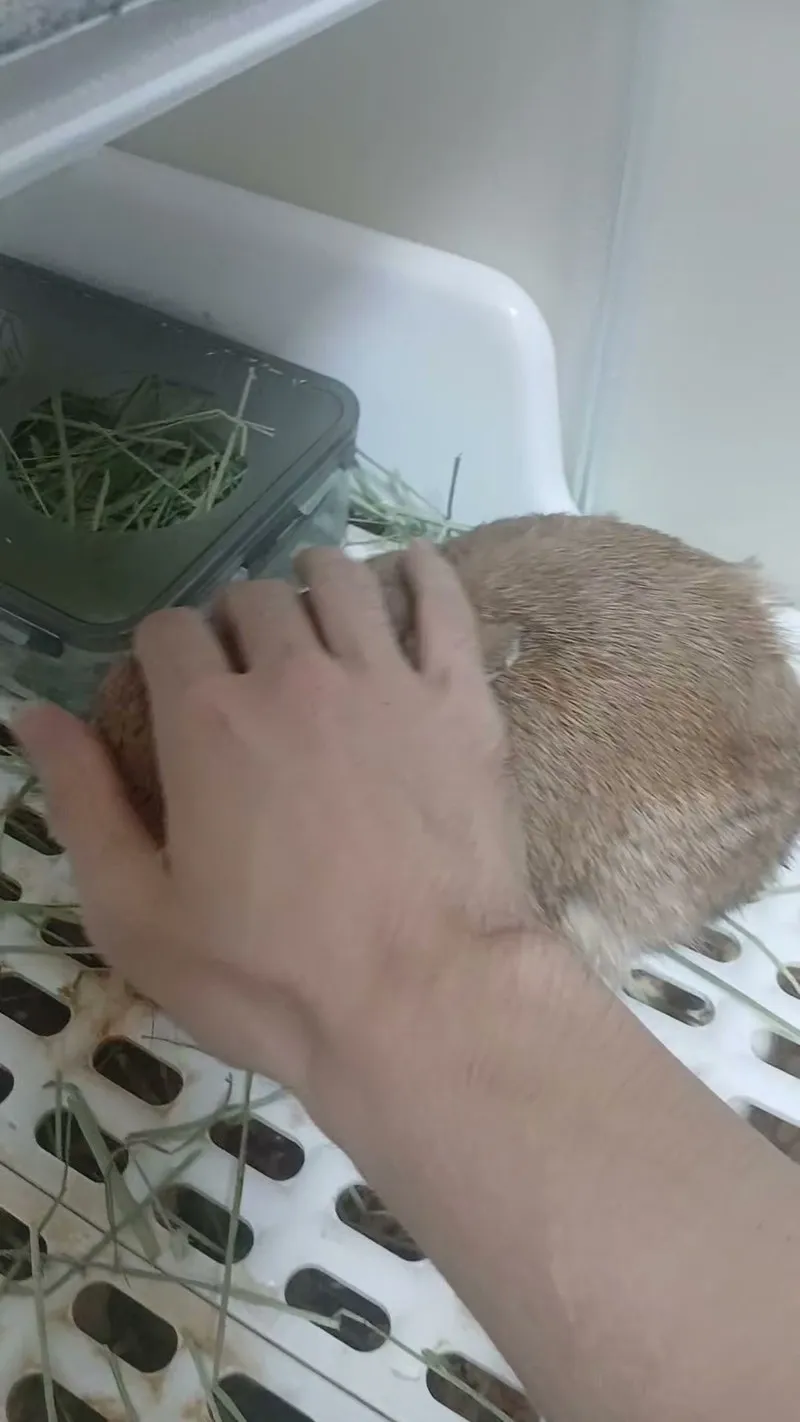
Step 2: Belly Massage on the Ground
With your rabbit still on the ground (or on your lap), use your fingertips to make slow, gentle circular motions on their lower abdomen. The pressure should be very light — think of it like petting, not pressing. If your rabbit flinches or kicks, you’re pressing too hard. Do this for about 5 minutes.
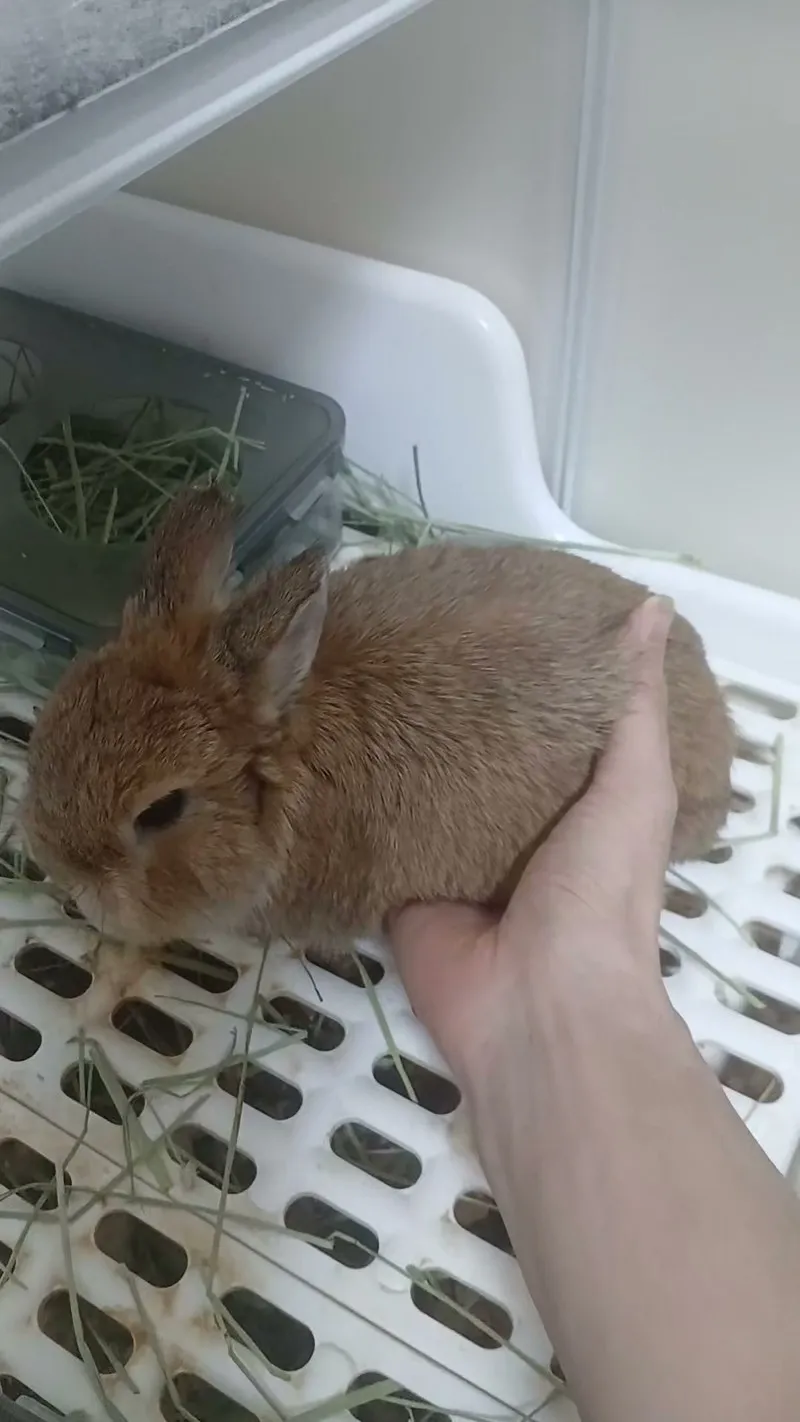
Step 3: Supported Belly Massage
Once your rabbit is comfortable, you can go a step further. Use one hand to gently support their front legs and head area, and with the other hand, slightly lift their lower belly and massage with slow circular motions. This gives you better access to the lower abdomen where gas and blockages tend to build up.
This step takes some practice — not every rabbit will tolerate being held this way at first. Build up to it over multiple sessions. My rabbit was nervous the first few times but now stays completely relaxed.
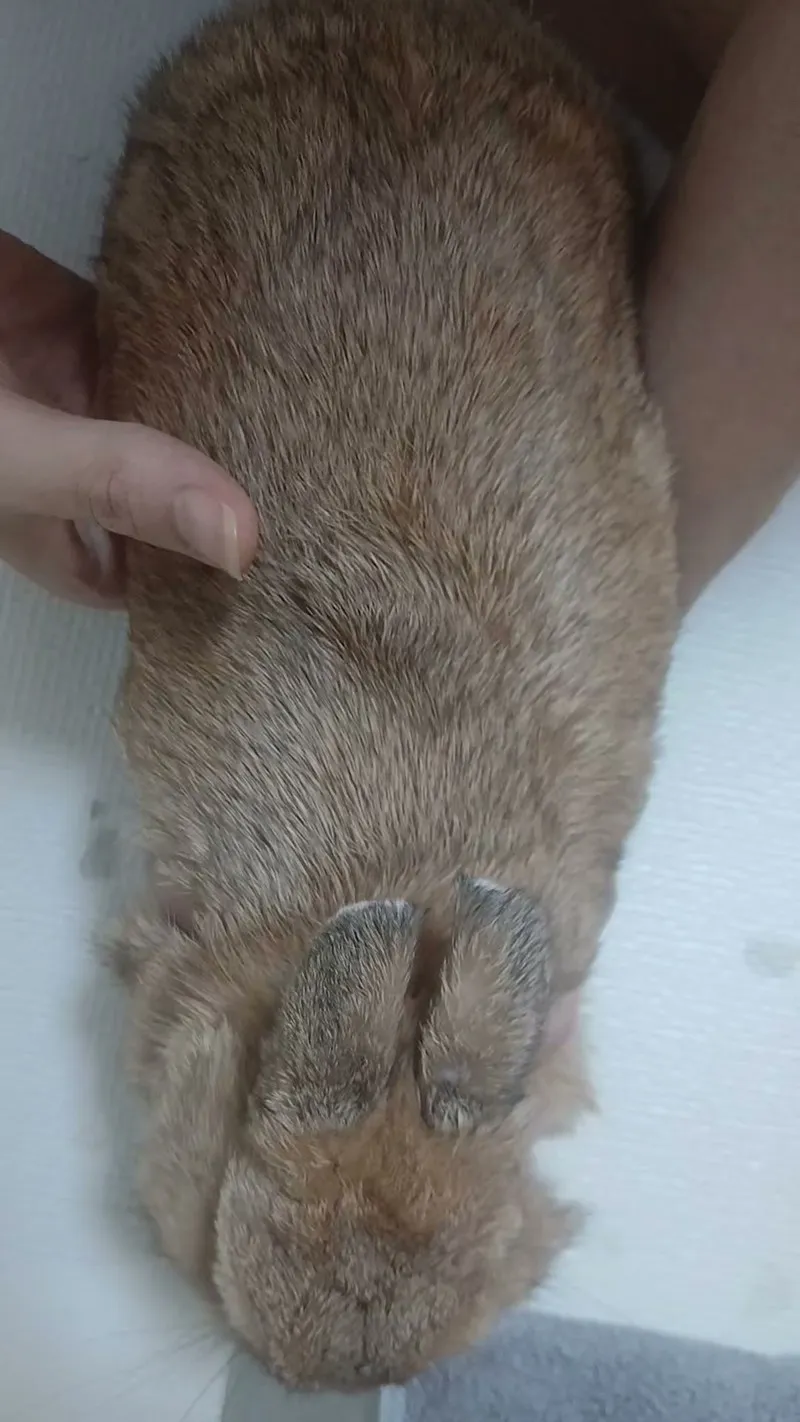
The whole routine takes about 10 minutes. That’s it — no special technique, just consistent, gentle contact.
The Biggest Risk Factor: Fur
From everything I’ve read and heard from my vet, the most common trigger for GI stasis in house rabbits is ingested fur. Rabbits groom themselves constantly, and unlike cats, they can’t cough up hairballs. The fur just sits in their gut, and if enough accumulates, it clumps together and slows everything down.
This is why grooming is so important — especially during shedding season. I use two methods:
- Brushing — I brush my rabbit every other day during shedding season. I use three different brushes: a small one for the face, a slicker brush for the body, and a steam brush for deep undercoat removal.
- Petting by hand — Even without a brush, simply running your hands along your rabbit’s fur regularly picks up a surprising amount of loose hair. I do this every time I interact with my rabbit. It’s not a substitute for proper brushing during heavy shedding, but as a daily habit, it makes a real difference in how much loose fur your rabbit ends up swallowing.
Getting the loose fur off before they swallow it is the easiest prevention there is.
How to Prevent GI Stasis
Here’s what I do to keep my rabbit’s gut healthy:
- Unlimited timothy hay, always — The hay feeder is never empty. The long fibers keep the gut moving and help push any ingested fur through. Here’s my full guide on timothy hay. Even the pellet bowl plays a role here — fiber content is the reason I switched pellet brands. The whole fiber-first menu is in my rabbit’s complete diet.
- Regular belly massage — A few times a week, about 10 minutes. It stimulates gut movement and doubles as bonding time.
- Brush and pet frequently — Brushing every other day during shedding season, plus daily hand-petting to catch loose fur.
- Papaya and pineapple treats — These contain enzymes (papain and bromelain) that may help break down ingested fur. I give small freeze-dried pieces a few times a week during shedding season.
- Water bowl, not just a bottle — A bowl encourages more drinking. More water means smoother digestion.
- Check droppings daily — Monitor their poop for changes in size, shape, or quantity. If you start seeing linked chain droppings frequently, increase grooming immediately.
When to Go to the Vet
Belly massage and prevention are great, but they’re not substitutes for veterinary care. Take your rabbit to the vet immediately if:
- No droppings for more than 12 hours
- Complete refusal of food AND water
- Belly feels very hard or extremely bloated
- Any signs of pain (teeth grinding, hunched posture) that don’t improve
Don’t just call — bring them in. GI stasis can go from “something seems off” to life-threatening in less than a day. Minutes matter.
Final Thoughts
I consider myself lucky that my rabbit hasn’t experienced GI stasis in over two years. But luck isn’t a strategy — the reason he’s stayed healthy is consistent prevention. Unlimited hay, regular grooming and petting, and belly massages a few times a week. It takes about 10 minutes of effort and could save your rabbit’s life. And the stakes run longer than one bad week — when I looked into how long rabbits live, the gut turned out to be the thing that quietly decides whether a rabbit reaches the far end of the 8-to-12-year range.