can-you-litter-train-a-rabbit
—
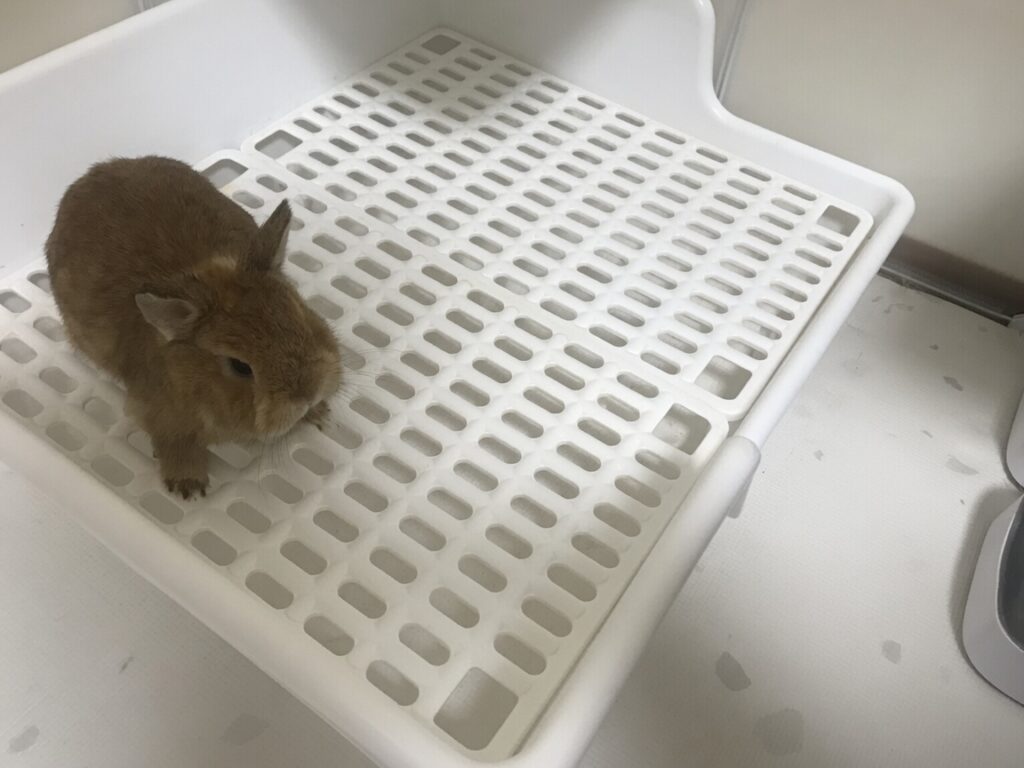
Can you litter train a rabbit? Yes. Completely, reliably, to the point where “cleaning the cage” nearly stops being a chore. My Netherland Dwarf has used a litter box since his first week home, over two years ago.
But if you came here for a training method, I have a confession that might be more useful than any method: I didn’t train him. No moving droppings into the box, no treats for good aim, no following him around with paper towels. The entire “training program” was one sentence from the pet shop owner on the day I brought him home — and a setup that did the rest by itself.
The one sentence that did all the work
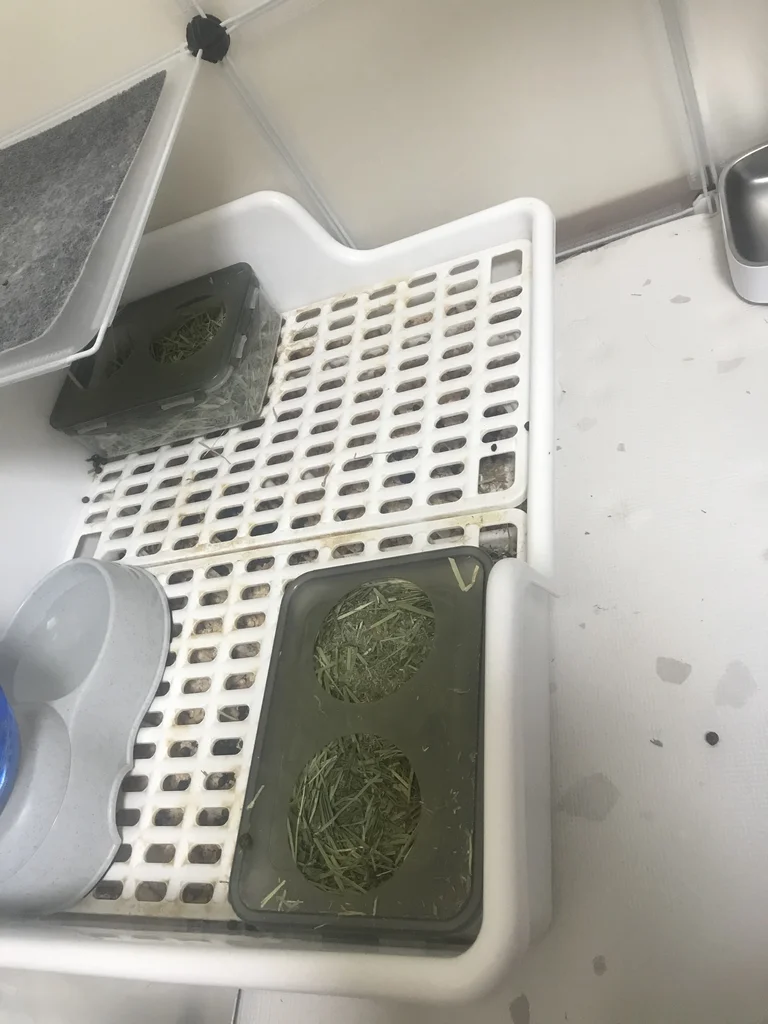
On day one, the shop owner gave me a single piece of setup advice: rabbits poop while they eat — so put the hay feeder directly above the litter box.
That was it. I set the box down in the spot I’d picked inside his cage, mounted the hay feeder above it, and let a baby rabbit figure out the rest. He hopped in to eat, and everything a rabbit does while eating happened in the box. Within about a week, it wasn’t a coincidence anymore — it was a habit. Urine and droppings, in the box, from the start.
I only learned later that this is textbook advice. The House Rabbit Society’s litter training guide puts it almost word for word: “Rabbits like to munch while they potty. Place a hay rack or pile of fresh hay at one end of the box or just outside it.” The shop owner wasn’t sharing a quirky trick. He was handing me the single highest-leverage move in rabbit care, and I didn’t even know it.
Why this works when “training” isn’t really possible
You can’t train a rabbit the way you train a dog. There’s no command, no leash correction, and punishment does worse than nothing — a rabbit just learns to fear you. What you can do is arrange the environment so that the rabbit’s own instincts produce the behavior you want.

Rabbits eat and eliminate at the same time — it’s just how their digestive system runs, and it’s the reason the standard litter setup puts hay above the box. Park the food where you want the bathroom to be, and the rabbit “trains himself.” It felt less like teaching an animal and more like designing a room so there was only one sensible place to go. Every photo I have of him eating hay is, if you look closely, also a photo of him standing over his litter box. That’s the method.
One honest caveat: I don’t know how much credit belongs to the setup alone. In those early months he lived in a cage, not roaming the whole apartment, so the litter box was never more than a few hops away. Maybe the small territory helped the habit set faster — I can’t separate the two. But the setup was the only thing I did, and the habit has survived every enclosure change since.
Everything I didn’t do
Litter training guides list a lot of techniques. For the record, here’s what my rabbit’s training actually involved:
- Moving stray droppings into the box to “teach” him? Never did it. There were barely any stray droppings to move.
- Letting the rabbit pick the corner, then putting the box there? The opposite. I picked the spot; he adapted. (To be fair, by the time we rearranged his space, the box habit was already solid — a rabbit who’s committed to the box will follow the box.)
- Treat rewards for good bathroom behavior? None. The hay above the box is the reward, built into the architecture.
And one more piece of honesty, because it cuts against my own story: my rabbit settled in about a week as a baby — and babies are supposed to be the hard case. The House Rabbit Society notes that older rabbits are actually easier to litter train than young ones. So if your baby rabbit is taking longer than mine did, nothing is wrong with your rabbit. Set up the box-plus-hay arrangement, give it time, and let the instinct do its slow work.
Toilet training, house training, potty training — same question
People ask this a dozen ways — can you toilet train a rabbit, can a rabbit be house trained, how do you potty train a bunny — and for rabbits they all collapse into the same thing: litter box training. There is no separate toilet to train for; the litter box is the toilet. And there’s no dog-style house training either, because a rabbit never needs to be walked outside — a “house trained” rabbit just means the box habit holds everywhere the rabbit is allowed to roam.
So whichever phrasing brought you here, the answer is the same yes, by the same method: hay above the box, box where the rabbit lives, instincts doing the rest. If a guide sells “rabbit toilet training” as something beyond a litter box setup, it’s renaming this exact arrangement. What “trained” actually looks like day to day — including the one instinct the box doesn’t switch off — is the next section.
What “fully litter trained” looks like after two years
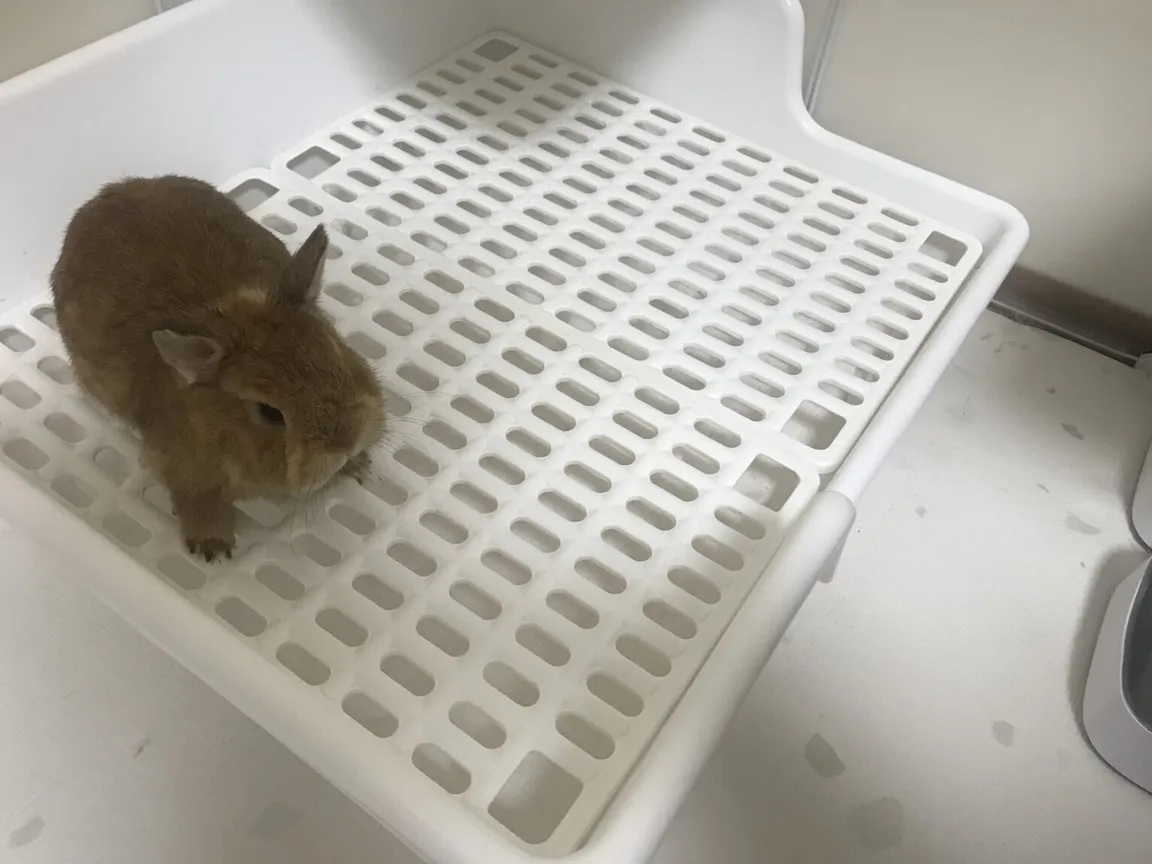
Here’s the part most guides skip: even a perfectly litter trained rabbit is not a 100% rabbit. Two years in, this is what reliable actually means in my home:
Urine: near-perfect, not perfect. Maybe two or three times a month, he pees outside the box — no pattern to it, just occasionally on the floor mat. I clean it up, say nothing, and move on. Scolding a rabbit accomplishes nothing — he can’t connect it to the act, and he can connect it to me. The misses stay rare, and that’s the deal.
Droppings: an occasional toll. Once in a while a pellet or two drops as he hops out of the box — not a decision, just physics. VCA’s veterinary guide describes exactly this: rabbits are “fairly reliable with their urinary habits in the litter pan,” but “will often unconsciously leave a trail of hard, dry stool pellets as they hop along.” Rabbit droppings are dry, odorless, and take three seconds to pick up and toss into the box. This is the entire cost of living with a litter trained rabbit.
Marking is a different animal. During his free roam year, my flawlessly box-trained rabbit peed on my bed — repeatedly. That wasn’t training failure; that was territorial marking, a separate instinct that a litter box doesn’t switch off. If your trained rabbit suddenly pees on your bed or couch, you don’t have a litter problem. You have a rabbit with opinions about territory.
Why is my litter trained rabbit pooping outside the box?
This is the other half of the search traffic — how to train a rabbit not to poop everywhere, rabbit poop training, litter trained rabbit suddenly pooping outside the box. After two years of living with a trained rabbit, my honest answer: there is no separate poop training. There’s the box habit you just read about, and three different reasons droppings show up outside it — each with a different fix, and only one of them has anything to do with training.
A few stray pellets a day is the normal tax. That’s the VCA point from the section above — even a reliable rabbit unconsciously drops the occasional pellet on the way out of the box. The House Rabbit Society puts it flatly: “Rabbits will never have 100% perfect litter habits.” If you’re finding one or two dry pellets and sweeping them up in seconds, nothing is broken, and no amount of training will change it.
Poop suddenly everywhere is territory, not toilets. According to the same HRS guide, a new pet, a rearranged room, or a move can make even a trained rabbit feel the need to re-mark — droppings (and sometimes urine) start appearing in places they never did before. The fix isn’t retraining; it’s neutering if that hasn’t happened yet (next section) and letting the rabbit re-settle into the changed territory. I can’t offer a war story of my own here — ours was neutered before the hormonal phase ever arrived, and his box habit survived every enclosure change — but the pattern is well documented.
Poop right beside the box means check the hardware — or the rabbit. Half-in, half-out misses were the one real problem we ever had, and it was the box’s fault, not his (that story is two sections down). And one non-training cause worth knowing: if the droppings outside the box are getting smaller, fewer, or stopping entirely, that’s not a litter issue at all — that’s a gut warning sign. See my GI stasis guide for exactly what to look for.
The neutering asterisk
Every litter training resource tells you to spay or neuter first, because intact rabbits mark territory too much for any box habit to hold. Veterinary sources back this up — as the UK veterinary group CVS puts it, castration doesn’t prevent urine spraying entirely, but makes it much less likely.
I can’t give you a before-and-after story, and the reason is the point: we neutered him preemptively, before the hormonal behaviors ever arrived. No spraying phase, no territorial droppings phase — we skipped the entire chapter. If you’re starting with an intact adult rabbit who sprays, expect neutering to be step one of litter training, not an optional extra.
When the box was the problem, not the training
There was one rough patch in this otherwise easy story, and it’s instructive because of what it wasn’t. His first litter box was tiny — and with the hay feeder mounted over it, there was barely room for the rabbit himself. He’d aim for the box, sit half-in half-out, and droppings would land on the floor anyway. On top of that, a small box holds so little litter that I was cleaning it every two days.
Not once was the habit the issue. He knew exactly where the bathroom was; the bathroom just didn’t fit him. Swapping in a much bigger box fixed everything overnight — same rabbit, same “training,” better hardware. If your rabbit seems half-trained, check the equipment before you blame the animal.
The payoff: cleaning almost disappears
The reason litter training is worth an entire post is what it buys you. When everything a rabbit produces lands in one removable box, cleaning the enclosure collapses into one small task every week or two. The box absorbs the whole mess; the floor stays clean by default. It’s the single highest-return effort in all of rabbit care — except in my case it wasn’t even effort.
Two years later, the habit runs on autopilot. He’ll be playing at the far end of his enclosure, and when nature calls mid-play, he stops, hops up into the litter box, takes care of business, and goes right back to whatever he was doing. Nobody taught him that. A pet shop owner taught me one sentence, and the hay feeder above the box has been doing the training every day since.