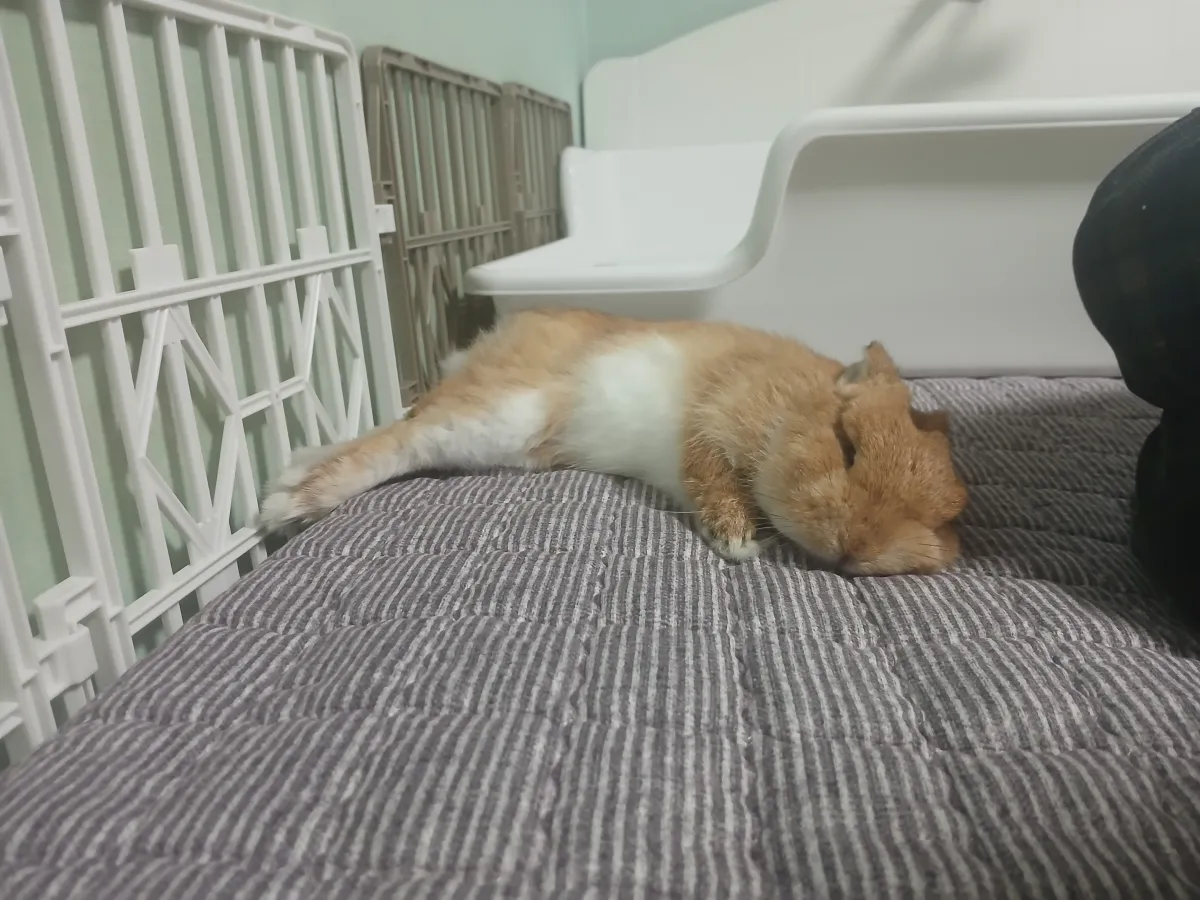
For about a year — from late 2024 through most of 2025 — my Netherland Dwarf was a free roam rabbit. No cage, no pen — the room was his. We didn’t start there — he outgrew a starter cage and a DIY grid pen first — but free roaming was supposed to be the destination. If you’ve read anything about free roaming, you know it’s usually presented as the enlightened endgame of rabbit care, and for that year I would have agreed.
Then I built him an enclosure and moved him in. I’d still make the same call today — and he’s doing great. This post is the honest version of both sides: what free roaming genuinely gave us, what it actually cost, and why “cage or free roam” turned out to be the wrong question.
What free roaming got right
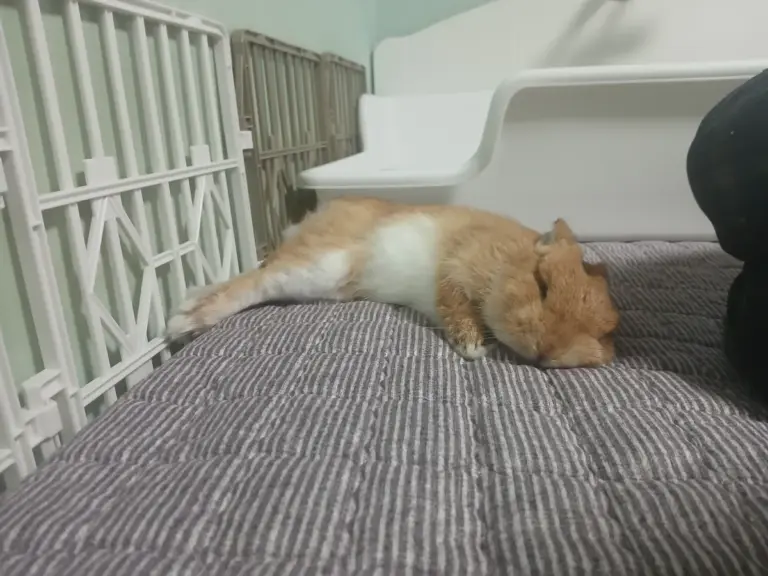
I want to be fair to free roaming, because the good parts are real:
- Exercise, constantly. A free rabbit runs, binkies, and stretches whenever the mood hits — not when the schedule says so.
- Personality on full display. You learn your rabbit’s body language fast when he lives in your space instead of beside it.
- Bonding by proximity. A rabbit who shares your floor becomes part of your day in a way an enclosure rabbit has to be invited to be.
- You can sleep together. This one deserves its own line. He’d hop up onto the bed, hand out rabbit kisses, bounce around the duvet, and settle in. Waking up next to a rabbit is absurdly good — and if I’m honest, I still miss it some nights. For some owners this single item outweighs half the downsides list, and I get it.
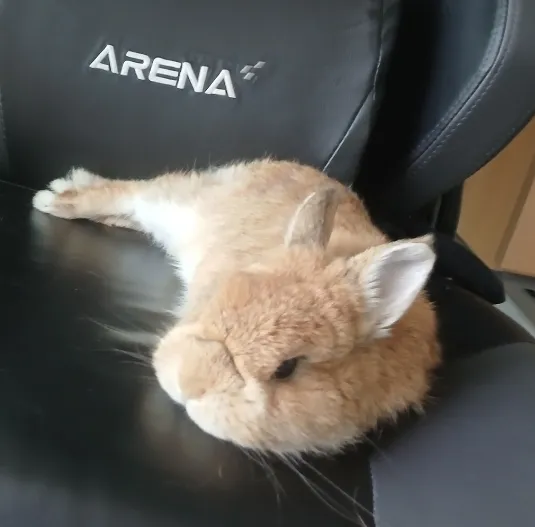
One prerequisite made all of this livable: litter training. My rabbit was reliably litter box trained, and I’d call that non-negotiable before anyone tries free roaming at all.
What it actually cost
The downsides of free roaming build up quietly, and after a year they had stacked into a real list. Mine had four items on it — three annoyances and one fear.
- Fur turned the whole home into the enclosure. When the rabbit’s habitat is your entire space, so is his shedding. Every cleaning session meant cleaning everything, and I’ll be honest: I got tired of it.
- The bed paid a urine tax. Here’s what litter training doesn’t cover: scent marking. Rabbits love having their own smell on their territory, and a fully litter-trained rabbit will still pee on prime real estate — like the bed we shared — to claim it. Mine did, regularly. I ended up layering a waterproof sheet and pee pads underneath the bedding, and blanket laundry became an every-two-to-three-days event, because nothing survives that schedule unprotected. So yes: the sleeping-together dream from the list above ships with a laundry subscription.
- The chewing had a repair bill. He went through my internet cable — I had a technician out because the connection had died at rabbit height. He also killed a phone charger. None of it was expensive individually; all of it was recurring. (The full wire-chewing story — and the fix that ended it.)
- Then came the fear. I read another rabbit owner’s account of their rabbit biting into a live cable, burning its mouth, and needing veterinary treatment. My rabbit wasn’t hypothetically a cable-chewer — he had a track record. That post was the tipping point: this wasn’t a cleanup problem anymore, it was a safety problem.
The switch: not a cage — a territory
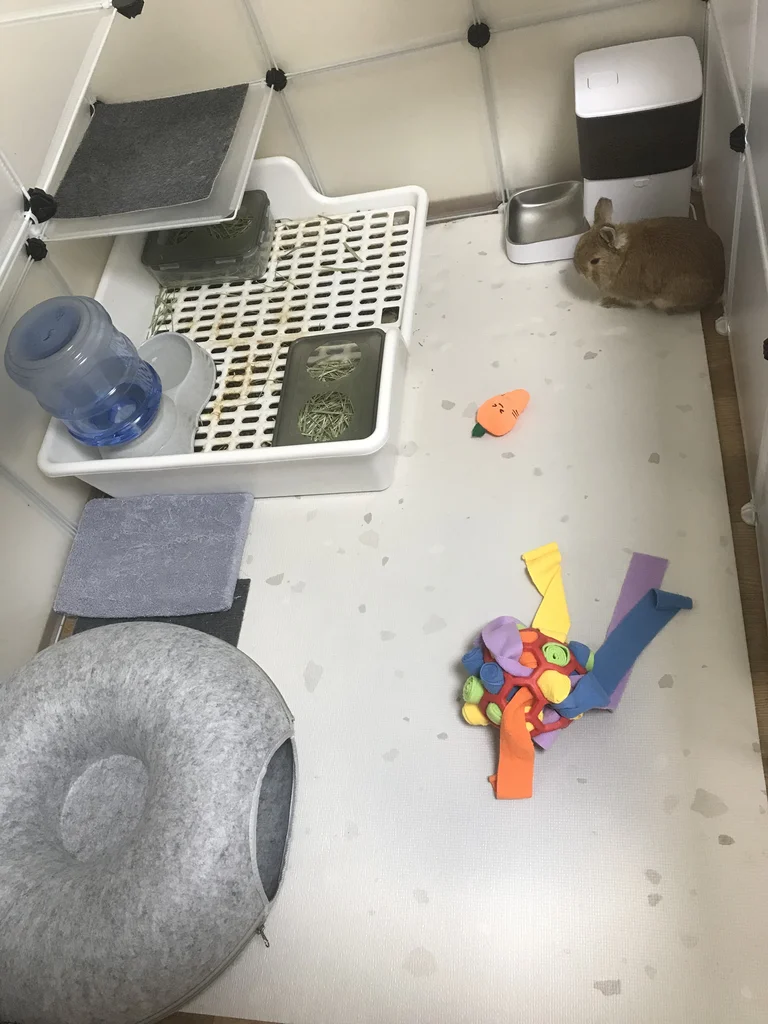
What I moved him into was not the sad wire cage the free roam movement rightly criticizes. It’s a large DIY enclosure built from opaque square panels — his own room within the room, with his litter box, hay feeder, water dispenser, and space to stretch and flop. (The enclosure build deserves its own post, and it’s coming.)
Here’s the part I didn’t expect: he didn’t mind. At all. I braced for days of sulking; he adapted basically overnight — rabbit adaptability is seriously underrated. Rabbits are territorial animals, and a defined, predictable territory of his own isn’t a punishment — arguably it’s more aligned with how rabbits naturally live than having an entire human room to patrol.
And moving him into an enclosure didn’t reduce our time together — it just moved the venue. The enclosure is big enough for a human to step inside, so day to day, I go to him: I climb in and play with him in his own territory constantly. I’ve never actually counted, but it’s many times a day, every day. He also still gets out — every week or two I open the door and we spend half an hour together on the open floor. Full transparency about who the outside time is for: mostly me. He gets a change of scenery; I get to hang out with my rabbit outside his room. Both sides of the deal seem satisfied.
So which should you choose?
After doing both for extended periods, my honest answer: it depends on which problems you’d rather own.
- Free roam fits if your space can truly be rabbit-proofed, nobody in the household minds fur as a lifestyle, and your rabbit is litter trained to a high standard. And it’s the only way you get the sleeping-together life — for some owners, that’s reason enough on its own.
- A quality enclosure fits if you want a defined, safe territory with predictable cleanup — without giving up floor time. Enclosure life doesn’t mean confinement life; it means the default state is safe.
The false choice is “free roam or a tiny cage.” The real spectrum runs from tiny cage (don’t) to spacious enclosure to supervised hybrid to full free roam — and after a year at the far end, I found our best life one notch back from it.