Every rabbit feeding guide converges on roughly the same chart: mostly hay, a measured scoop of pellets, and a daily salad of leafy greens. The UK’s Rabbit Welfare Association puts numbers on it — 85% hay, 10% leafy greens, 5% pellets.
My rabbit has been missing the 10% for two years. Not because I didn’t offer it. I bought the greens, chopped them small, presented them like a room-service tray — and he looked at me, looked at the vegetables, and went back to his hay.
So this post is the full, honest menu of what my Netherland Dwarf actually eats every day, why there isn’t a single vegetable on it, and what the veterinary sources really say about whether that’s a problem. (Short version: the part of the chart he refuses turns out to be the negotiable part. The part he loves is the one that matters.)
The whole menu, at a glance
This is everything that goes into my rabbit, every day, with nothing left out:
- Timothy hay, first cutting — unlimited. This is the actual diet. Everything else is a rounding error.
- Pellets — a small measured portion daily. Oxbow and Genesis are the two brands in rotation; for a dwarf his size that’s about 12 grams a day, not the quarter-cup a bigger rabbit would get.
- One piece of freeze-dried sugarcane every few days. His candy, honestly labeled as candy — recently downgraded from daily.
- Fresh water, always available.
- Vegetables — none. The story of why is most of this post.
That’s it. No salad bowl, no fruit plate, no forage mix. If the shortness of that list makes you nervous, it made me nervous too — which is exactly why I went digging through what actual veterinary sources require, versus what rabbit-internet assumes.
Hay first: the one non-negotiable
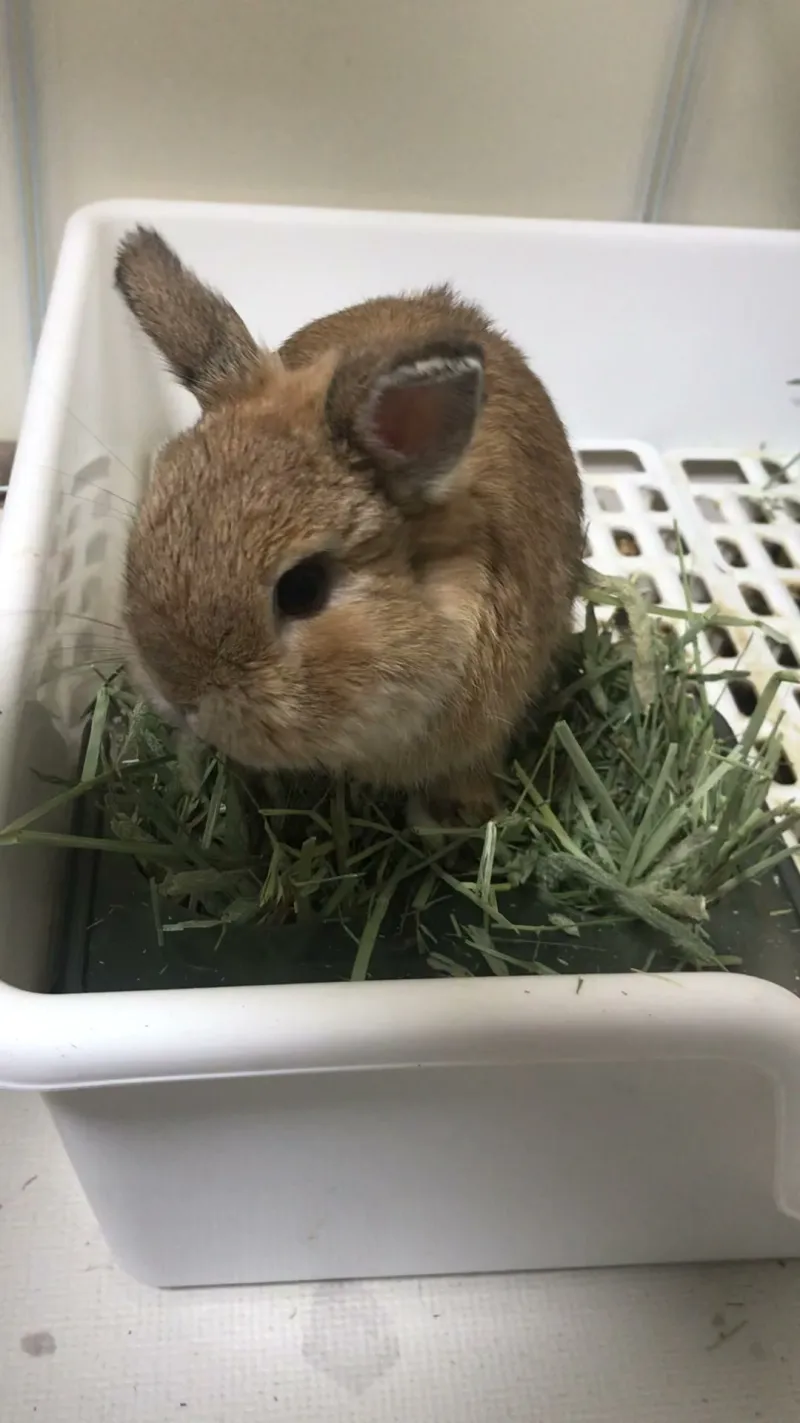
On this point, every source I’ve ever checked agrees, loudly. The Merck Veterinary Manual says a rabbit should always have an unlimited supply of hay. The Rabbit Welfare Association & Fund makes it 85% of the diet and adds, in so many words, that you can’t give your buns too much hay. Even the House Rabbit Society — the source most enthusiastic about vegetables — calls hay “the foundation of a healthy rabbit diet, not processed pellets, no matter how high quality the pellets may be.”
Hay is doing three jobs at once: the fiber keeps a rabbit’s famously fragile gut moving (the stakes of that are a whole separate post on GI stasis), the chewing grinds down teeth that never stop growing, and the endless low-calorie grazing keeps him busy without making him fat. I’ve written up why I settled on first-cutting timothy and the feeder setup that finally stopped him from trampling half of it — the short version is: unlimited supply, refreshed daily, positioned where he actually lives.
Pellets: measured, never free-fed
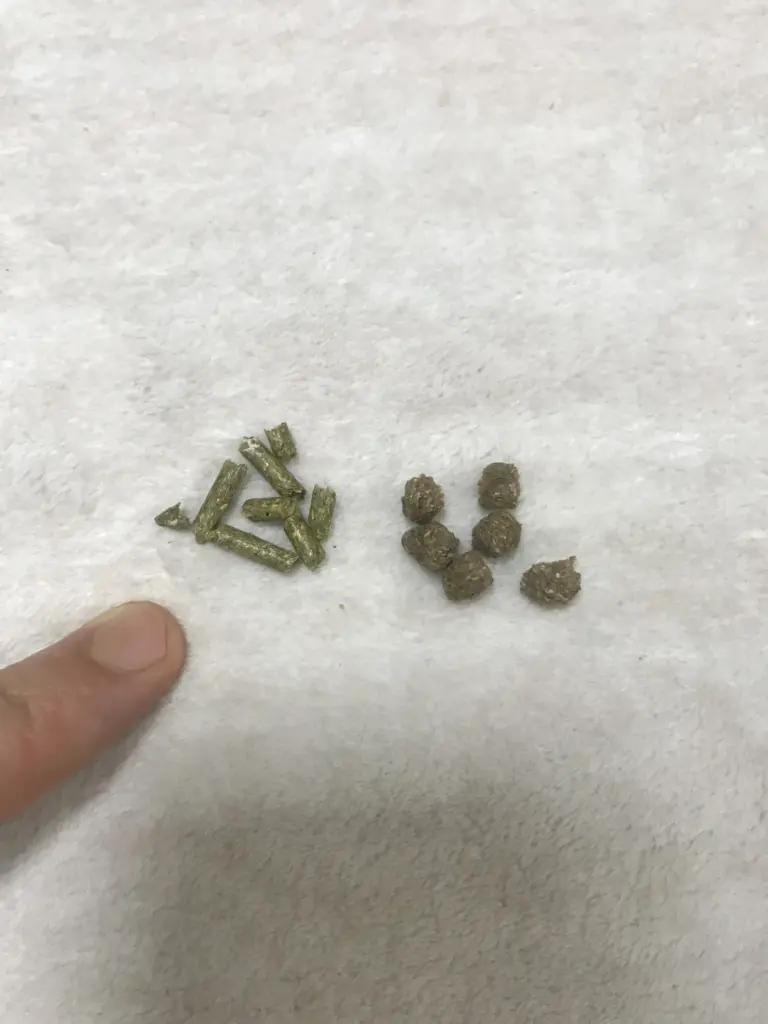
Pellets are where guides start using words like “restricted.” Merck caps adult maintenance pellets at about a quarter cup per five pounds of body weight; RWAF goes further and says to weigh it — 15 grams per kilogram of rabbit — rather than eyeball it. The logic is the same everywhere: pellets are concentrated food, and a rabbit that fills up on them stops eating hay, which is the thing actually keeping it healthy. VCA’s feeding guide adds that overfed pellets are a straight road to obesity and soft stools.
Mine gets roughly 12 grams a day, split between Oxbow and Genesis — I compared the two here — and he would cheerfully commit crimes for more. He doesn’t get more.
The treat department: one piece of candy
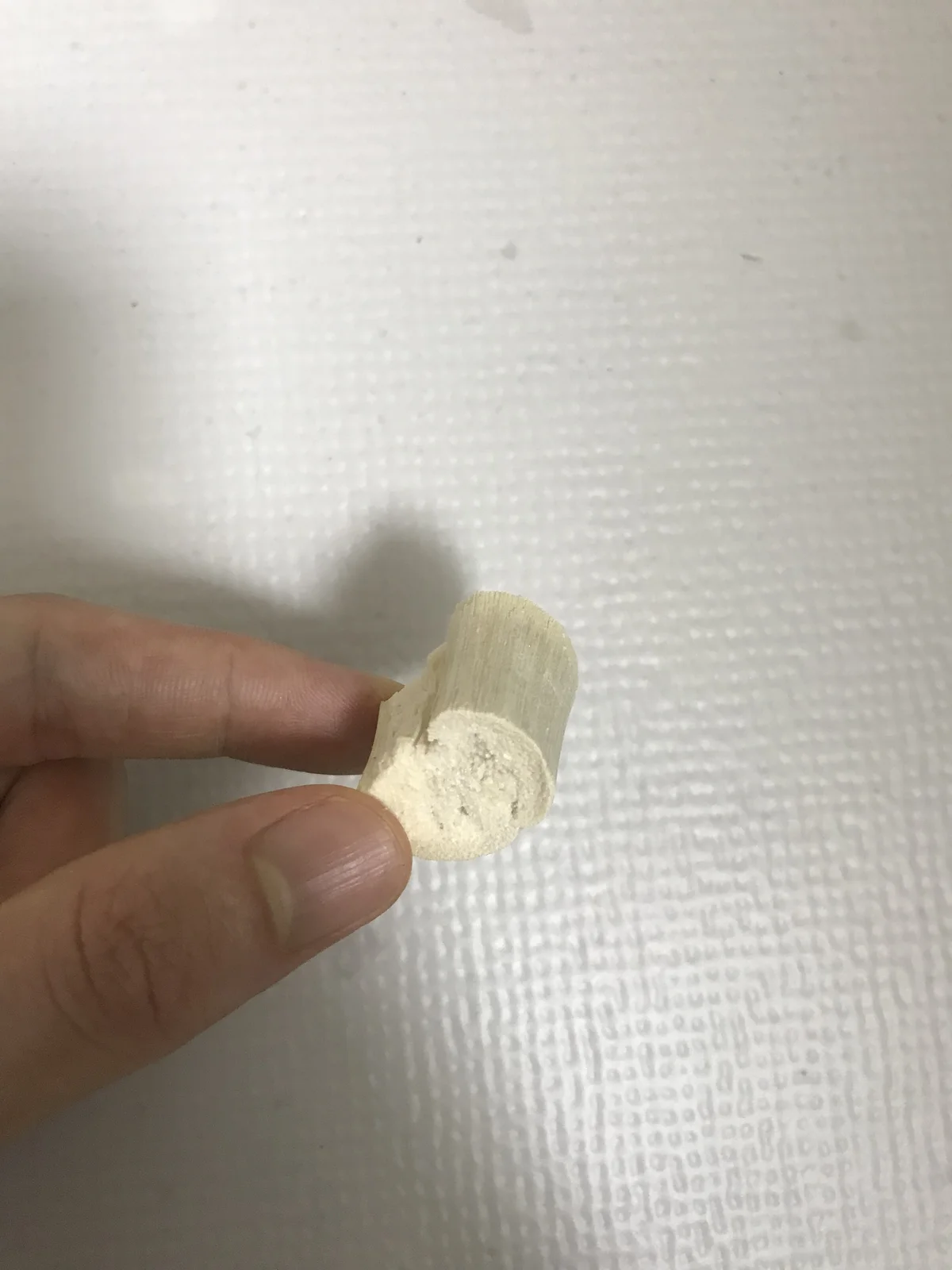
His one treat is a piece of freeze-dried sugarcane. I’ve written the full treats post about how the rotation shrank to this — including the freeze-dried papaya and pineapple I used to feed every day because the internet told me the enzymes prevent hairballs. (They don’t; Merck says so; the fiber-and-brushing routine does that job.) Once the “medicine” excuse evaporated, daily fruit stopped making sense, and sugarcane took the slot as pure, honestly-labeled candy.
One update since that post: the ration has shrunk again. It used to be one piece a day; lately it’s one piece every three days or so, because I kept looking at the size of a full piece next to the size of a dwarf rabbit and doing the math. He has registered his objection. The ration stands.
The vegetable chapter: I tried, he voted no
Now the missing 10%.
Somewhere around the seven-to-nine-month mark — his first winter with me — I decided to do this properly. I came home with leafy greens (kale, if I remember right), bok choy, and a carrot, cut everything into small rabbit-sized pieces, and offered them the way every guide describes.
He sniffed. He declined. Not dramatically — no flung vegetables, no offended thumping — he just… didn’t eat them, with the serene confidence of an animal who knows exactly where his hay feeder is. I tried again over the following days. Same result. The remaining groceries became my salad, and I never bought rabbit vegetables again.
But before shrugging it off, I did the reading — and the reading surprised me.
What the sources actually say about vegetables
Here’s the part nobody had told me. The sources that write rabbit feeding guidelines don’t actually agree that vegetables are essential:
- The Merck Veterinary Manual’s maintenance-diet guidance is unlimited hay plus restricted pellets. Fresh vegetables aren’t part of the core prescription at all.
- VCA Animal Hospitals — written by veterinarians — says a rabbit’s diet “may be supplemented” with a quarter to half cup of leafy greens. Supplemented. That’s the language of a bonus, not a requirement.
- The Rabbit Welfare Association includes greens at 10% of its ideal diet — a real recommendation, but a slice, sitting next to 85% hay.
- The House Rabbit Society is the most pro-vegetable, suggesting a daily variety of at least three types of leafy greens.
So the honest summary is: greens are recommended by some sources, treated as optional by others, and required by none. Meanwhile every single one of them agrees the diet lives or dies on hay. There’s also a practical warning attached wherever greens do get recommended: introduce them one at a time, slowly, and back off at the first sign of soft stools or diarrhea — fresh produce is watery, sugary territory for a gut that runs on dry fiber.
Which reframed my situation completely. I wasn’t failing to deliver an essential nutrient. I was failing to deliver the negotiable layer — to a rabbit with unlimited hay, measured pellets, and, two-plus years on, a spotless digestive record. Force-feeding him a food category he’d rejected, with known digestive risks and disputed necessity, stopped looking like good ownership and started looking like doing it for the chart.
If your rabbit does eat greens
To be fair to the other side of this: a rabbit that enjoys leafy greens is not doing anything wrong, and neither are you for feeding them. Greens add variety, moisture, and micronutrients, and RWAF’s 10% exists for a reason. If that’s your rabbit, the standard playbook from VCA and the House Rabbit Society is short:
- One new vegetable at a time, in small amounts, watching the litter box for a couple of days before adding another.
- Leafy greens over everything else. Skip iceberg lettuce and celery — VCA notes they’re mostly water with little to no nutrition.
- Go easy on the sweet stuff. Carrots are sugar storage, not salad; VCA warns the sugar in fruit and even carrots can upset the gut flora in excess. Bugs Bunny was not a veterinarian.
- Never at the expense of hay. If the salad bowl is displacing hay intake, the ratio is running backwards.
The only thing I’d add from my side of the fence: if your rabbit refuses, you have my permission — and, more importantly, the veterinary literature’s quiet blessing — to stop stressing about it.
What two years on this menu looks like
For completeness, the same boring menu — unlimited first-cutting timothy, ~12g of pellets, the occasional piece of sugarcane, fresh water — has produced: stable weight, consistent perfect droppings, teeth that pass every vet check, and zero digestive incidents in over two years. That’s not proof of anything (one rabbit is an anecdote, not a study), but it’s the honest report card of a vegetable-free rabbit diet built on the one thing every source agrees about.
Hay first. Everything else is negotiable — including, it turns out, the salad. It also happens to be my entire longevity plan — the case for that is in how long rabbits live.
FAQ
Do rabbits need vegetables every day?
Recommendations differ. The House Rabbit Society suggests daily leafy greens and RWAF includes them at 10% of the ideal diet, but VCA describes greens as a supplement and the Merck Veterinary Manual’s core maintenance guidance is unlimited hay plus restricted pellets, without requiring fresh vegetables. No major source treats greens as more important than hay.
Is a diet of just hay and pellets okay for a rabbit?
With unlimited grass hay as the bulk of the diet and pellets properly restricted, this matches the Merck Veterinary Manual’s maintenance-diet guidance. Vegetables, where recommended, are the flexible layer on top — my rabbit has thrived without them for over two years. If you’re unsure about your own rabbit’s situation, that’s a question for your vet, not a blog.
Why won’t my rabbit eat vegetables?
Some rabbits simply refuse them, especially rabbits raised on hay and pellets. It isn’t a medical emergency: as long as hay intake and droppings are normal, a vegetable-refusing rabbit on unlimited hay is nutritionally fine. Watch appetite and droppings — a rabbit that stops eating hay is a genuine red flag.
What vegetables are safe for rabbits?
If your rabbit does eat greens: stick to leafy vegetables, introduce one type at a time in small amounts, and watch for soft stools. Skip iceberg lettuce and celery (mostly water), and treat carrots and fruit as sugary occasional extras rather than daily salad.
Feeding is one slice of the routine — the full picture, from the daily chores to the things I never do, is in my complete rabbit care guide.