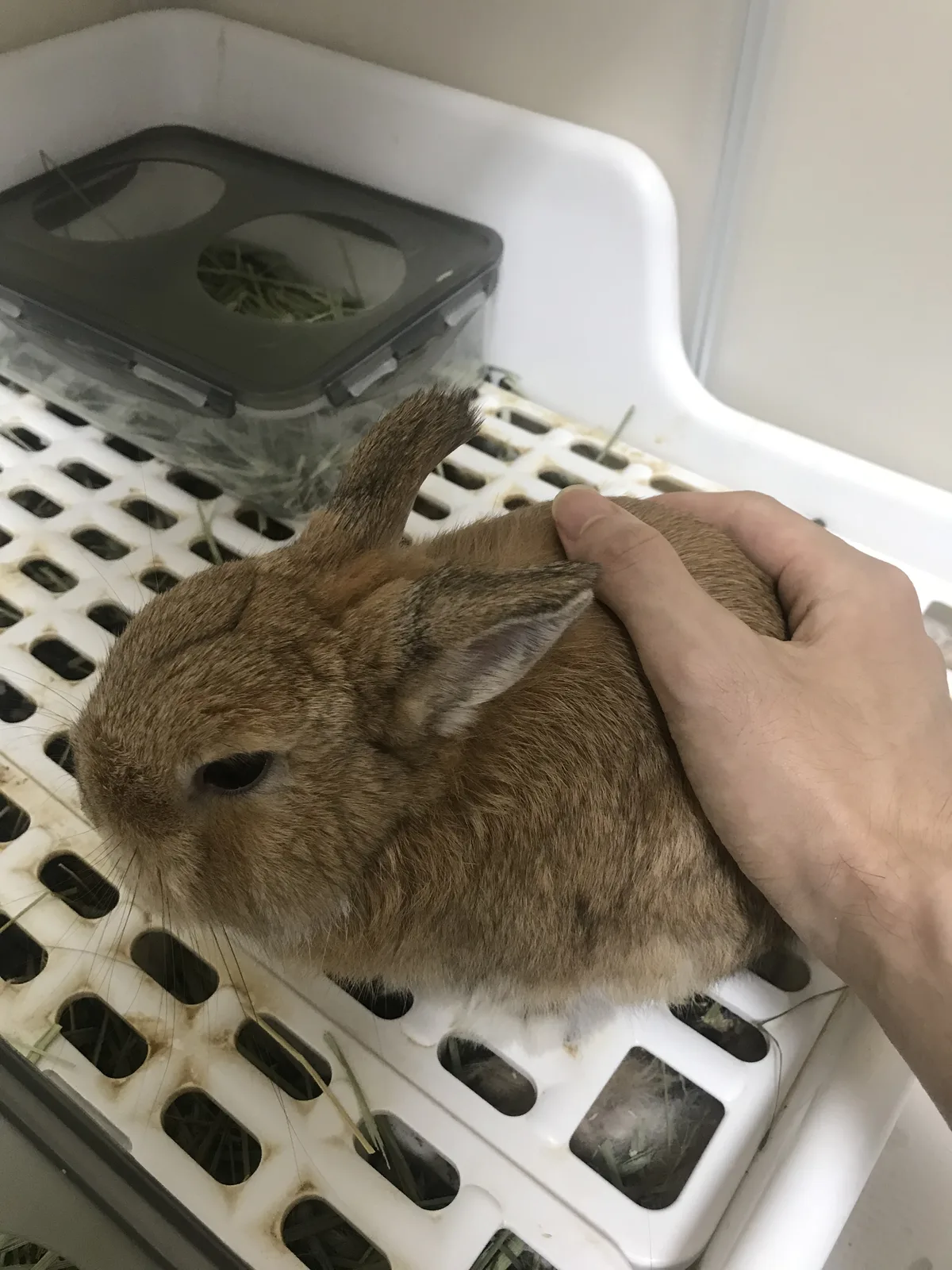
As I write this, the first signs are showing on my rabbit’s back: the fur there is just starting to loosen. It’s subtle — no bald spots, no drama, just a coat that suddenly feels less anchored than it did last week. But it happens twice a year, every year, and after two-plus years I know exactly what this preview means. Within days, a light pinch of fur will come away in a neat little tuft. Then come two weeks of fur on my clothes, fur in the air, fur on the water bowl. Rabbit shedding season is back.
If this is your first molt, the sheer volume of fur can be alarming. So here’s what a normal shedding season actually looks like, start to finish, from someone currently living in one — when it comes, how it moves across the body, how long it lasts, and the one part that actually matters for your rabbit’s health (hint: it’s not the vacuuming).
When is rabbit shedding season?
For my rabbit, it comes twice a year, and the trigger seems to be the turn of the seasons — once right before the weather gets hot, and once right before it gets cold. He’s an indoor rabbit, but his coat still runs on that outdoor calendar: shed the warm coat before summer, shed the light coat before winter. The molt that’s starting now, at the end of August, is the winter-prep one.
That lines up with what the Rabbit Welfare Association & Fund describes: rabbits generally molt twice a year, in spring and autumn. But the same guide adds an honest caveat — domestic rabbits are more variable, and some house rabbits “will appear to moult almost constantly.” So if your rabbit sheds year-round with no clear season, that’s not broken; that’s just a coat confused by central heating. Mine happens to keep the wild schedule, which at least makes it predictable.
The tide line: how a molt moves across the body
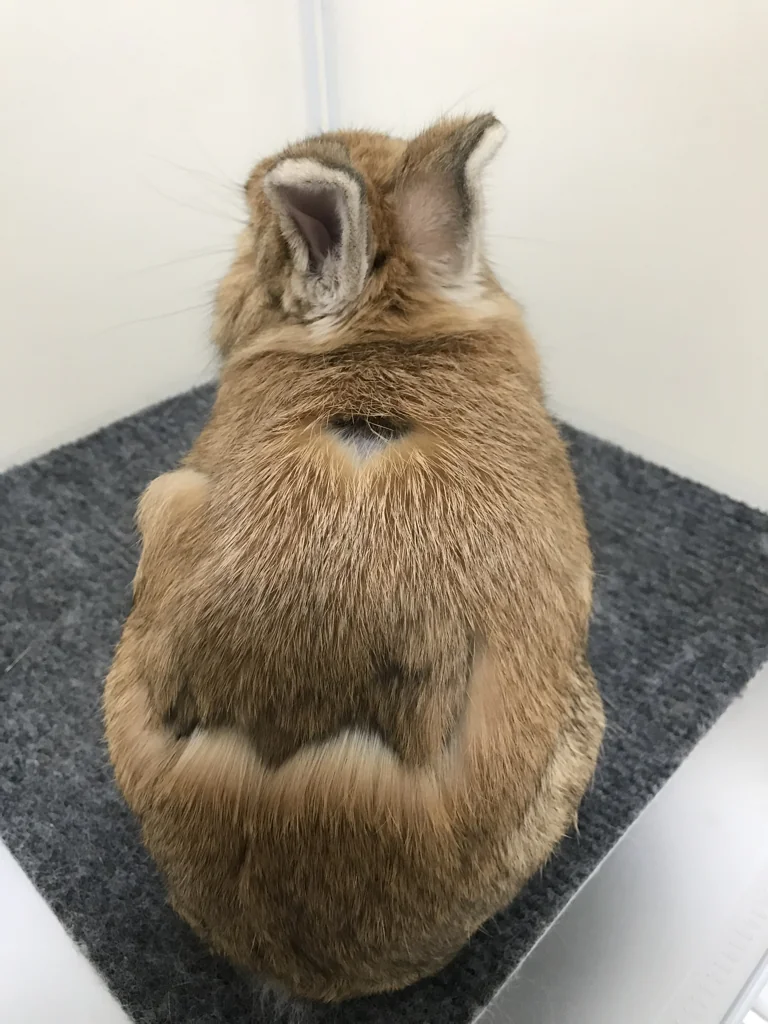
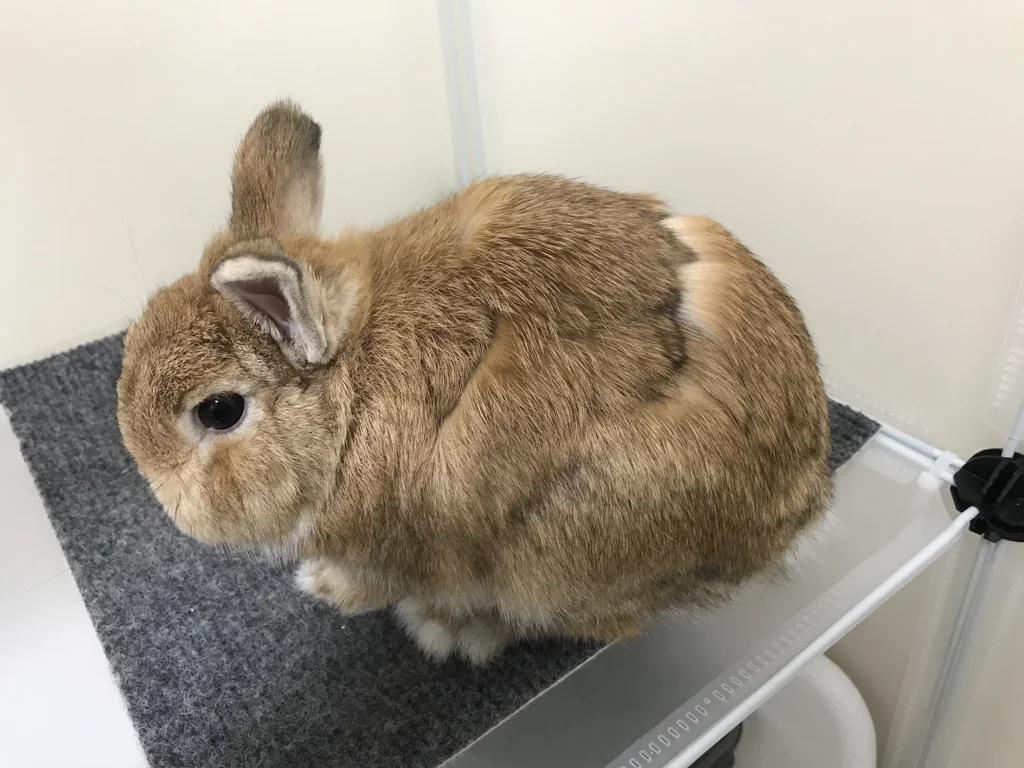
A big molt isn’t a uniform, all-over thinning. It travels. On my rabbit, the place I always notice it first is his back: a visible boundary appears in the coat, darker on one side and lighter on the other, where the old fur is giving way to the new coat underneath. Over the following days that boundary spreads outward until the whole coat has turned over.
There’s an official name for that boundary — RWAF calls it a tide line, “a line across the rabbit’s fur, where the moult is progressing.” By the book, a molt starts at the head and works backward — down the neck and back, then the sides, finishing at the rump. I’ll be honest: I’ve never caught the head stage on mine. The back is where the line first becomes obvious to me, so that’s where “shedding season has started” gets declared in this house.
Update, early September: the molt that was “just starting” in the intro has now properly arrived — and this time I had the camera ready. This is the tide line, on exactly the schedule described above.
The other tell is the pinch test I mentioned in the intro. Outside of molt season, a gentle pinch of fur gets you nothing. During a molt, loose fur lifts out with zero effort — and if I sit down and work through his coat with my fingers for five minutes, I end up with a full handful. Not a few strands. A handful.
How long does it last?
For us, about two weeks per molt — from the first loose tufts to the coat feeling settled again. I can’t promise yours will match; coat length, breed, and indoor conditions all play into it, and RWAF doesn’t pin a universal number on it either. But if you’re mid-molt and wondering whether the fur storm ever ends: in this house, it reliably blows through in a couple of weeks.
The first molt is the big one
If your rabbit is young and you’re watching your first-ever molt in mild horror, some context: baby coats don’t last. Per RWAF, a rabbit’s baby coat is replaced at around five months old by a transitional coat, on the way to the adult one. If I remember right, that first coat change was the heaviest shedding my rabbit has ever done — more dramatic than any of the regular seasonal molts since. So a spectacular first molt isn’t a warning sign; it’s a rite of passage.
Why shedding season is really gut season
Here’s the part of shedding season that actually matters, beyond the lint rollers. Rabbits groom themselves constantly, and during a molt all that loose fur has exactly one place to go: down the rabbit. They can’t vomit it back up the way a cat does. Every molt, my rabbit swallows some of his own coat — I see the evidence in the litter box, where linked droppings (poops strung together with fur, like tiny beads on a thread) show up far more often than in any other season.
The fix isn’t panic — it’s throughput. RWAF puts it plainly: constant access to hay is “absolutely vital to keep the guts moving normally, even more so when the rabbit is moulting,” and interestingly, it describes hairballs as a secondary problem — trouble starts when the gut slows down or the rabbit gets dehydrated and the swallowed fur dries out, not simply because fur went in. In other words: the fur is inevitable, so the job is keeping it moving. In practice, during a molt I make sure of three things:
- The hay feeder is never empty. Long-strand fiber is what pushes swallowed fur through. Unlimited timothy hay is the whole strategy — shedding season is the worst possible time to let the feeder run low.
- Water is easy to drink. A bowl, not just a bottle — hydration is exactly what keeps that swallowed fur from drying out in the gut.
- I watch the litter box. The occasional fur-linked dropping during a molt is normal. Droppings shrinking, getting scarce, or stopping — that’s a different story, and it’s the reason my GI stasis guide exists. Molt season is when I read the litter box most carefully.
My shedding season grooming routine
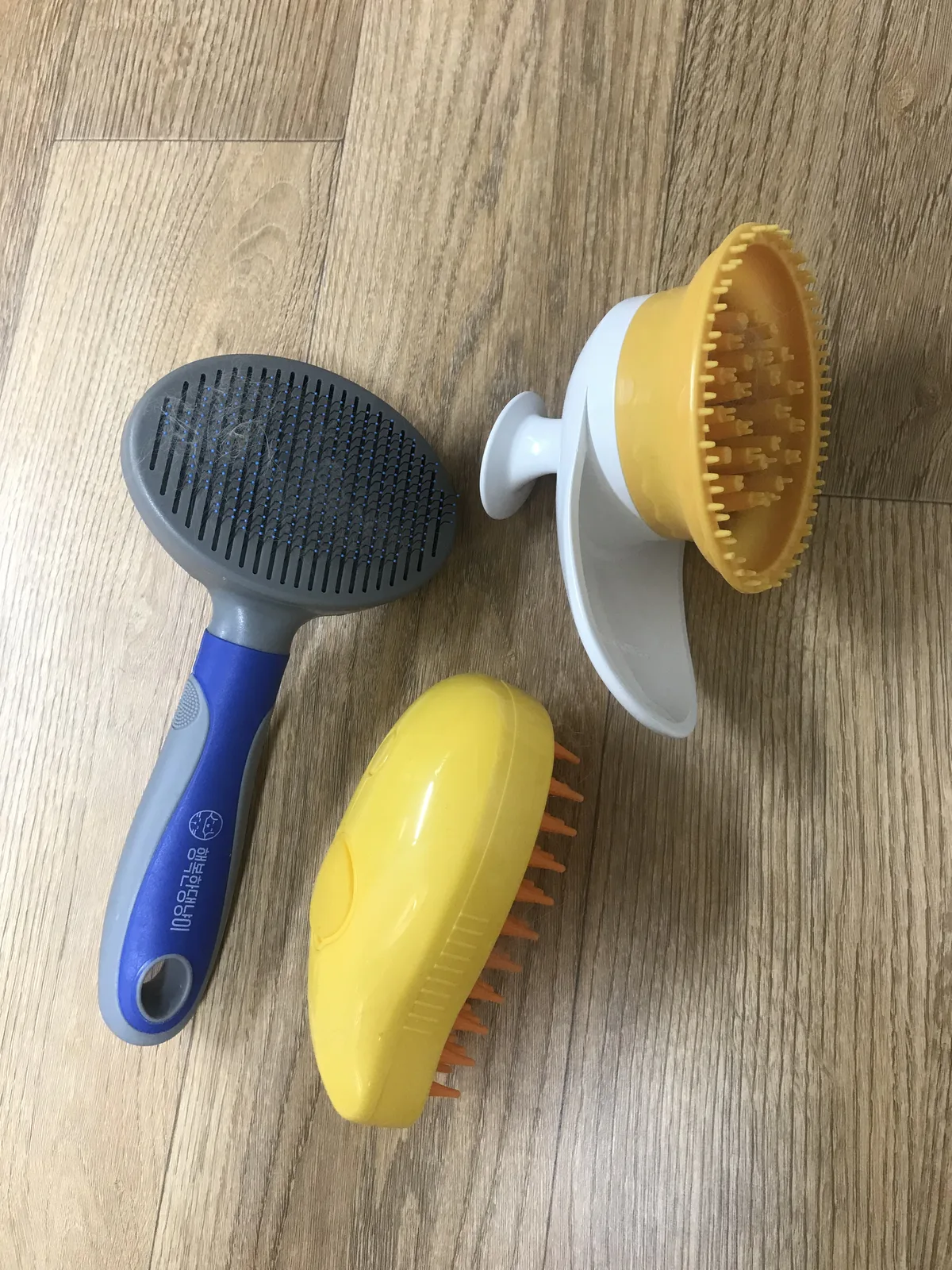
Every hair I remove is a hair he doesn’t swallow — that’s the entire logic. During a molt I step up from casual to systematic: brushing every other day, using the same three brushes I use year-round — a small one for the face, a slicker for the body, and a steam brush for the undercoat. The steam brush is the molt-season MVP; I use it occasionally in normal times, but during a shed it comes out much more often, because it’s the one that actually reaches the loose undercoat where most of the volume lives. (RWAF notes that during a molt, brushing more than once a day may even be necessary — we’ve never needed that, but heavier coats might.)
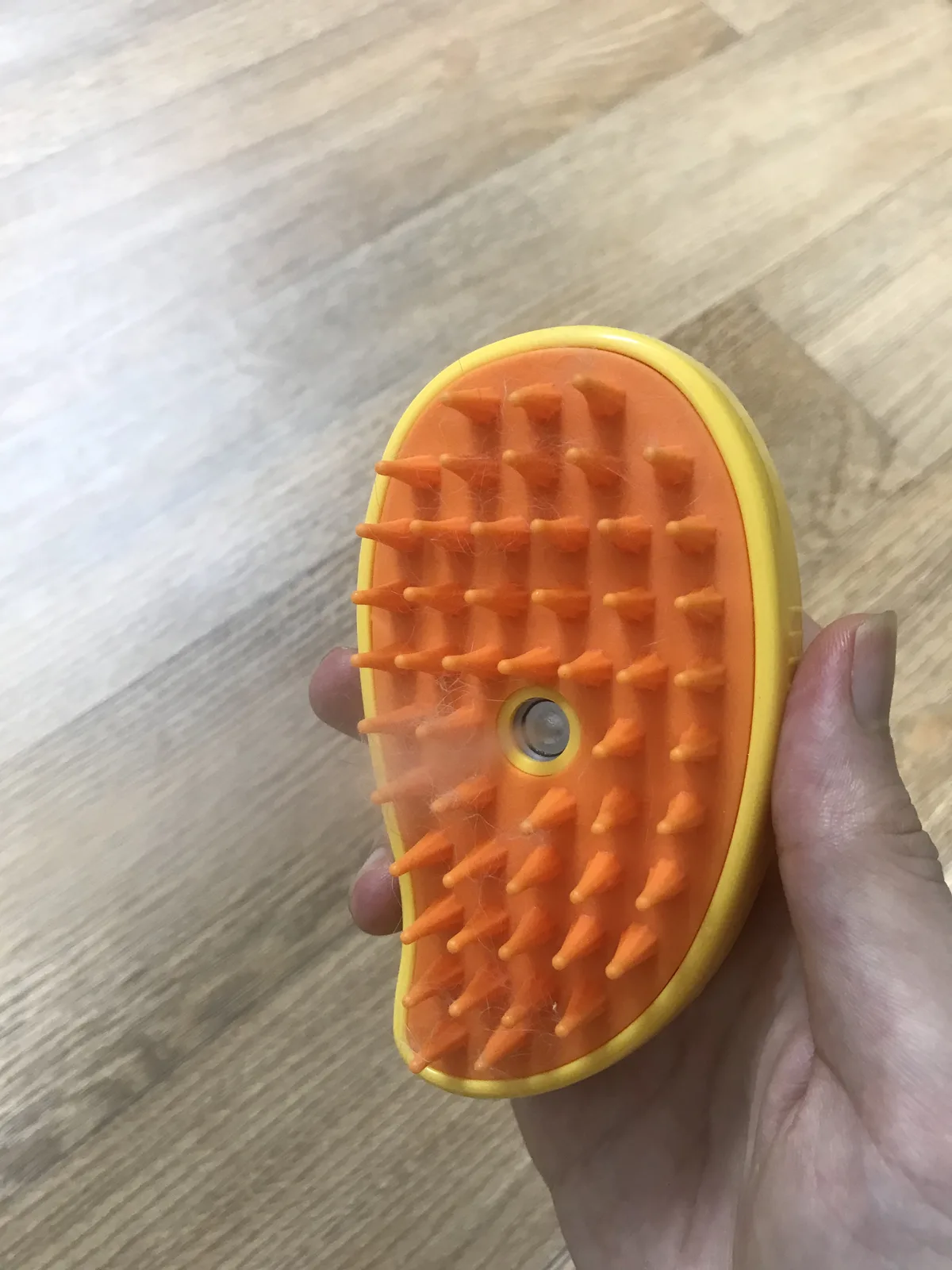
Between brushing days, there’s the lazy method that shouldn’t work but does: petting. Just running my hands over him during normal hangout time lifts a surprising amount of loose fur — during a molt, my hands come away furry every single time. It’s not a substitute for the brushes, but it’s fur that ends up on my palms instead of in his stomach, at zero extra effort. The full toolkit and technique details are in the grooming post; this section is just what changes during the season: frequency up, steam brush up, attention up.
The fur gets everywhere. Accept this.
A confession from the lifestyle side of shedding season: rabbit fur is absurdly light. It doesn’t fall, it floats. During a molt it drifts through the air, settles on every surface, and — because the universe has a sense of humor — I wear a lot of black, which for two weeks a year functions as a fur-collection device. At peak molt, a black shirt can come away looking closer to gray.
My two countermeasures, neither of them clever: a lint roller for the full de-furring, and — the quick fix — a damp hand. Wet your palm, wipe down the shirt, and the fur clumps up and peels away instead of floating off to resettle somewhere else. That’s it. That’s the technology. If someone has invented a better answer to shedding season than “water on hand,” it has not reached this household.
FAQ
Do indoor rabbits shed all year round?
Some do. RWAF notes that house rabbits can have much more variable molt patterns than wild rabbits — some seem to molt almost constantly. Mine happens to hold the classic twice-a-year schedule despite living indoors, but a rabbit that sheds lightly year-round isn’t abnormal. What matters is the gut-care side: whenever fur is coming loose, hay and water intake matter more than usual.
How long does rabbit shedding season last?
About two weeks per molt for my rabbit. There’s no universal number — coat type and living conditions vary it — but a defined molt with a moving tide line typically passes in weeks, not months.
Does a rabbit act differently during molting season?
Honestly, I can’t detect a behavior change in mine — but he’s such a dedicated self-groomer year-round that a molt-season increase would be hard to spot. His appetite and energy stay normal through every shed. If your rabbit’s behavior does change noticeably during a molt — especially eating less or slowing down — don’t file it under molting; check the GI warning signs instead. For reading normal day-to-day behavior, see the behavior guide.
When do baby rabbits have their first molt?
Around five months old, per RWAF, when the baby coat gives way to a transitional coat. Expect it to be dramatic — ours was the heaviest shed he’s ever had. Stock up on hay and patience.
Shedding season is also a good moment for a general once-over — the full checklist lives in my rabbit care guide.