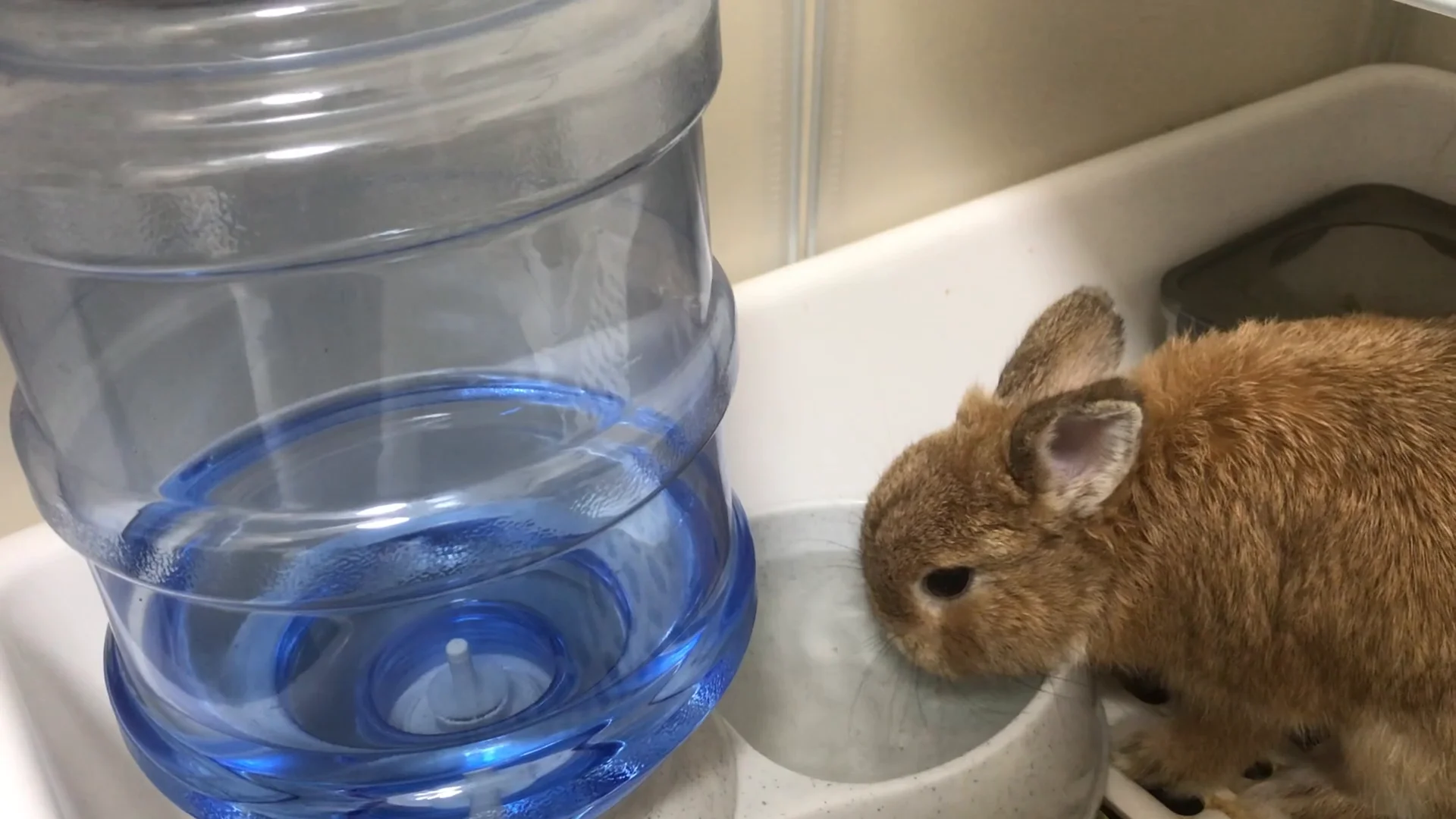
Of all the gear in my rabbit’s enclosure, the water setup is the one I’ve replaced the most times. Over two years with my Netherland Dwarf, we’ve gone through all three systems: a sipper bottle in his baby days, then an open bowl (in several sizes), and finally what we use now — a semi-automatic dispenser with a 3-liter reservoir that keeps his bowl topped up on its own.
If you just want the short version: bowl-based drinking wins — the veterinary references are clear that rabbits drink more from open bowls than from sipper bottles — but let a reservoir do the refilling for you. The rest of this post is the journey through all three, and what I’d look for if I were buying again.
Rabbits drink far more than you’d guess
Here’s the number that changed how seriously I take water: according to the Merck Veterinary Manual, a rabbit consumes roughly 120 mL of water per kilogram of body weight per day — about double what a dog or cat of the same size drinks. Even a small dwarf rabbit gets through a surprising amount of water every single day.
And the stakes are higher than “he might get thirsty.” Merck notes that a rabbit brought to the vet for not eating is most often dehydrated as well — and in rabbits, not eating is the doorway to GI stasis, the emergency every rabbit owner learns to fear. Water isn’t a convenience item. It’s part of the same gut-health system as hay.
Stage 1: the sipper bottle (his baby days)
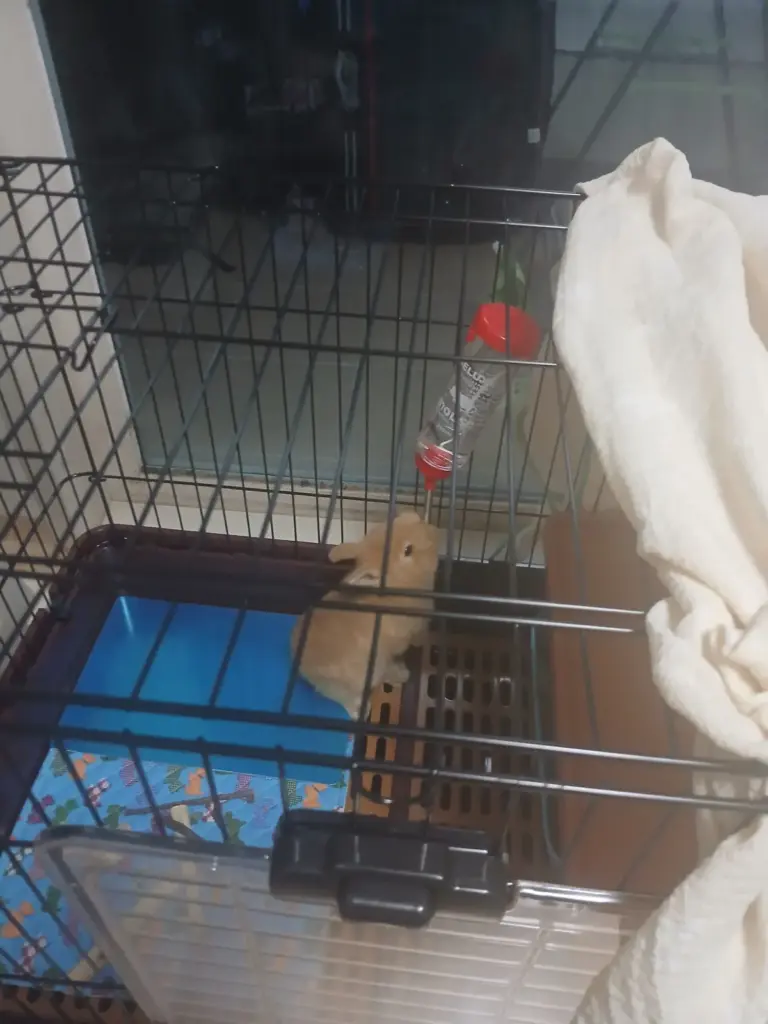
Like a lot of rabbits, mine started life drinking from a bottle — the classic sipper clipped to the bars of his starter cage, in his very first photos at home. It’s the default for a reason: it can’t spill, it can’t collect hay, and it comes bundled with every cage setup.
Then I actually watched him drink. To get anything out, he had to work the little ball in the nozzle around with his tongue — spin, lick, spin again — for a trickle at a time. Watching that, I couldn’t shake the feeling that he simply couldn’t drink enough this way. So I read up on it, and the reading agreed: for real water intake, a rabbit needs open water. At around three months old, the bottle went away and a bowl took its place.
Stage 2: the ordinary bowl
The open bowl works — that’s the honest truth, and it’s already the rabbit-appropriate choice. In two years of bowl-based drinking we never had a single disaster: no floods, no tipped bowls, no drama. The problem is quieter than that: a plain bowl means living with its maintenance schedule. It runs low, it collects hay and fur, and it depends on you noticing all of that in time, every day, including the days you’re busy or away.
Stage 3: bigger bowls didn’t fix it
My first instinct was that the bowl was simply too small, so I tried several sizes. A bigger bowl does buy you time between refills — but the water that sits there longer also gets dirtier, and the fundamental job hasn’t changed: I was still the refill mechanism. Changing the bowl size changed how often the system needed me, not whether it did.
Stage 4: the 3-liter semi-automatic dispenser
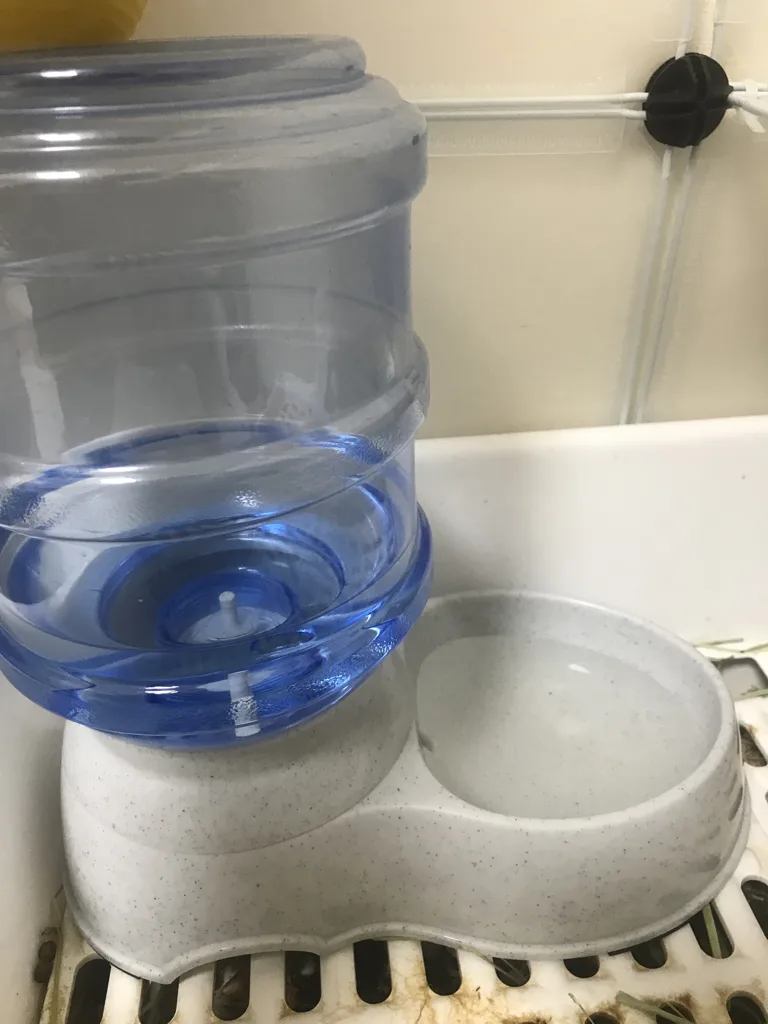
What finally worked was moving the storage out of the bowl. My current setup is a gravity-fed dispenser: a 3-liter bottle reservoir with a spring-valve cap that feeds a small drinking bowl and keeps the water level constant by itself. He still drinks from an open bowl — the posture and intake stay natural — but the bowl never runs dry, because liters of water are standing behind it.
One detail you can see in the photo: the whole station lives in one corner, right on the litter area next to the hay feeder. That’s not laziness — that’s rabbit logic. Rabbits famously eat and “go” at the same time, which is the same reasoning behind my litter box setup. Hay, water, litter: one corner, zero commute.
My maintenance routine (the honest version)
Here’s the entire weekly workload. I deliberately fill the reservoir only about halfway — even half of 3 liters is comfortably more than a week of water for a rabbit his size, and a smaller standing volume stays fresher. Then once a week, everything comes apart and gets scrubbed with hot water and a brush — no detergent, ever. My reasoning is simple: any soap residue that survives rinsing ends up in the only water he has. Hot water and bristles do the job fine.
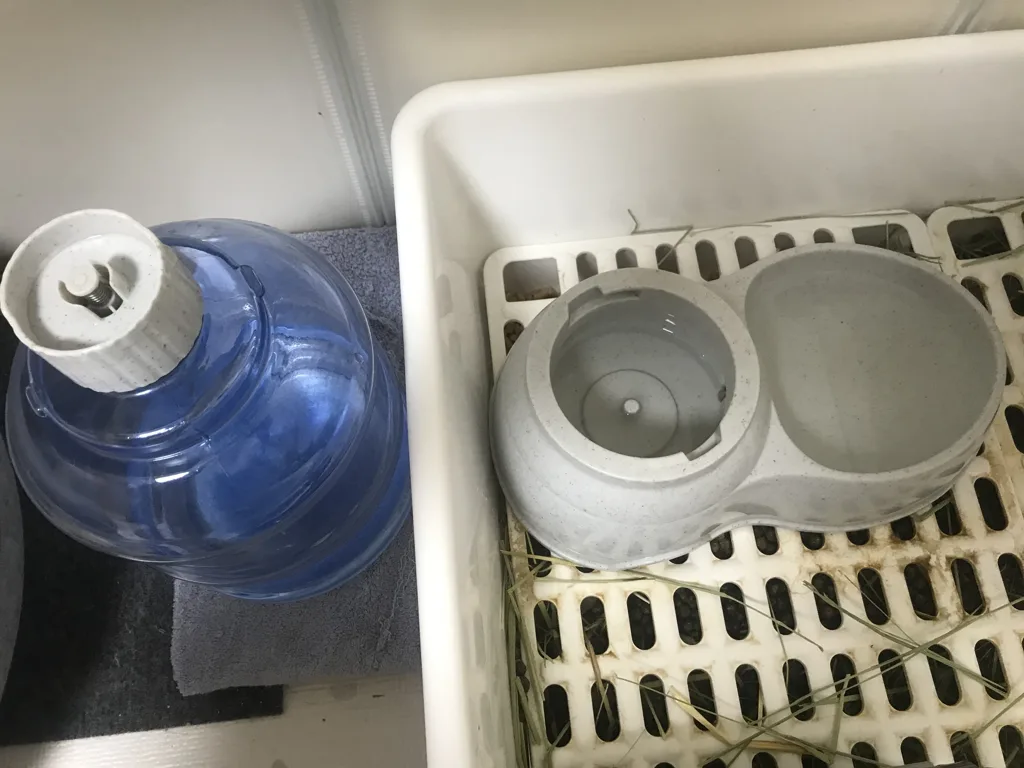
That’s it. One refill-and-scrub session a week, instead of a daily bowl patrol. The rabbit-facing side of the system never changes.
Bottle versus bowl: this one isn’t a matter of taste
If you’re choosing between a bowl-based setup and a hanging sipper bottle, the veterinary guidance is unusually direct. Merck’s rabbit nutrition page states that a rabbit will drink significantly more water from an open bowl than from a sipper bottle. Given how much rabbits need to drink in the first place, I see no reason to pick the option that works against them.
We’ve run both systems with the same rabbit, and my own eyes got there before the manual did — the tongue-spinning-the-ball routine I watched in his baby days is exactly what drinking less looks like in practice. A dispenser with a reservoir gives you the one real advantage bottles had — capacity — without asking your rabbit to lick his daily water out of a metal nozzle, drop by drop.
The summer stress test
Water capacity matters most exactly when the weather is worst. In summer, when I’m running my heat-stroke prevention routine, the dispenser is the part of the setup I don’t have to think about: whatever else happens during a heat wave, the water level takes care of itself. A bowl that can run dry on a 35°C afternoon is a risk I’m glad to have retired.
What I’d look for if buying again
Brand matters less than form factor here — same conclusion as my hay feeder comparison. Whatever you buy, I’d check four things:
- Bowl-based drinking, not a nozzle. The rabbit should drink from open water. This is the non-negotiable one.
- A reservoir measured in liters, not cups. The whole point is removing “did I refill it today?” from your life. Around 3 liters has been plenty for one dwarf rabbit — I don’t even fill it all the way.
- Stability. Rabbits bump, dig, and occasionally redecorate. A tall reservoir with a narrow base is asking for a flood.
- Parts you can actually wash. The bowl and reservoir should come apart without tools, because you’ll be scrubbing them weekly for years.
The bottom line
Two years and three water systems later, the ranking is clear: semi-automatic dispenser > plain bowl > sipper bottle. The bowl part is what’s right for the rabbit — the veterinary references back that up. The reservoir part is what’s right for the human. A good water setup is the one where both sides stop having to work at it.
As always: nobody paid me for this. I bought every one of these setups with my own money, and the rejects earned their retirement honestly.
This post is part of my complete rabbit setup — a tour of everything currently in his enclosure and why each item survived.