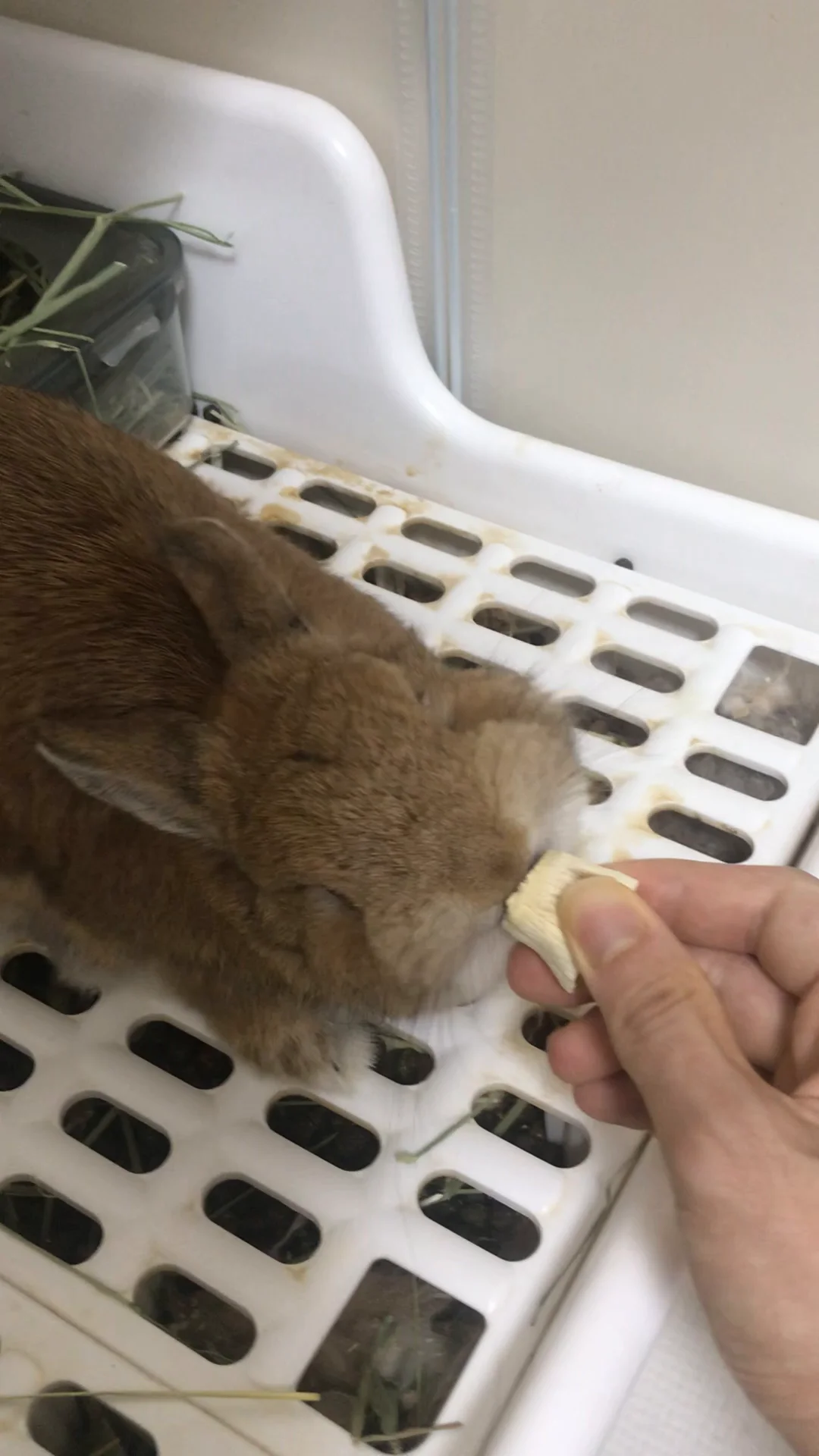
Treats are the part of rabbit care where I’ve changed my mind the most. In two years with my Netherland Dwarf, my list of safe treats for rabbits has only gotten shorter — and today it’s down to exactly one thing: a single piece of freeze-dried sugarcane a day.
This post is about how I got there. It includes one embarrassing confession — for about two years I fed papaya and pineapple because of a “hairball prevention” claim that, it turns out, doesn’t hold up — and a couple of treats my rabbit flatly refused to touch. If you just want the short version: hay does all the real work, treats are entertainment, and the simpler the ingredient list, the better.
The rule that makes treats simple: hay first
Before any treat talk, the boring truth: hay is the actual diet. Everything else — pellets, greens, treats — is a rounding error by volume, and it has to stay that way for a rabbit’s gut to keep moving. I’ve since written up the complete menu — including the vegetables he refuses to eat.
So when I say “treats” in this post, I mean the sweet stuff — fruit and other sugary things a rabbit would happily overeat. Hay-based nibbles like the timothy treats I use as nail-trim rewards are a different category: closer to his normal food, and much harder to get wrong.
Why I skip most store-bought treats
Pet store shelves are full of colorful rabbit treats — yogurt drops, honey-glued seed bars, fruit mixes with mystery coatings. My rabbit would probably love them. That’s exactly the problem: they’re engineered to be loved, and the ingredient panels read like candy.
I’m not claiming every commercial treat is dangerous — I simply couldn’t verify what was in most of them, and with an animal this small, “probably fine” wasn’t good enough for me. So I made myself a one-word rule: if the ingredient list is longer than one word, I put it back. Freeze-dried single fruits pass. Almost nothing else does.
The one treat I feed now: freeze-dried sugarcane
The winner, by a landslide, is freeze-dried sugarcane — thick cork-sized chunks, airy and crisp, just sugarcane and nothing else.
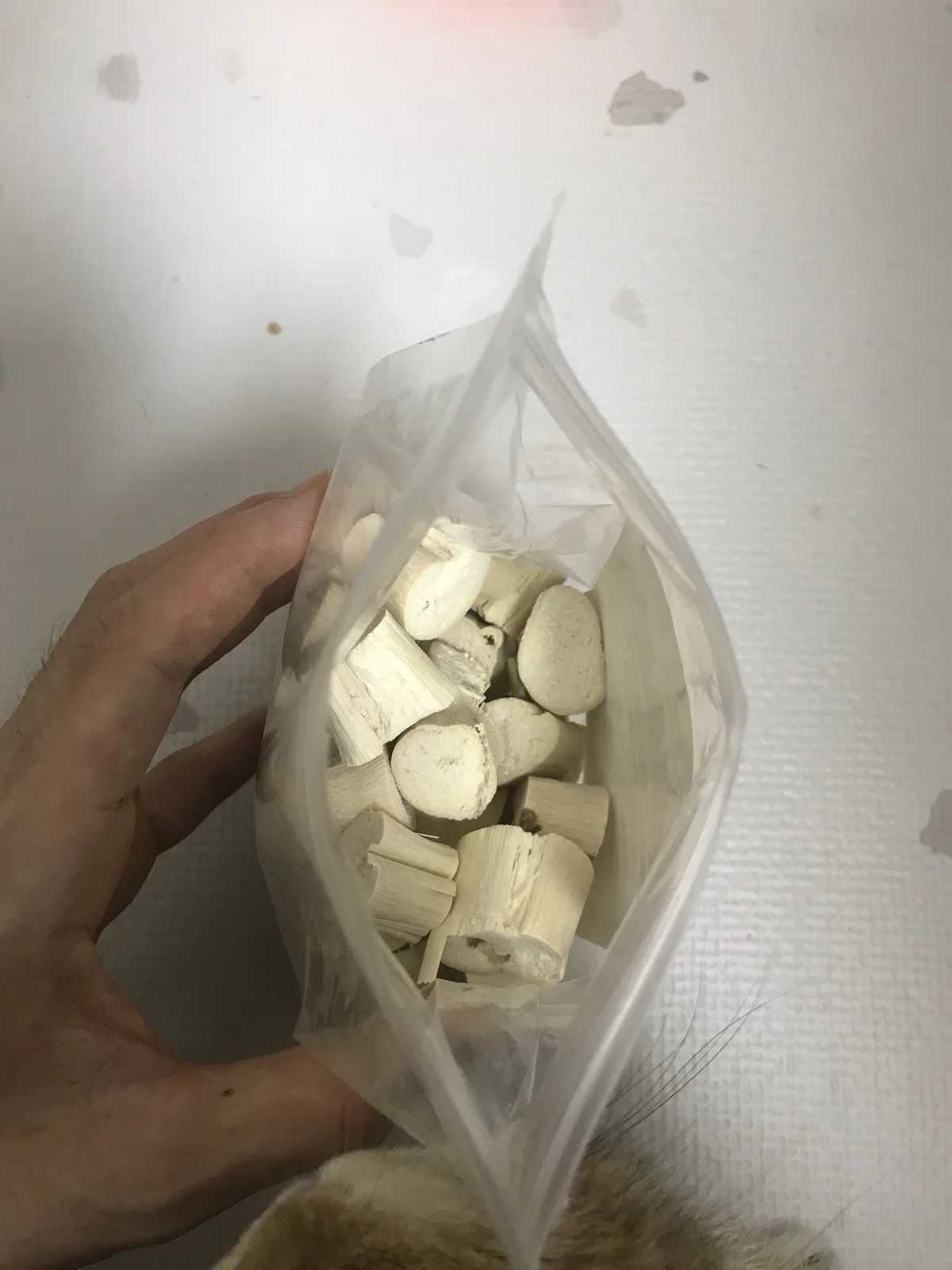
My rabbit is politely interested in most food. For sugarcane, he abandons all dignity. He hears the bag and materializes. This is the reaction, every single time:
One piece a day — and why not more
The daily ration is one chunk. Not because a second piece would poison him, but because I learned early on that a rabbit with too many treats in him is a rabbit with less appetite for hay — and hay is the whole game. Anything that competes with hay is quietly working against his gut, which is the one system you never want to slow down (I wrote about GI stasis and why it scares me more than anything else in rabbit care).
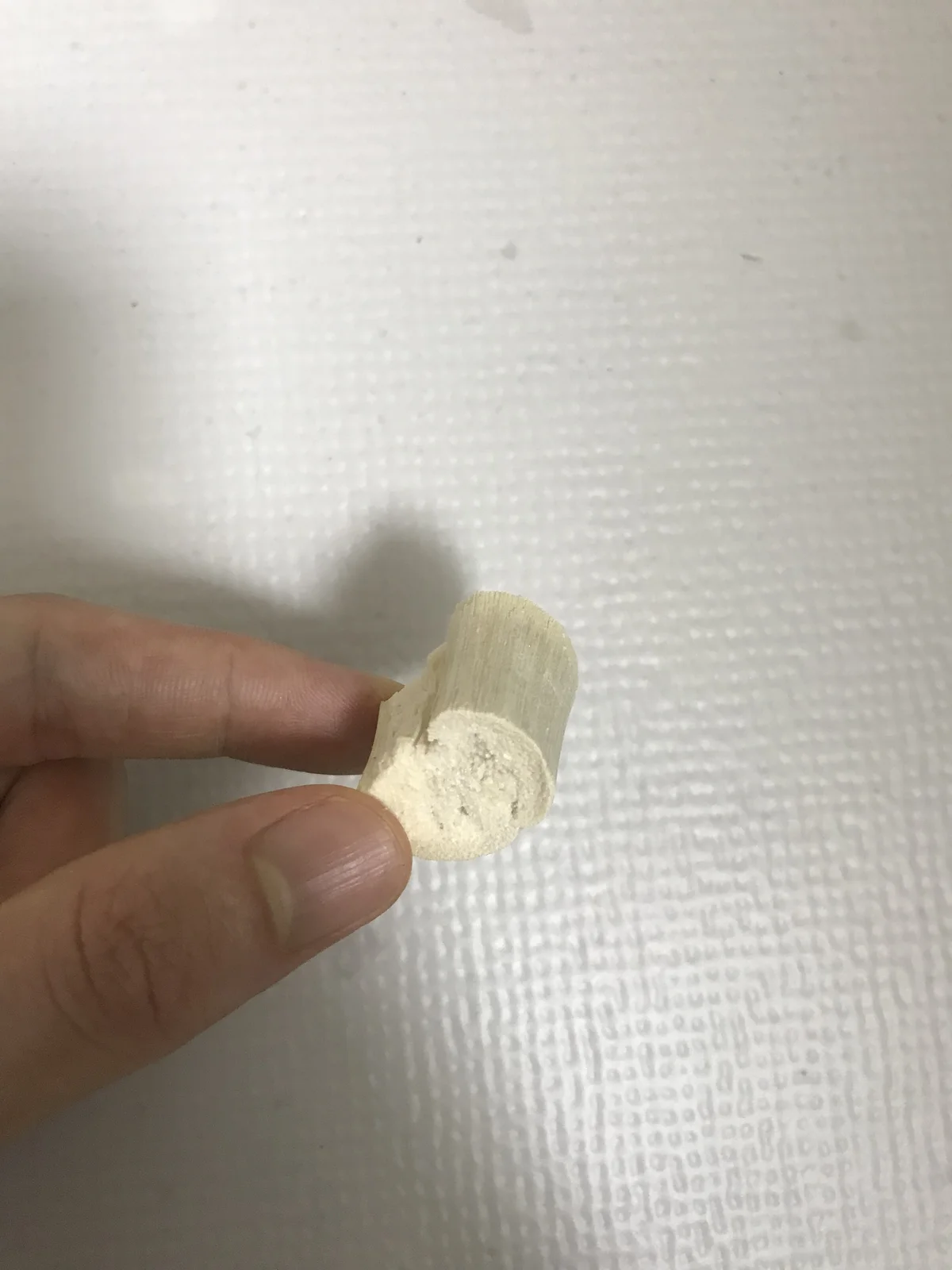
Update (August 2026): the ration has shrunk again — it’s now one piece every three days rather than daily. A full chunk is a lot of sugar next to a dwarf-sized rabbit, and the complete diet post has the current menu.
The papaya and pineapple myth I fell for
Now the confession. For a long time, my treat rotation also included freeze-dried papaya and pineapple. I kept them in the fridge and fed one piece a day through summer and through every molt — because I’d read that the enzymes in those fruits (papain and bromelain) dissolve swallowed fur and prevent hairballs. It’s one of the most repeated pieces of rabbit advice on the internet, and I bought it completely. During shedding season it felt almost like medicine: a tasty piece of insurance.
Then I actually looked into it. Those enzymes break down proteins in general, but there’s no evidence they do anything useful to keratin — the protein hair is made of — in a rabbit’s stomach. The Merck Veterinary Manual — a standard veterinary reference — puts it plainly: clinical research does not support proteolytic enzymes as an effective hairball preventive. What it recommends instead is exactly the unglamorous stuff: a high-fiber diet and daily combing during molts — in other words, hay and brushing the loose fur out before it gets swallowed in the first place. And the fruit itself is mostly sugar, which a rabbit’s gut has no love for in quantity.
To be clear, nothing bad happened to my rabbit — a small piece of freeze-dried fruit a day is a perfectly ordinary treat, and he loved molting season accordingly. But I was feeding it as hairball prevention, and as hairball prevention it was doing nothing. Once I knew that, the sugar stopped being worth it. I don’t feed papaya or pineapple anymore; sugarcane took their slot, honestly labeled as pure candy.
The treats he refused: my two failures
For balance, the things that flopped:
- Dried sugarcane sticks. Same plant, different form — long, thin, woody sticks instead of freeze-dried chunks. He sniffed once and never touched them again. Apparently it was never about sugarcane; it’s the airy, crispy freeze-dried texture he loves.
- Apple wood chew sticks. Bought for tooth wear, recommended everywhere. Complete indifference. His teeth get their workout from hay, which is how it’s supposed to work anyway.
Both failures taught me the same thing: rabbits vote with total honesty. You can’t talk a rabbit into a treat.
If I were starting over
My whole treat philosophy, two years in, fits in five lines:
- Hay is the diet. Treats are entertainment, not nutrition.
- One small treat a day. If he’s ever less hungry for hay, that’s one treat too many.
- For the sweet stuff, one-word ingredient lists only. Freeze-dried single fruits are the easy pass.
- Ignore anything sold or shared as a “hairball remedy” — brush during molts instead.
- Introduce anything new in a tiny amount, then watch the litter box for a day or two. Normal droppings are the only review that counts.
And if you find the one treat your rabbit truly loses his mind over — congratulations. You now own the single most powerful training tool in the house. Use it wisely.