For over two years, the bottom of my rabbit’s litter box has held the same thing: wood pellets, made — according to the bag — from 100% pine.
If you’ve spent any time reading about rabbit care, that sentence should make you flinch. Pine sits on almost every “never use” list ever written for rabbits, and for good reason. So either I’ve been slowly poisoning my Netherland Dwarf for two years, or something about those warnings gets lost in translation. It’s the second one — and the difference comes down to one word: shavings.
This post is the litter deep-dive: what actually makes a litter dangerous for rabbits (with veterinary sources, not forum folklore), why pine pellets pass a test that pine shavings fail, and the exact routine, layer depth, and cost of the setup that’s kept my apartment smelling like nothing at all.
The three ways a litter can hurt a rabbit
Strip away the brand names and every unsafe litter fails in one of three ways.
1. It blocks the gut
This is the serious one. Clumping cat litter is engineered to absorb liquid and cement itself into a solid mass — exactly what you don’t want inside an animal that grooms itself constantly and investigates everything with its mouth. The Merck Veterinary Manual is blunt about it: wood shavings, corncob litter, clay litter, and clumping litter should not be used, because they can cause a digestive tract blockage if swallowed. The Rabbit Welfare Association puts it even more vividly — ingested clumping litter does exactly what it says on the tin, and clumps in the gut.
A gut blockage in a rabbit isn’t a “wait and see” problem. A rabbit whose digestive system stops moving is an emergency measured in hours — I’ve written about GI stasis and the warning signs separately, and it’s the reason “safe if eaten” is the first filter any rabbit litter has to pass, before absorbency, before odor control, before price.
2. It irritates the airways
Rabbits live nose-down in their litter box, dozens of visits a day. Fine dust goes straight into a very sensitive respiratory system. This is why sawdust and loose shavings score so badly — Merck notes they’re poor choices simply because they’re dusty and irritate rabbits’ airways, before you even get to the chemistry.
3. The softwood problem: oils and phenols
And here’s the pine warning, properly stated. Fresh softwoods like pine and cedar contain aromatic oils — phenols, the compounds that give them that lovely forest smell. Lovely for you; not for a small animal sitting on them all day. The Rabbit Welfare Association & Fund warns that sawdust “can irritate the skin and lungs because of the oils/phenols contained in the wood,” and the UK veterinary charity PDSA tells rabbit owners plainly to avoid wood shavings because of respiratory problems.
So the internet is right: pine shavings have no business in a rabbit’s litter box. Which brings us to the obvious question.
The pine paradox: why pellets aren’t shavings
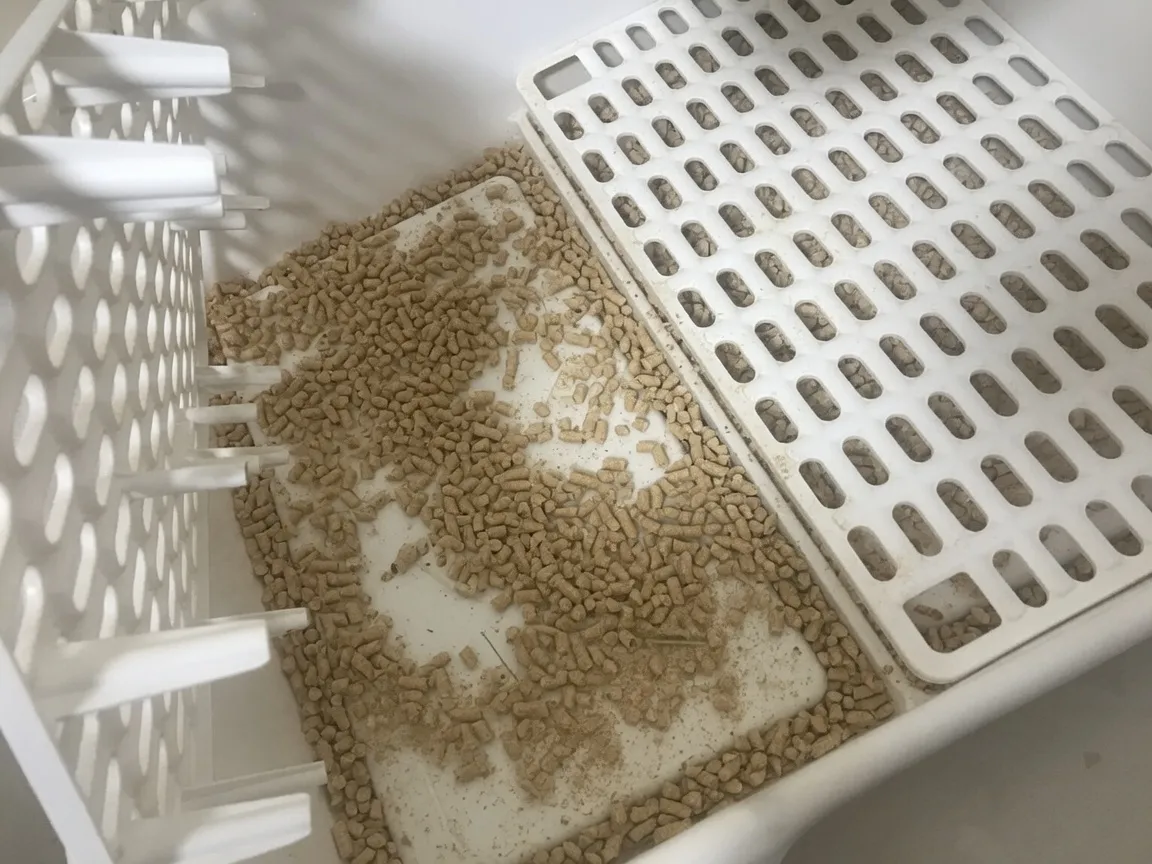
Wood pellets are made by grinding wood and compressing it under serious heat and pressure. That process is the whole story. In RWAF’s words: “Wood-based cat litter pellets are also heat processed which removes the harmful oils and phenols and therefore do not pose a risk of skin and lung irritation.”
Same tree, different product. The heat drives off the volatile oils that make raw softwood a problem, and the compression means no fine dust floating around — a pellet stays a pellet until urine hits it. PDSA’s own recommended list includes “compressed woodchip (non-clumping)” right alongside shredded paper and hay. This isn’t a loophole I found; it’s the mainstream veterinary-charity position.
Two honest caveats, because this distinction only works if you buy the right bag:
- Buy pellets sold for animals. Wood pellets also exist as stove fuel, and fuel-grade pellets aren’t made to be sat on by a living creature — some have binders or additives, and nobody labels them for animal safety. Mine are sold specifically as small-animal litter, and the label says exactly one ingredient: pine. That product category — pet litter, one ingredient, no fragrance — is the filter.
- “Heat-processed” is the load-bearing phrase. The safety argument belongs to pellets, not to pine in general. If it’s fluffy, loose, or smells strongly of forest, it’s the other thing.
The safe list, according to people with veterinary degrees
For completeness, here’s what the sources above actually endorse. Merck’s good options: recycled newspaper pellets, paper pulp, or hay. PDSA adds shredded paper, soft straw, and non-clumping compressed woodchip. Paper pellets are probably the consensus “safest possible” answer — highly absorbent, digestible-safe, zero chemistry concerns.
I have no argument with paper. I’ve just never needed to switch, because my setup adds a physical layer that makes the whole “what if he eats it” question nearly theoretical.
My setup: the grate is a second safety layer
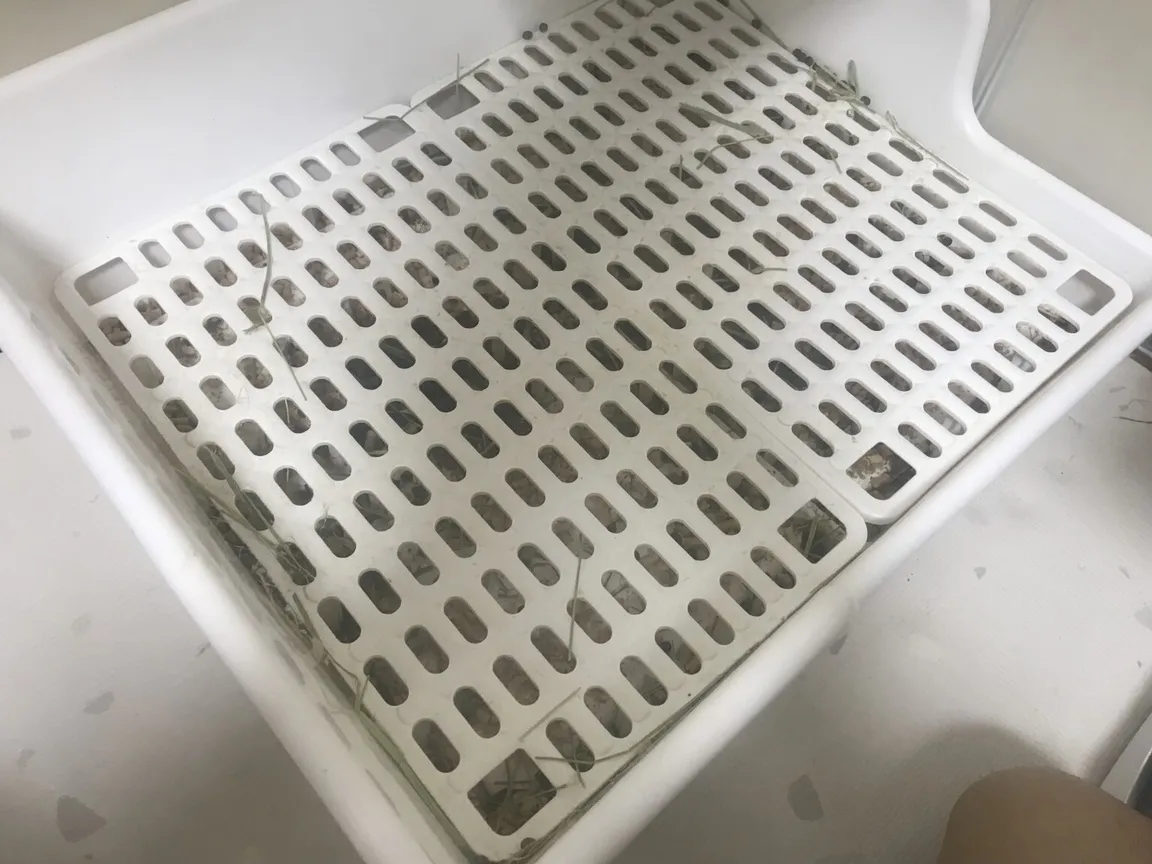
In my litter box, the pellets live under a plastic grate. Urine passes through; the rabbit stands on clean, dry plastic and never actually contacts the litter. In over two years, he has not eaten, chewed, or so much as investigated a single pellet — not because he’s unusually well-behaved, but because they’re physically out of reach.
Somewhere in my early research I ran across a warning that stuck with me: sand-style litters used without any separation can end up in the rabbit during grooming — lick the paws, swallow whatever’s dusted on them, repeat all day. The grate deletes that entire pathway.
To be clear about the logic: the grate is the second layer, not a substitute for the first. Grates get lifted, boxes get tipped, rabbits surprise you — the litter underneath still has to be safe on its own. Safe litter plus a grate just means two independent things have to go wrong before there’s a problem.
How I got here: the pee pad chapter
I didn’t start with pellets. For my first couple of months — the same era as the comically undersized first litter box — I lined the box with disposable pee pads. They looked convenient and failed completely: rabbit urine has a strong ammonia smell, and the pads barely held it. Within hours the room knew. Cleaning was somehow more work, daily and unpleasant.
So I did what you’re doing right now — searched — and switched to wood pellets. The difference was immediate and total. I told that story in the litter box post from the convenience angle; this post is the missing half of the answer. The thing that fixed my odor problem also happens to be the thing the welfare organizations consider safe. That’s not always how product research goes.
Living with wood pellets: the practical details
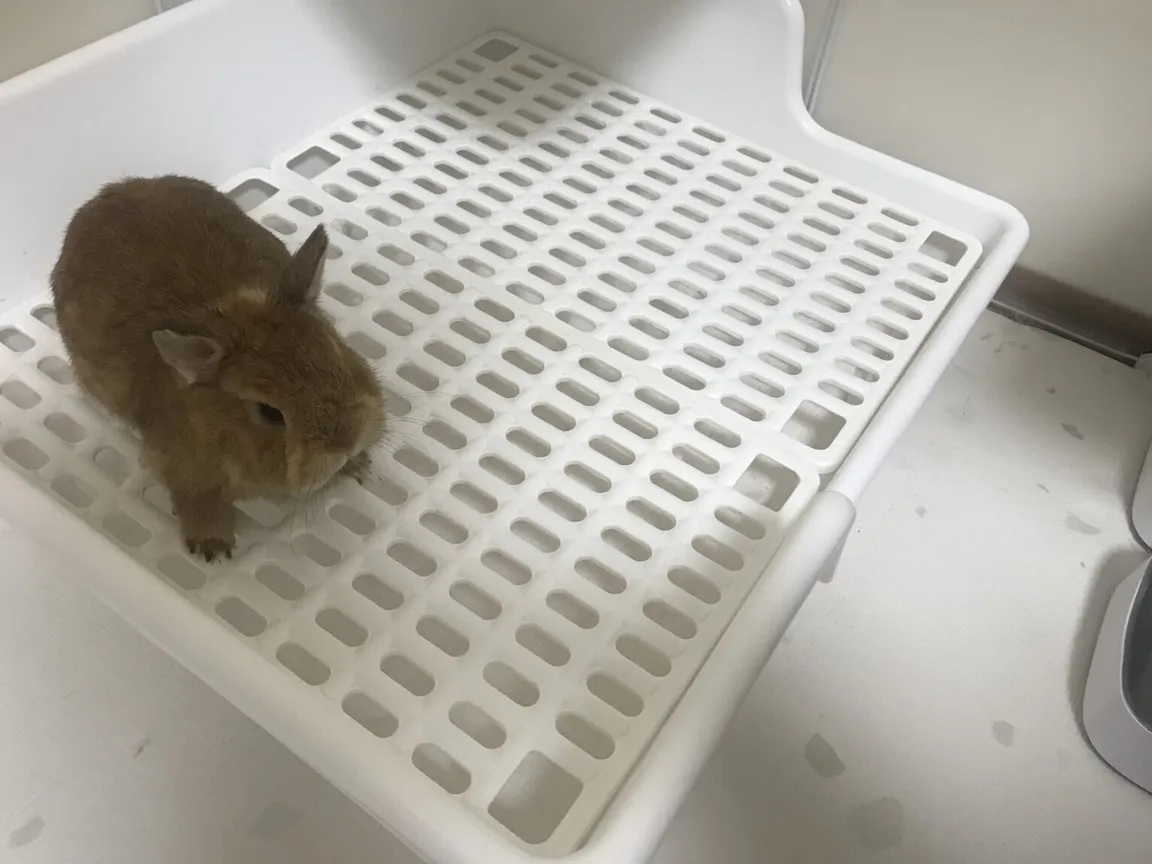
Everything else you’d want to know before buying a bag:
- You need less than you think. I spread a shallow layer, one or two pellets deep — roughly 2–3 cm. Pellets expand as they absorb, so a thin layer does more work than it looks like it should.
- Wet pellets crumble. That’s the feature. On contact with urine, a pellet swells and breaks down into damp sawdust, trapping the liquid and the smell inside. Under the grate, that crumbling happens out of the rabbit’s reach — no dust in anyone’s face.
- Zero-maintenance between changes. I never open the grate mid-cycle to scoop or top up. Every one to two weeks, the whole box gets emptied and refilled fresh — pellets, droppings and all, straight into a regular trash bag. The full teardown is in my cage cleaning routine.
- The math is silly. A 5 kg bag costs me about $15 and lasts two to three months. The pee pads it replaced were a daily consumable. This is one of the cheapest line items in the entire rabbit budget.
- It only works because he’s trained. One box catches everything, which is what makes a one-bag-a-quarter setup possible. If you’re starting from scratch, litter training is the step that makes every other part of this easy.
Frequently Asked Questions
Can I use regular cat litter for a rabbit?
No. Clumping and clay cat litters are the most dangerous options on the shelf — swallowed litter can clump inside the gut and cause a blockage, which for a rabbit is a genuine emergency. Crystal and silica litters are in the same skip-it category, and anything scented is a respiratory irritant in a box your rabbit’s nose lives in. If it’s marketed for cats, assume it’s wrong for rabbits until proven otherwise.
Are pine wood pellets really safe for rabbits?
Pellets sold as pet litter — heat-processed, compressed, unscented, nothing but wood on the label — yes, per the Rabbit Welfare Association and PDSA. The pine warnings you’ve read are about shavings and sawdust, where the aromatic oils and dust are still present. Don’t repurpose fuel-grade stove pellets; buy the ones made for animals.
What if my rabbit eats litter?
Design for it rather than police it: choose a litter that’s safe if swallowed (paper, hay, or heat-processed wood pellets), and consider a grate-style box so the litter isn’t reachable at all. If your rabbit has gotten into clumping or clay litter, call your vet — and watch for the signs of a slowing gut: not eating, no droppings, hunched posture. Those are GI stasis red flags, and they don’t wait.
Do I need a grate over the litter?
No — plenty of rabbits sit directly on paper or pellet litter their whole lives, and that’s fine with a safe litter. I like the grate because it keeps feet permanently clean and dry, stops digging, and adds that second safety layer between rabbit and litter. If your box didn’t come with one, it’s a cheap upgrade, not a requirement.