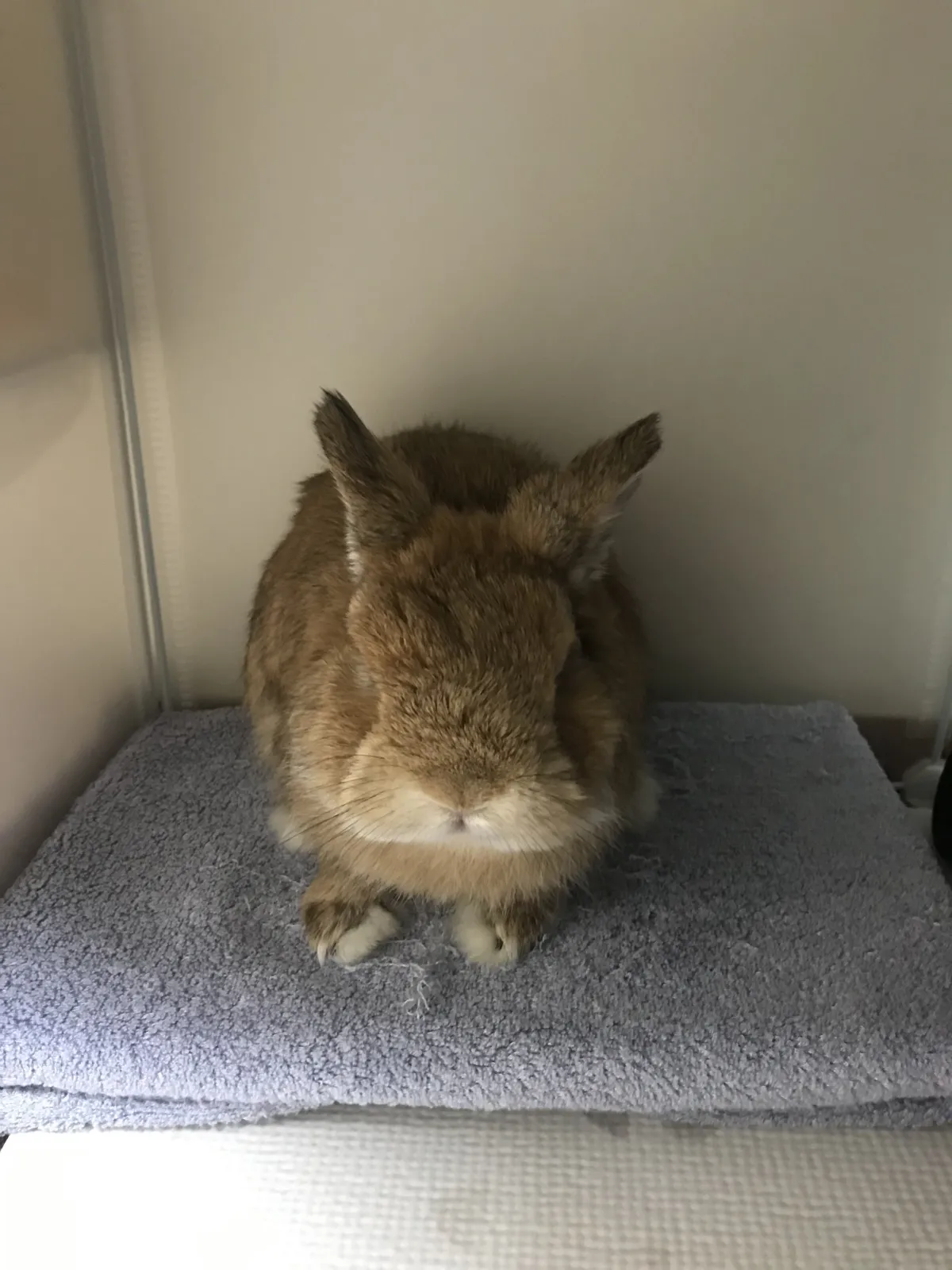
On my rabbit’s very first day home, the pet shop sent us off with two cooling products: a thin fabric cooling mat, and a stainless steel mat wrapped in blue patterned vinyl. Summer is dangerous for rabbits, they said — and that part is absolutely true. Over two years later, here’s the scoreboard: the fabric mat is in the trash, and the stainless mat is still here — but it only became genuinely cold this summer, when I stopped expecting a mat to make coldness out of nothing.
One thing before the review, because it matters for fairness: cooling mats come in several types, and mine were the thin fabric kind and the plain stainless steel kind. Not the gel-filled type, not the water-filled type. I haven’t used those, so I won’t pretend to review them. This is a review of what I actually owned.
Why I trusted them (at first)
Heat is not a comfort issue for rabbits — it’s a safety issue. Rabbits can’t sweat, and hot rooms can turn dangerous fast; I wrote about the warning signs and my full prevention routine in the rabbit heat stroke post. So when the shop that sold me my rabbit also sold me “the things that keep him cool,” I didn’t question it. I was a brand-new owner. Passive mats — no electricity, no ice, no daily effort — sounded exactly like the safety equipment I needed.
The fabric mat: “less warm” isn’t “cool”
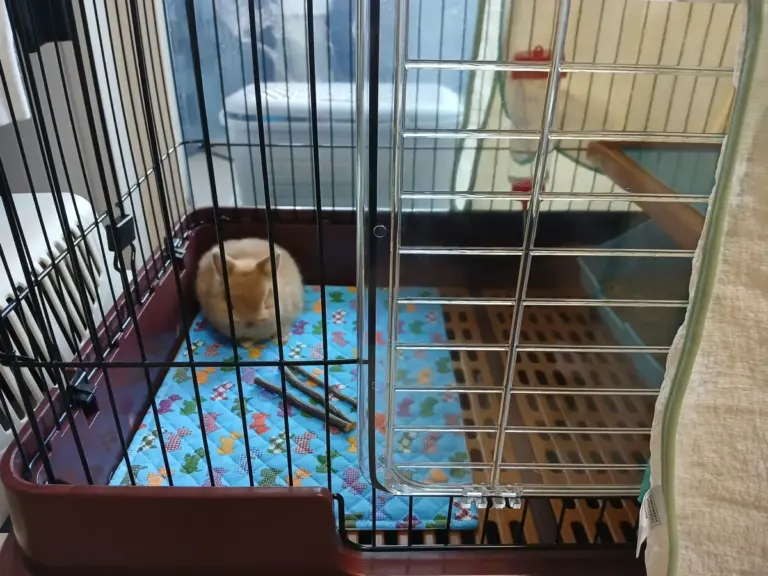
To be fair to the fabric mat: he did use it. He’d hop on and stretch out, so it wasn’t rejected — it just wasn’t doing what it was sold to do. Here’s what a thin fabric cooling mat actually delivers: it feels slightly less warm than the surrounding floor. That’s the whole trick — a smoother, airier weave that doesn’t hold body heat the way a blanket or rug would. It is not cold. It doesn’t stay cold. There’s no stored coolness in it, because there’s nothing in it to store coolness with — it’s fabric.
And I checked the only way that matters: with my own hand. Press your palm on a fabric “cooling” mat on a hot afternoon and you’ll feel it immediately — it’s barely different from the floor next to it. It survived about a year and a half in our setup, mostly out of inertia, before I accepted that it was bedding with a marketing budget and threw it out.
The stainless mat: better — but only as cold as your room
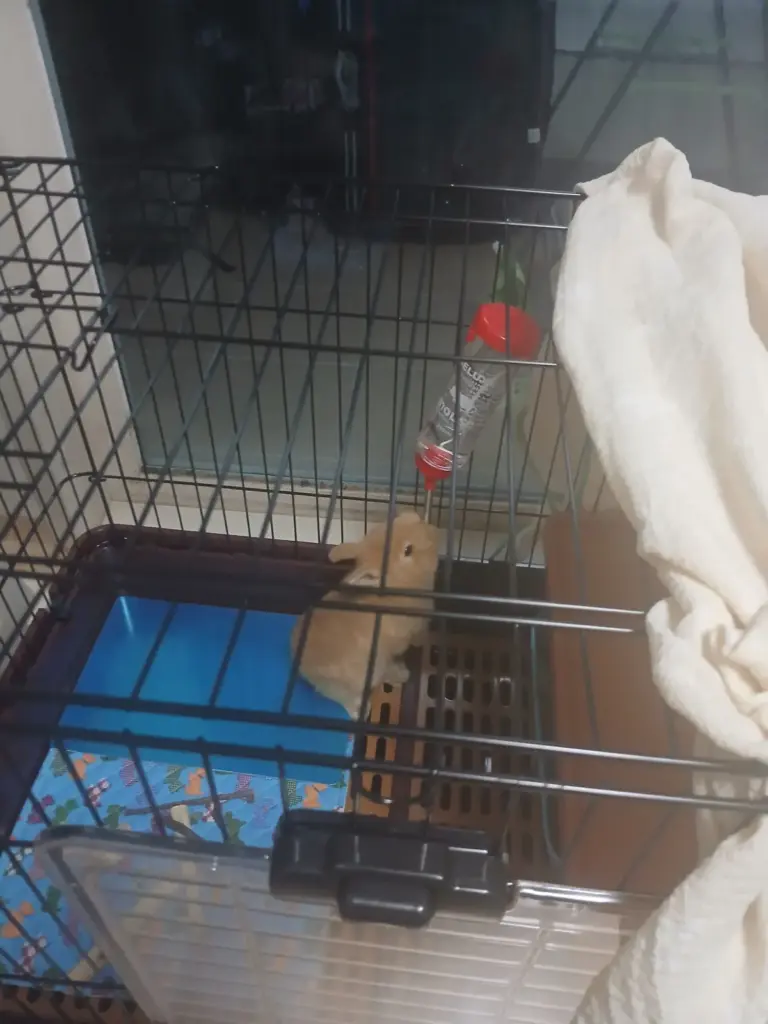
The stainless mat was the better half of the pair from the start. Metal genuinely feels cool to the touch, because it pulls heat away from whatever touches it — that’s real physics, not marketing. As a summer surface, it beats fabric easily.
Two honest caveats, though. First: a bare metal plate can only ever be as cool as your room. It doesn’t generate cold; it just conducts it. For two summers I ran it with a couple of towels and nothing else, and on genuinely hot days I could feel with my hand that it wasn’t getting the temperature down far enough. Second: the blue vinyl coating didn’t survive. My rabbit started chewing on it, and rather than find out what swallowed vinyl does to a rabbit, I stripped the coating off completely and threw it away. Rabbits chew everything — if a product for them has a plastic skin, assume it will end up in their mouth. The bare steel plate underneath? Still in service today.
This summer’s fix: add an actual source of cold
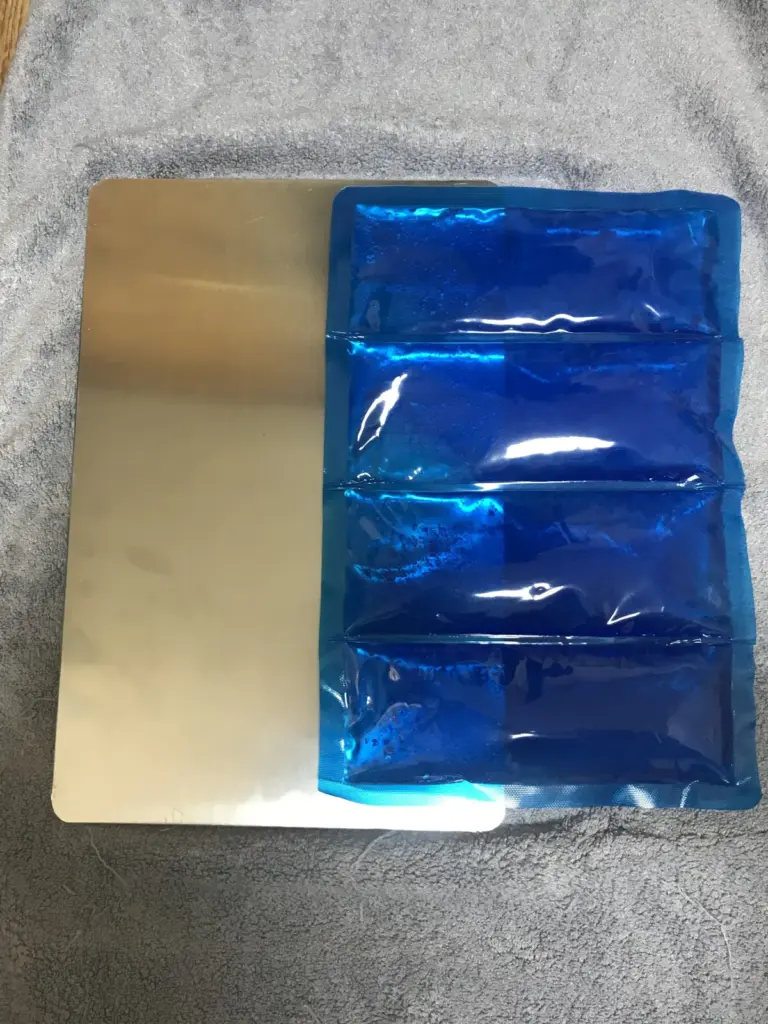
What changed everything was this summer’s upgrade: a gel ice pack under the stainless mat, wrapped together in a towel — the full setup is in the heat stroke post. The difference is the same hand test. The bare plate feels like the room. The plate with a frozen pack under it is genuinely cold — actually a little too cold right out of the freezer, and then it settles into a steady, comfortable coolness that lasts for hours. That settling turns out to be a feature, not a flaw: he gets a surface that starts crisp and stays pleasantly cool instead of icy.
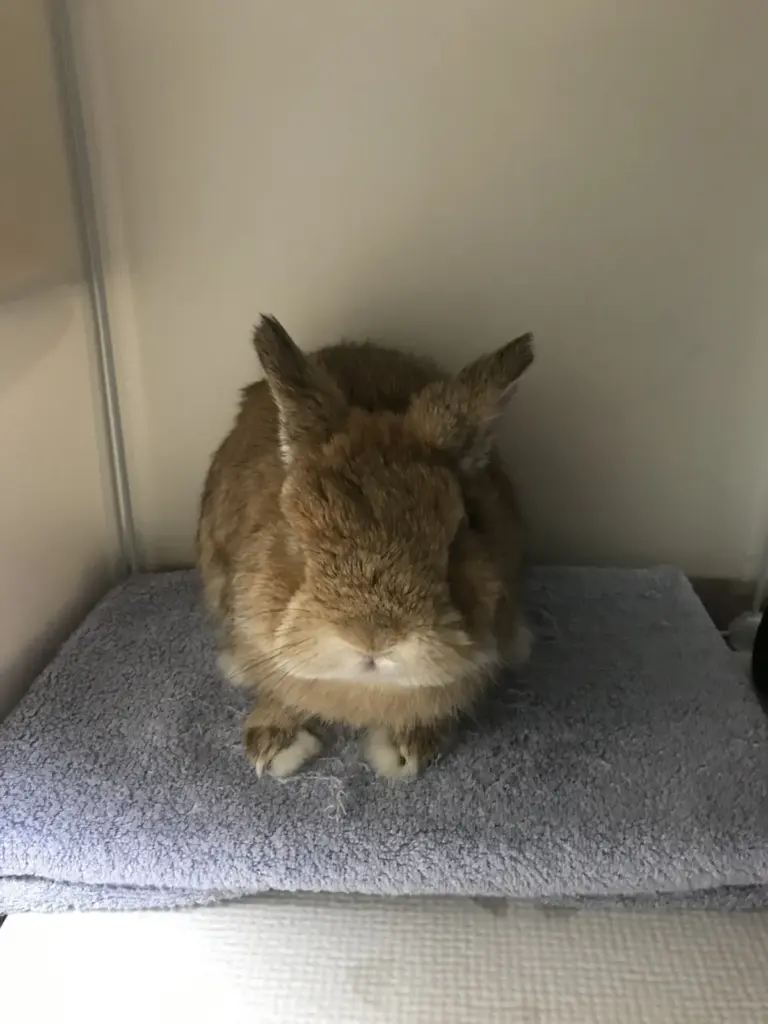
Yes, it’s more work. Ice packs need swapping twice a day, and you have to keep a spare in the freezer. That’s exactly the trade I’m arguing for: in summer, choose the reliable-but-annoying method over the convenient-but-weak one. Heat stroke doesn’t grade on effort. (The rest of my summer defense is boring on purpose: air conditioning set so the room stays under 28°C, and a fan running at all times.)
The bottom line
- Thin fabric cooling mats: a mild comfort upgrade, not heat protection. Test one with your own hand on a hot day before you trust it with your rabbit’s summer.
- Bare stainless steel mats: the better surface — but they’re room temperature with better manners. Worth owning as a base, not as a plan. And strip off any plastic coating before your rabbit does.
- Stainless mat + frozen gel ice pack + towel: real, hours-long cold for under $20. This is the version I actually trust.
- Gel or water-filled mats: can’t say — haven’t used them. If yours works, no argument from me.
Two cooling products came home with my rabbit on day one. Over two years later, one is gone and the other survived by becoming part of something colder than itself. That’s the whole lesson: if your cooling plan has no actual source of cold in it, it isn’t a cooling plan — it’s bedding.
This post is part of my complete rabbit setup — a tour of everything currently in his enclosure and why each item survived.